
 US
 Australia
 United Kingdom
 Europe
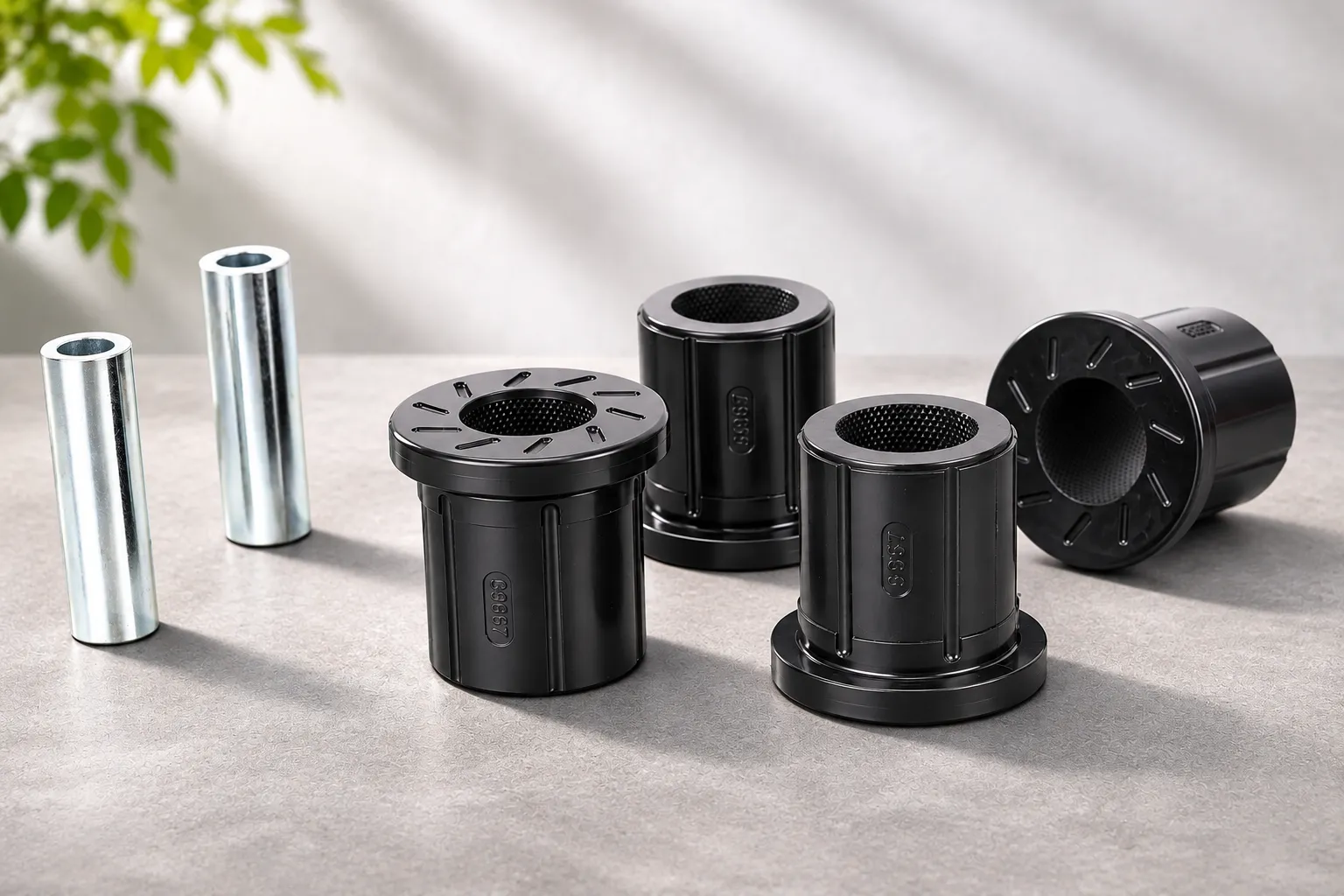

To set leaf spring shackle angle correctly, measure it from vertical at ride height with an angle finder, then cycle the suspension to check full compression and full droop. The shackle should sit at a moderate angle, lean the right way for your setup, never approach going over center and never contact the frame anywhere in its travel.
Shackle angle, along with the condition of each leaf spring bushing, is one of those details that rarely gets attention until something goes wrong. Get it wrong and the rear end can ride harshly, sit at the wrong height, bind on articulation or, in the worst case, let the shackle flip over. It matters most after a lift, a spring swap or a shackle change. Here is how to set leaf spring shackle angle properly, what the correct leaf spring shackle angle looks like, and why healthy leaf spring shackle bushings are part of getting it right.
Why Leaf Spring Shackle Angle Matters
A leaf spring gets longer as it flattens, and the shackle swings to let that happen. The angle the shackle starts at decides how it behaves through the rest of its travel. A shackle at a sensible angle lets the spring lengthen smoothly, while one that is too upright or leaning the wrong way changes the effective spring rate and can push the axle into awkward positions.
At the extremes of travel, the problems get far more serious. A shackle that swings past vertical toward the frame can toggle over center and invert, locking the spring in a bent position. A shackle that sits too far from vertical can let the axle shift excessively and make the ride feel loose. Neither is something you want on a loaded truck or a trail rig.
What Is the Correct Leaf Spring Shackle Angle?
There is no single number that suits every vehicle, because the right angle depends on spring arch, shackle length and how much the suspension travels. The general rules are consistent across most trucks, though:
- Measure from vertical: Use an angle finder on the shackle plate and read the angle from straight up and down.
- Avoid vertical at ride height: A shackle that starts vertical has nowhere sensible to go as the spring lengthens.
- Lean the correct way: The shackle should lean so that it swings toward vertical, rather than further away from it, as the spring flattens under load.
- Stay off the frame: Check that the shackle and its hardware clear the frame at full compression and full droop.
- Never approach inversion: At full droop and full compression, the shackle must stay well short of going over center.
Most factory setups place the shackle at a moderate angle at ride height for exactly these reasons. If your shackle looks very different from stock after modifications, measure it carefully.
How to Set Leaf Spring Shackle Angle Step by Step
- Park at ride height: Put the truck on level ground with its normal load and tire pressures.
- Measure the static angle: Hold an angle finder against the shackle plate and record the angle from vertical.
- Check full compression: Load the rear or compress the suspension safely and watch which way the shackle swings.
- Check full droop: Support the frame on stands and let the axle hang, then measure again.
- Confirm clearance: Make sure the shackle never contacts the frame and never approaches over center.
- Adjust if needed: Changes to shackle length, hanger position or spring arch alter the angle, so correct the cause rather than forcing the shackle.
Write the three readings down as you take them. Comparing them shows you how much range the shackle has and whether it is close to either limit.
Lift Shackles and Shackle Angle
Lift shackles are longer than stock and raise the rear of the vehicle by pushing the spring eye further from the frame mount. They are popular because they are cheap, but they also change shackle angle, often making the shackle sit closer to vertical. That can increase the risk of inversion on droop, change pinion angle and alter how the rear end handles under load.
Offset and adjustable leaf spring shackles change the geometry in similar ways. If you fit any of them, run through the measurement steps above carefully. For many trucks, correctly rated springs give a more reliable result than relying on shackle length for lift.
How Worn Bushings Affect Shackle Angle
Worn bushings at the shackle pivots and spring eye add slop, so the shackle no longer sits where the geometry intends. The axle can shift under braking and acceleration, the shackle angle changes from moment to moment, and you hear clunks and squeaks as the parts move. Measuring shackle angle on worn bushings will not give a reliable reading.
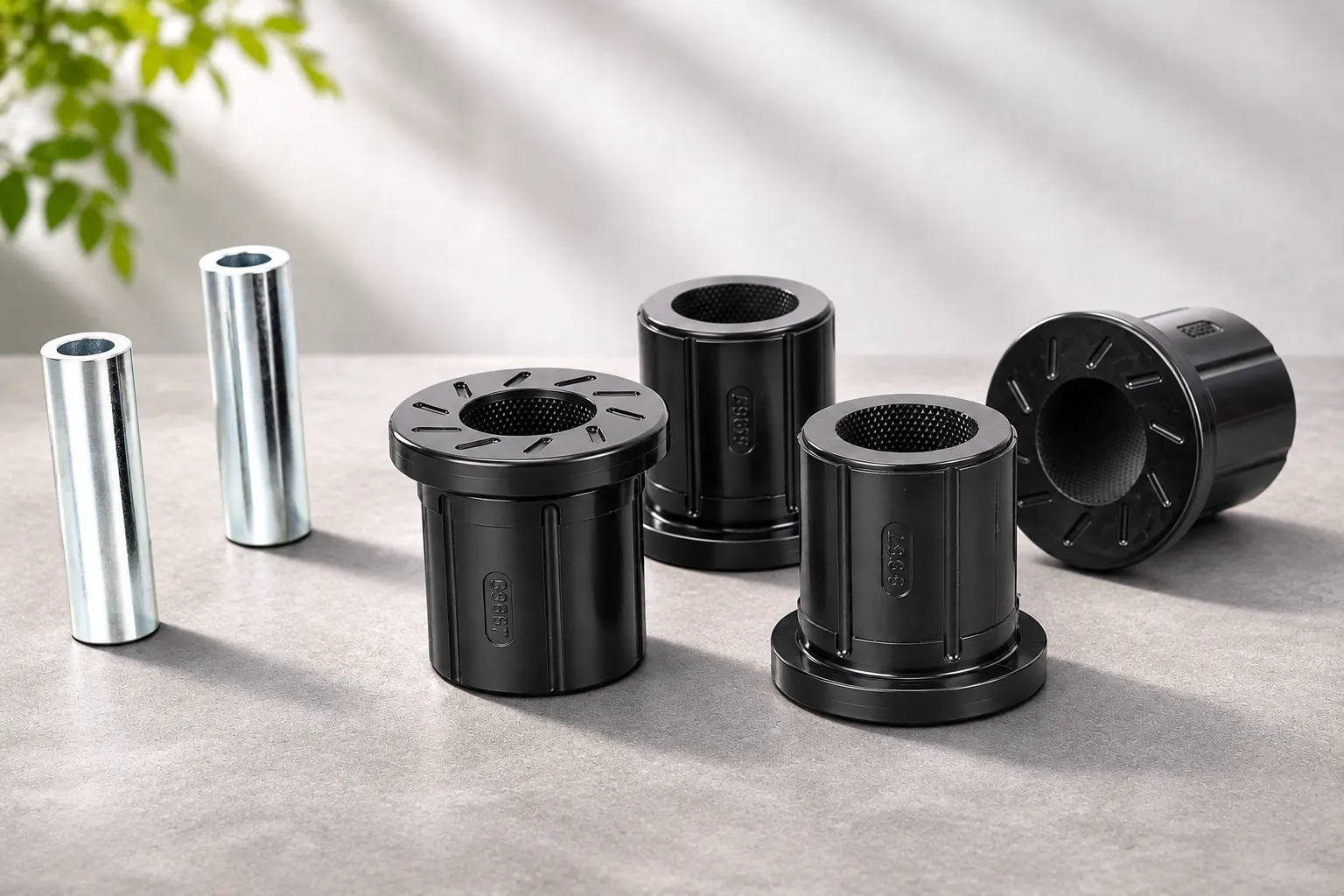
Our polyurethane shackle bushings hold the pivots firmly so the shackle angle stays consistent through its travel. Greaseable shackle bushing and hardware kits let you keep the pivots lubricated for smooth movement. For the spring eyes, see our full range of leaf spring bushings. If you are new to how shackles work, start with our explainer on what a leaf spring shackle is.
FAQs
Looking for more information about leaf spring shackle angle? Below we answer the most commonly asked questions
What is the correct leaf spring shackle angle?
Should a leaf spring shackle be vertical?
Which way should a leaf spring shackle lean?
Do lift shackles change shackle angle?
What happens if a leaf spring shackle inverts?
Do worn bushings change shackle angle?
Keep your shackles swinging the way they were designed to. Find polyurethane leaf spring shackle bushings and greaseable shackle kits for your truck.


