US
 Australia
 United Kingdom
 Europe
Sway Bar Bushings with Fitting Position Front, Rear for 1999 Toyota Celica GT
IMPROVE GRIP, HANDLING & PERFORMANCE.
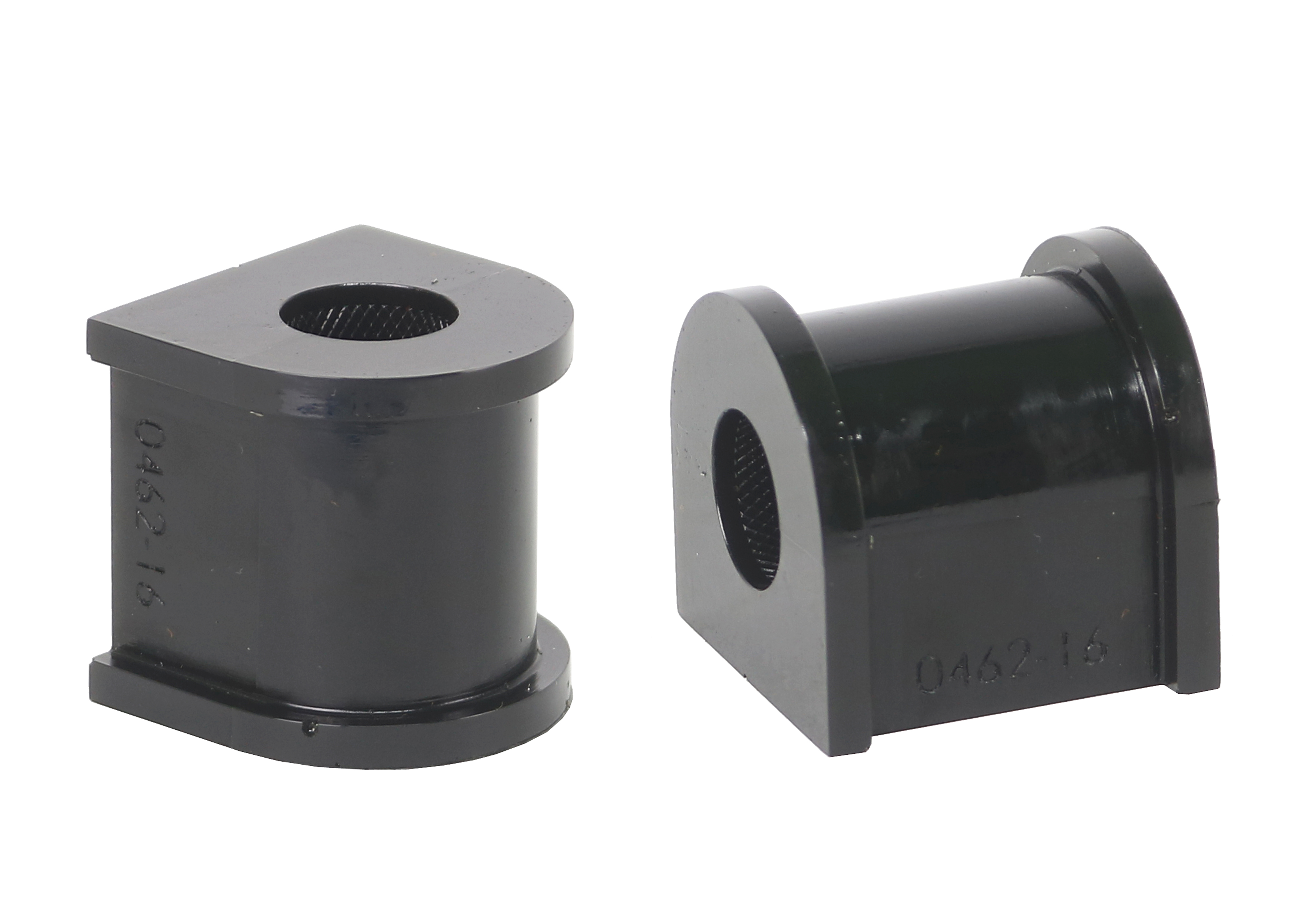
Sway bar bushings are the pair of D shaped blocks clamping the bar to the chassis or subframe of your Toyota Celica. Everything the bar does depends on them holding it still while the ends move. They are the most frequently replaced bushings on any vehicle, they cost very little, and they are responsible for one of the most persistent noises in ... Read more
Sway bar bushings are the pair of D shaped blocks clamping the bar to the chassis or subframe of your Toyota Celica. Everything the bar does depends on them holding it still while the ends move.
They are the most frequently replaced bushings on any vehicle, they cost very little, and they are responsible for one of the most persistent noises in automotive repair. Stabilizer bar bushings is the same part under a different name.
Why Toyota Celica Sway Bar Bushings Are Split Down One Side
Pick one up and the first thing you notice is a slit running the full length of the bore.
That slit exists so the bushing can be opened up and wrapped around the bar in place. Without it, fitting a new set would mean disconnecting both end links, dropping the bar out of the vehicle entirely, sliding the bushings on from one end, and reassembling everything. With it, the bracket comes off, the old bushing peels away, the new one clips on, and the bracket goes back.
That single design detail is why sway bar bushing replacement is one of the few suspension repairs most people can genuinely do at home in an hour with hand tools.
The D shape is equally deliberate, since the flat face seats against the mounting surface on the chassis and the curved back sits inside the bracket, which locates the bushing positively rather than letting it rotate with the bar. Fitted upside down it will not seat, which is worth checking before you start forcing anything.
Why Greasing Worn Toyota Celica Sway Bar Bushings Only Buys You Months
Almost everyone tries this first, and it is worth understanding what it tells you.
A squeak from the front end over speed bumps and driveways is the signature symptom of worn sway bar bushings. The bar is rotating inside a bore that has hardened and dried out, so instead of sliding smoothly the two surfaces catch and release rapidly. Weather changes it, which is the giveaway, since it appears on cold mornings and after rain then fades as things warm up.
Pump grease into the gap and the noise usually stops within a day. What you have done is temporarily restore the lubrication film, and it works because lubrication was the problem.
It comes back because the bore is still worn. Grease applied from outside cannot reach the whole contact surface, it gets flung out and washed away, and the enlarged bore that allowed the movement in the first place has not changed. Expect a few weeks in bad weather and a few months in good.
The useful part of trying it is diagnostic, because if grease silences the noise, the bushings are confirmed and you know what to order. If grease makes no difference at all, look at the end links instead.
Toyota Celica Sway Bar Bushings vs Sway Bar Link Bushings
Two completely different parts share almost the same name, which causes more wasted orders than anything else in this category.
Sway bar bushings, the ones covered here, sit at the center of the vehicle where the bar crosses the chassis. There are two of them, roughly a hand's width either side of the vehicle centerline.
Sway bar link bushings sit at the ends of the bar, out near the wheels, inside the short links connecting the bar to the suspension. Not every vehicle has them, since many links use sealed ball joints instead.
The two fail differently and sound different from each other. Mount bushings squeak and creak, they change with the weather, and the noise comes from the middle of the vehicle. Sway bar end link bushings rattle and knock rather than squeak, the noise follows small sharp bumps, and it comes from the wheel area.
Doing sway bar links and bushings together is common practice, because both are inexpensive and both need the vehicle in the air. The cost to replace sway bar links and bushings at the same time is barely more than doing either alone.
Symptoms of Bad Toyota Celica Sway Bar Bushings
- Squeaking or creaking from the front over speed bumps, worse in cold or wet weather
- A dull knock over sharp edges at parking lot speeds
- Vehicle sway through corners that has crept up over time
- The body taking noticeably longer to settle after a lane change
- Steering that feels loose with no fault found elsewhere
- Cracked, flattened or missing material visible in the bushing
- The bar able to be moved inside the bracket by hand
- An aftermarket bar that never delivered what was expected of it
Signs of bad sway bar bushings develop over years rather than weeks, and most drivers adapt to a vehicle that has slowly gone soft without ever noticing the change. The noise is usually the first thing anyone registers, by which point the bar has been underperforming for a long time.
How to Measure Your Toyota Celica Bar for Sway Bar Bushings
Sway bar bushings are sized to the bar rather than to the vehicle, and getting this wrong is the second most common ordering mistake.
Measure the bar diameter at the point where the bushing actually sits, not at the ends and not in the middle of a bend, since bars are not always a constant diameter along their length. Vernier calipers give a clean reading, and a piece of string around the circumference divided by pi works in a pinch.
Check front and rear separately, because the two bars on the same vehicle are frequently different sizes.
The reason this matters more than it sounds is that anyone who has fitted an aftermarket bar is no longer running the diameter your Toyota Celica was built with. Upgraded bars are commonly two to four millimeters larger, which is enough that a factory sized bushing will not close around it properly. Searching by a specific measurement, a 28mm set for example, finds the right part when a vehicle lookup returns the original specification.
A bushing slightly too large lets the bar move from the day it goes in. One slightly too small will not close in the bracket and the bolts will not pull down square.
Why the Bracket Decides How Long New Toyota Celica Sway Bar Bushings Last
A detail most people skip, and it explains why a fresh set sometimes fails early.
The bushing is meant to be held completely stationary by the bracket while the bar rotates inside it. If the bracket cannot clamp it tight, the bushing spins in the bracket instead, and a bushing spinning against steel wears out in a fraction of its intended life.
So inspect the bracket while it is off. Look for distortion, elongated bolt holes, rust scale that has reduced the metal thickness, and a bore that has been polished or scored by a bushing that was already spinning. Any of those and the new bushings will go the same way as the old ones.
On a vehicle that has had a larger bar fitted, check the mounting points on the chassis as well, since a heavier bar puts more load into a bracket and panel that were specified for the original.
Toyota Celica Sway Bar Bushing Replacement Cost
This is one of the cheapest repairs on any vehicle, and one of the best value in terms of how much it changes the way the car drives.
The parts are inexpensive, the labor is short because nothing needs pressing, and no alignment is required afterward. A shop is quoting a straightforward job rather than a teardown.
What varies between quotes is corrosion, because the bracket bolts sit in a poor position and seize, and on a vehicle from a salt state that turns a twenty minute job into a considerably longer one. Sway bar bushing replacement cost quotes vary largely on how much of that risk the shop has priced in.
If the end links are also due, have both done together. The access is identical, the parts are cheap, and going back under the vehicle twice for two twenty dollar components makes no sense.
Why New Toyota Celica Sway Bar Bushings Squeak and How to Stop It
Getting this right is entirely about lubrication and clamping.
Grease the bore and the bar itself on assembly with a product made for polyurethane. Silicone and PTFE based greases are correct, while lithium and petroleum based products degrade the material over time. A dry bushing will squeak within weeks regardless of how good it is, and that is the single most common reason people conclude that polyurethane sway bar bushings are noisy.
Clamp the bracket down to its full torque figure, because the instinct is to stop short to avoid crushing the polyurethane, and that instinct is wrong. An under clamped bushing rotates in the bracket rather than letting the bar rotate inside it, which destroys it quickly.
Fit both sides before final tightening so the bar sits square across the vehicle rather than being pulled to one side.
Check the end links while the vehicle is in the air, since they produce similar complaints and you are already underneath.
No alignment is needed afterward, and the vehicle can go straight back on the road.
Find Sway Bar Bushings for Your Toyota Celica
Sway bar bushings make up a large part of Nolathane's polyurethane bushings selection, and a worn sway bar bracket can be replaced at the same time.
Select your Toyota Celica to see the front sway bar bushings and rear sway bar bushings listed for it, and check the bar diameter each one suits before ordering. Every Nolathane component is backed by our warranty, a fitment guarantee and 60 day returns.
1 item
Rear Sway Bar - Mount Bushing
✅ Fits 1999 Toyota Celica GT In StockShips within 24hrs.Ships within 24hrs.SKU: REV012.0278Rear Sway Bar - Mount Bushing
✅ Fits 1999 Toyota Celica GTIn StockShips within 24hrs.Ships within 24hrs.Qty Required 1$9.87
Your vehicle
Matching vehicles
No match — try selecting it below.
Refine your search
Clear allNo categories match.
Can’t find what you’re looking for?
Our team can help you find the right part — or tell us what was missing so we can improve the site.
Call Us +1 909-476-2860 Give Feedback (opens in a new tab)