
 US
 Australia
 United Kingdom
 Europe
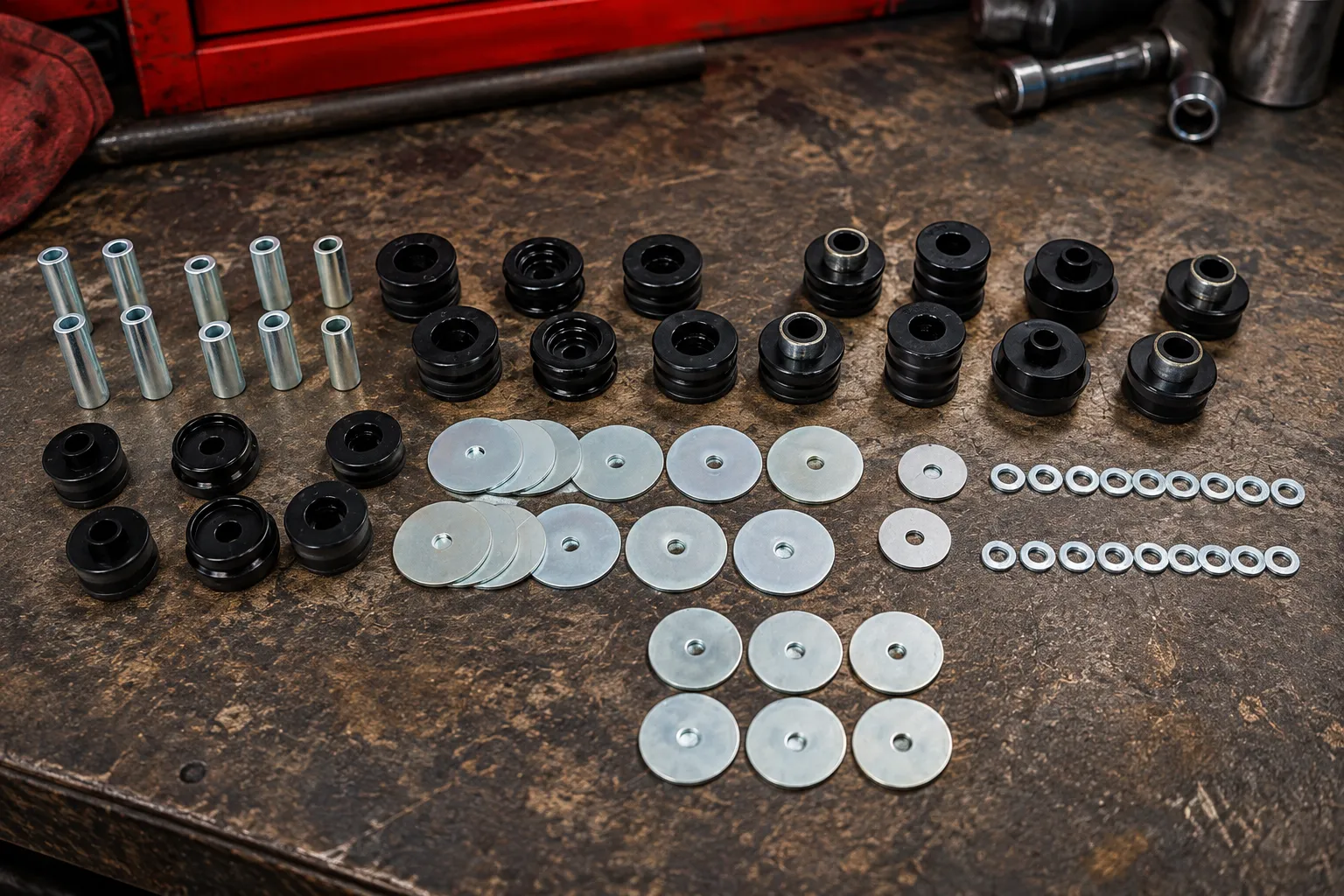

The most common bad body mount symptoms are a clunk from under the cab over bumps, squeaks when the frame flexes, extra vibration in the floor or steering wheel, and door or hood gaps that no longer line up. You may also see cracked, flattened or missing rubber at the mount, or rust around the bracket.
Worn body mounts and cab mounts rarely fail in one dramatic moment, because each body mount bushing wears gradually. The rubber hardens and compresses a little at a time, so the noises and rattles creep in slowly until the truck feels much older than it should. Knowing the bad body mount symptoms early lets you fix the problem with a fresh set of polyurethane body mount bushings before rust and movement damage the brackets or cage nuts.
What Does a Bad Body Mount Sound Like?
A body mount clunk is the classic sign. It is usually a dull knock from under the cab when you drive over a driveway lip, cross railroad tracks or hit a pothole at low speed. It often shows up when braking hard or turning into a steep driveway, because those moments twist the frame and shift the body against worn rubber.
Squeaks and creaks are the second giveaway, and they come from hardened rubber rubbing against the frame bracket and the body as the chassis flexes, which creates a chirp that changes with every bump. On older trucks you may also hear a metallic tap when a bushing has worn through or gone missing completely, letting the body touch the bracket.
Bad Cab Mount Symptoms You Can Feel From the Driver's Seat
Some bad cab mount symptoms are easier to feel than to hear:
- More vibration in the floor and seats: Worn bushings stop isolating tire noise, exhaust drone and drivetrain vibration.
- A shake through the steering wheel or shifter: The cab moves slightly on the frame, so vibrations reach controls that used to feel steady.
- A loose, wobbly feel over bumps: The body moves a fraction later than the frame, which makes the truck feel disconnected.
- Shifting under acceleration or braking: The cab rocks forward or backward on the frame when the load changes.
None of these are dangerous on their own, but they tell you the body is no longer clamped firmly to the frame.
Visual Signs of Worn Body Mounts
Get under the truck with a flashlight and work through each mount position, looking for these warning signs:
- Cracked or split rubber: Surface cracking means the rubber has hardened and lost compliance.
- Flattened bushings: If the bushing looks squashed or uneven, compression set has taken hold.
- Gaps between the body and the bracket: A visible gap or uneven spacing means the bolt has lost clamping force.
- Rust around the bracket or cage nut: Moisture trapped by a failing mount can rot the floor or bracket.
- Uneven panel gaps: Doors that need slamming, a hood that sits high on one side, or a bed that no longer lines up with the cab.
Pull up on a corner of the cab with a long pry bar between the frame and body while a helper watches the mount. A healthy mount moves a little and returns, while a worn one lets the body lift and drop easily.
What Else Can Cause a Clunk Under the Cab?
Body mounts share their symptoms with other parts, so it pays to rule a few things out before you order parts. Sway bar links and their bushings can knock over bumps, worn control arm bushings can clunk when braking, and loose exhaust hangers or heat shields can rattle against the frame. Engine and transmission mounts can also cause a thump when you change gear.
|
Symptom |
Points to worn body mounts when... |
Check these too |
|
Clunk over bumps |
It comes from under the cab or bed and gets worse on driveways |
Sway bar links, shock mounts |
|
Squeak when flexing |
It changes with frame twist, such as one wheel on a curb |
Leaf spring bushings, shackles |
|
Floor vibration |
It rises as rubber cracks and flattens with age |
Exhaust hangers, driveshaft |
|
Cab rocks under braking |
The cab moves while the frame stays still |
Engine and transmission mounts |
|
Misaligned doors or hood |
Gaps changed gradually with mileage |
Accident damage, hinge wear |
Can You Drive With Bad Body Mounts?
You can usually keep driving for a while, but the problem only grows. As the rubber breaks down, the body moves more on every bump, which loads the remaining mounts harder and wears the brackets and cage nuts. On trucks that see salted winter roads, a failing mount traps water and speeds up rust in the floor and frame bracket.
In severe cases a mount can tear out completely, letting the body shift far enough to strain wiring, brake lines and the steering column. If you can see daylight between the body and the bracket, or a bushing has fallen out, book the repair soon.
Fixing Worn Body Mounts the Durable Way
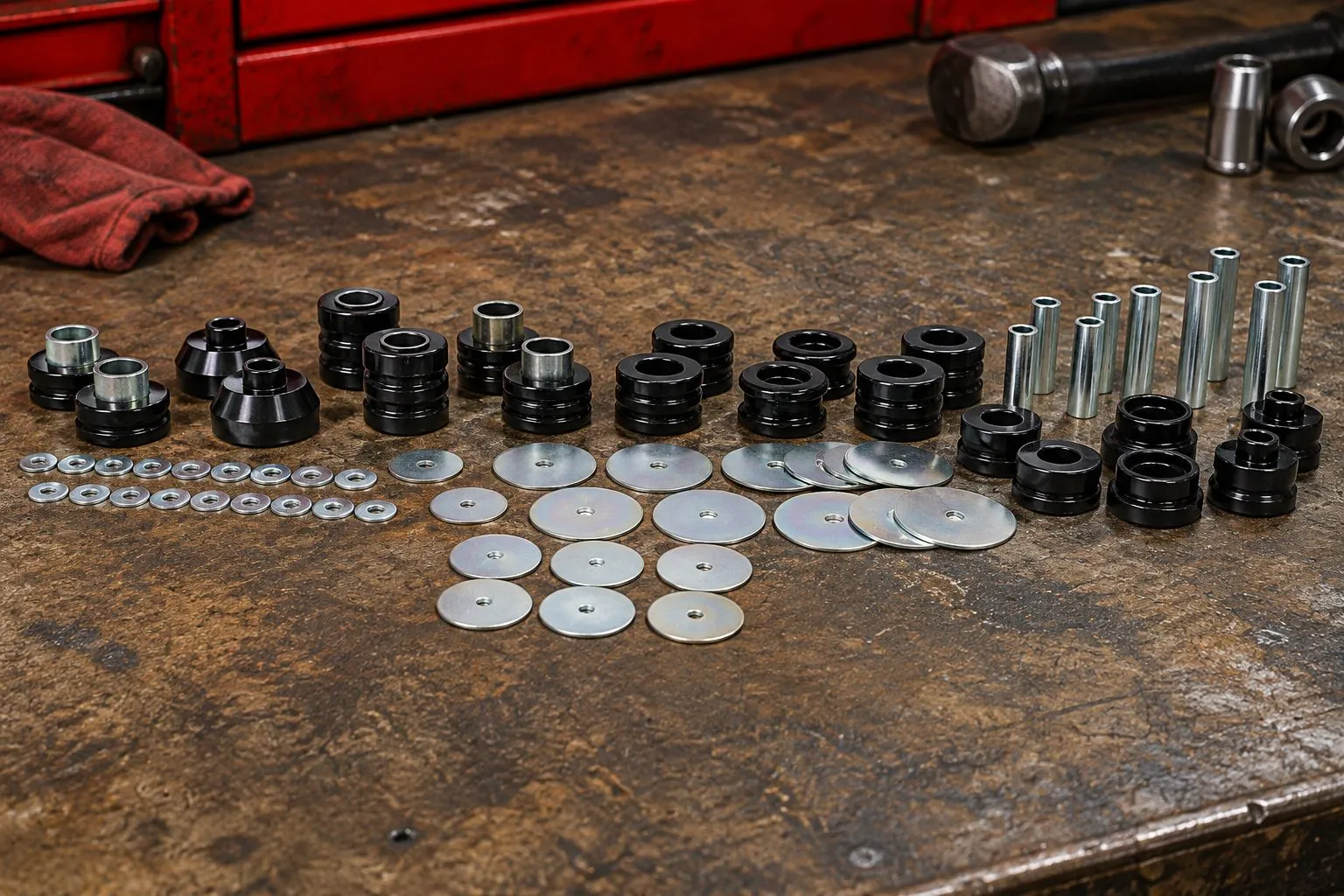
Replacing rubber with rubber puts you back on the same clock. Our polyurethane body mount bushings resist the compression set, cracking and road salt damage that kill factory rubber, so the body stays clamped at the right height for far longer. Kits are matched to standard cab, extended cab, crew cab and extra cab configurations, and most come with installation guides and a limited lifetime warranty.
Before you start, check our guides on body mount replacement cost and how to replace body mount bushings so you know what the job involves.
FAQs
Looking for more information about bad body mounts? Below we answer the most commonly asked questions
What are the first signs of bad body mounts?
Can bad body mounts cause steering wheel vibration?
Do bad body mounts make noise when turning?
How do I know which body mount is bad?
Should I replace all body mounts at once?
Are bad body mounts dangerous?
Clunks and squeaks from under the cab are a fix you can do once and forget. Find the right body mount bushings for your truck, and our support team can confirm fitment for your cab style and drivetrain.


