
 US
 Australia
 United Kingdom
 Europe
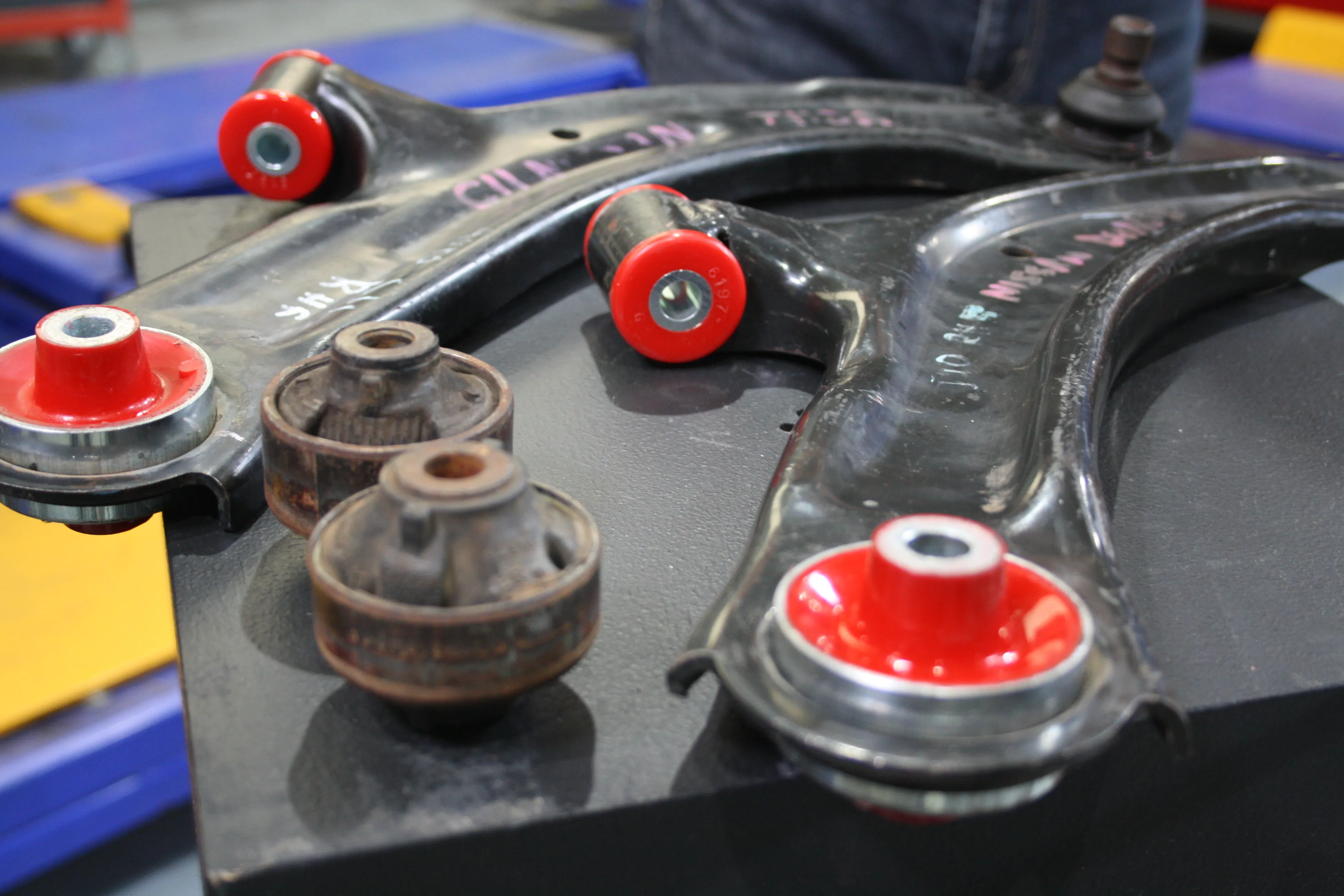

The most common bad control arm bushing symptoms are a clunk over bumps or when braking, steering that wanders or pulls, vibration through the steering wheel, uneven tire wear and a loose, imprecise front end. These happen because worn bushings let the control arm shift, so the wheel moves out of alignment under load.
Worn control arm bushings rarely fail suddenly or without warning. The rubber softens, cracks and tears over thousands of miles, and the vehicle slowly loses the tight, precise feel it had when new. Because the change is gradual, many drivers get used to the noises and vague steering without realizing a simple bushing replacement would fix them. Here are the symptoms of bad control arm bushings to watch for, and how polyurethane control arm bushings solve them for good.
1. Clunking Over Bumps and When Braking
Control arm bushing noise usually starts as a clunk or knock from the front end over potholes, speed bumps and expansion joints. It is often loudest when braking firmly or accelerating away from a stop, because those forces push the arm forward and back. A worn bushing lets the arm shift until metal parts or the bushing sleeve take up the slack with a knock.
A creak or squeak over bumps is another sign, especially on older rubber bushings that have dried out. The noise tends to change with temperature and gets worse in cold weather.
2. Steering That Wanders or Feels Loose
Healthy bushings hold each control arm firmly so the wheel stays pointed where you steer it. Once they wear, the arm can shift slightly as the road surface changes, and the vehicle starts to wander within the lane. You find yourself making small corrections on the freeway, and the steering feels less connected than it used to.
This is one of the most common lower control arm bushing symptoms, since the lower arm carries most of the cornering and braking load.
3. Pulling to One Side Under Braking
When you brake, the front wheels try to push rearward against the control arms. A worn bushing on one side lets that wheel move further than the other, so the vehicle pulls toward one side as you slow down. The steering wheel may also twitch or jerk during hard braking.
Brake problems can cause similar pulling, so it is worth checking both. If the pull happens mainly under braking and goes away when you are coasting, worn bushings are a strong suspect.
4. Vibration Through the Steering Wheel
Worn bushings stop absorbing road vibration and let the arm oscillate at certain speeds. That shows up as a vibration or shimmy through the steering wheel, often at highway speed or when driving over rough surfaces. It can feel similar to an out-of-balance wheel, which is why the bushings are easy to overlook.
5. Uneven or Rapid Tire Wear
When a bushing lets the arm move, camber and toe settings change as you drive. The tire spends more time on its inner or outer edge, leading to feathered or uneven wear. A fresh alignment will not hold for long if the bushings behind it are worn, so persistent tire wear after an alignment is a classic sign.
6. Visible Cracks, Tears or Leaks
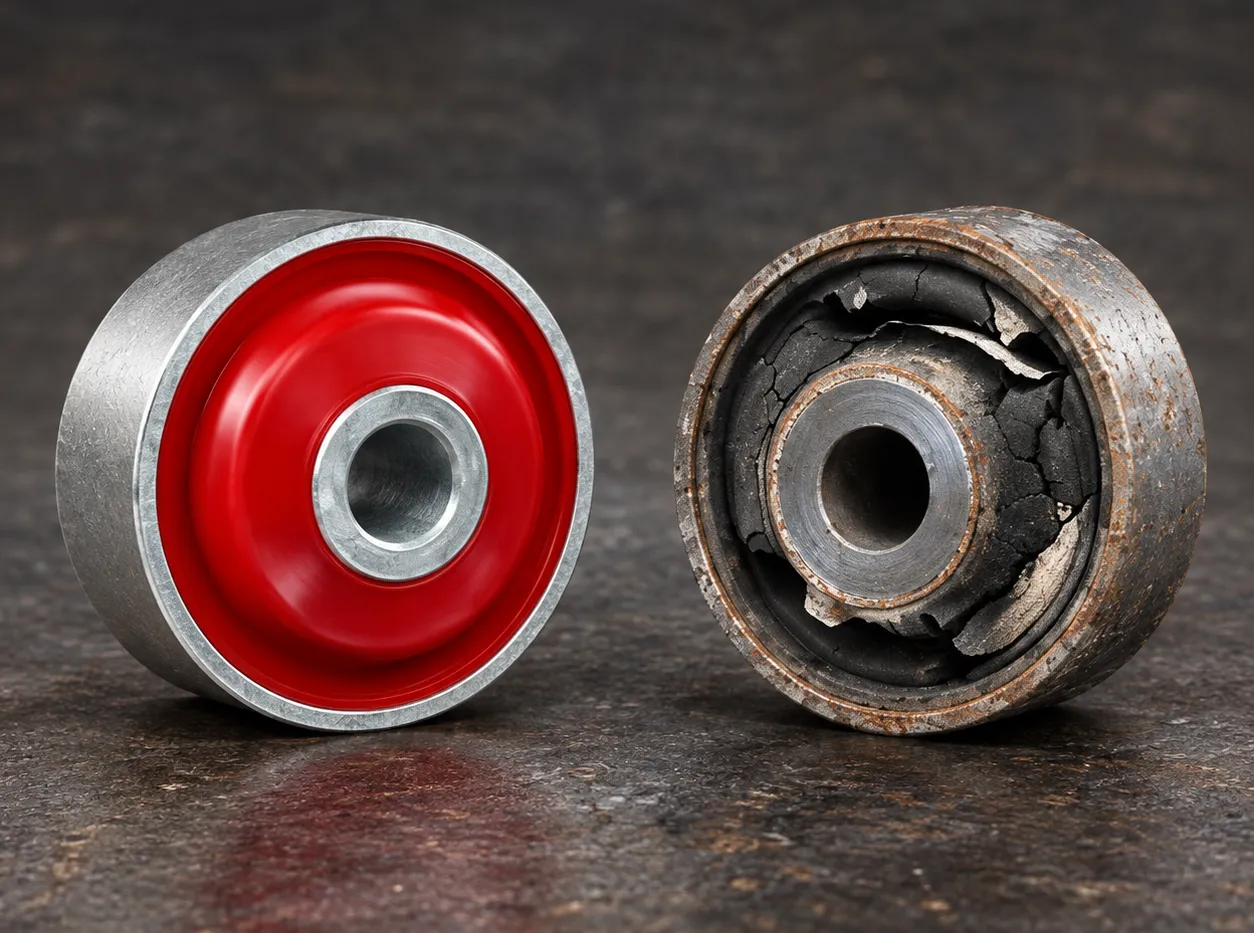
Take a close look at each bushing with a bright flashlight. Cracks in the rubber, a bushing that has torn away from its sleeve, or rubber that bulges out of the arm are all clear signs of bad control arm bushings. Fluid-filled hydraulic bushings may show oily residue where they have leaked. Our step by step guide on how to check control arm bushings shows exactly what to look for.
7. A Front End That Feels Sloppy Over Bumps
Even without obvious noise, worn bushings make the front end feel less settled. The vehicle may dip or shift oddly over undulations, and the steering can feel delayed in quick direction changes. It is the combined effect of several small movements that healthy bushings would prevent.
Control Arm Bushing Symptoms at a Glance
|
Symptom |
Why it happens |
Most likely position |
|
Clunk when braking or accelerating |
Arm shifts fore and aft in a worn bushing |
Lower control arm rear bushing |
|
Wandering steering |
Arm moves as the road surface changes |
Lower control arm bushings |
|
Pulling under braking |
One side moves further than the other |
Lower arm bushings, often on one side only |
|
Steering wheel vibration |
Arm oscillates at certain speeds |
Lower or upper arm bushings |
|
Uneven tire wear |
Camber and toe change while driving |
Upper or lower arm bushings |
Fixing Bad Control Arm Bushings
The fix is to replace the worn bushings and align the wheels. Fitting rubber again restores the feel for a while, but the same breakdown returns. Our polyurethane control arm bushings resist deflection, oil, ozone and road salt, so they keep the arm located and the alignment steady far longer. A limited lifetime warranty covers most of the range.
If you are wondering how urgent the repair is, our guide to how long you can drive with bad control arm bushings covers the risks of waiting.
FAQs
Looking for more information about bad control arm bushings? Below we answer the most commonly asked questions
What does a bad control arm bushing sound like?
What are the signs of bad lower control arm bushings?
Can bad control arm bushings cause vibration?
Can bad control arm bushings cause pulling?
Do bad control arm bushings cause tire wear?
Can I just replace one control arm bushing?
Bring back the tight, precise feel your vehicle had when new. Find polyurethane control arm bushings matched to your vehicle and suspension position.


