
 US
 Australia
 United Kingdom
 Europe
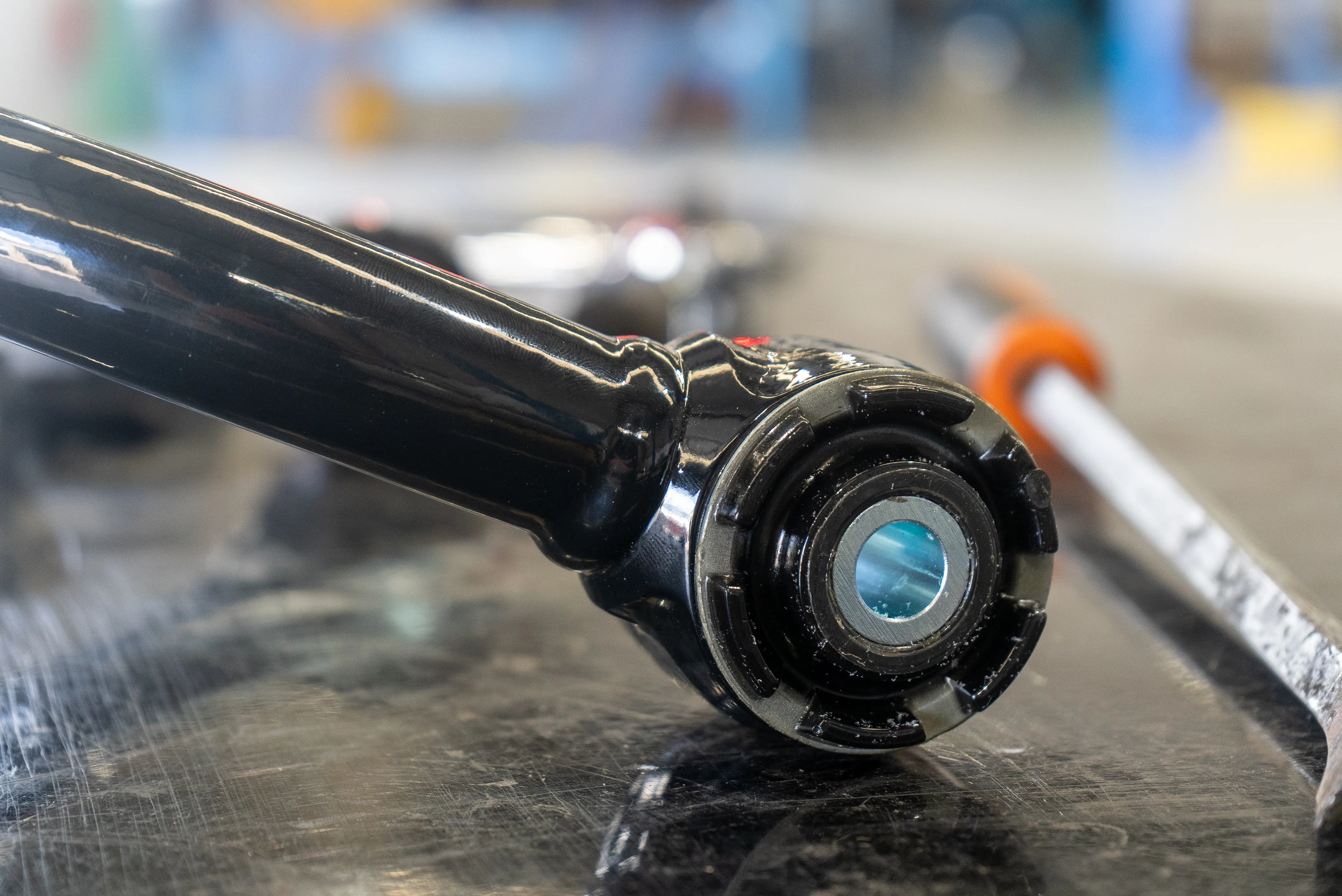

To check control arm bushings, raise and safely support the vehicle, inspect each bushing with a flashlight for cracks, tears, leaks and offset sleeves, then lever gently between the arm and its mount with a pry bar. A good bushing flexes slightly and returns, while a worn control arm bushing lets the arm shift, gap or knock.
You do not need a workshop to find out whether your control arm bushings are worn. With a jack, stands, a flashlight and a pry bar, you can check every position in under an hour and know exactly what needs replacing before you spend a cent. Here is how to tell if control arm bushings are bad, step by step, plus a clear guide to good vs bad control arm bushings, so you can order the right polyurethane control arm bushings the first time.
Tools You Need to Check Control Arm Bushings
- Floor jack and jack stands: To lift the vehicle and support it securely on the frame or subframe.
- Bright flashlight: To see cracks, tears and leaks in shaded areas.
- Pry bar: To apply gentle force between the arm and its mount and watch for movement.
- Wheel chocks: To stop the vehicle rolling while you work.
- A helper: Useful for the brake and rock test and for spotting movement you cannot see from one angle.
Never work under a vehicle supported only by a jack. Place jack stands under solid support points before you start.
Step 1: Inspect Each Bushing Visually
Start with a close look at every bushing you can reach. Turn the steering to full lock in each direction to see the front lower control arm bushings more clearly. Look for these signs of a worn control arm bushing:
- Cracked control arm bushing: Deep cracks running into the rubber, not just fine surface crazing.
- Torn control arm bushings: Rubber that has split or separated from the inner or outer sleeve.
- Offset sleeve: The inner sleeve sitting off center in the bushing instead of in the middle.
- Bulging or missing rubber: Rubber pushed out of the arm or chunks missing completely.
- Oil or fluid residue: Signs of a leaking hydraulic bushing or oil contamination softening the rubber.
Always compare the left and right sides of the vehicle. A bushing that looks noticeably different from its partner on the other side is often the one that has failed.
How Long Do Control Arm Bushings Last?
There is no set replacement interval for control arm bushings. Their life depends on the material, the vehicle's weight, the roads you drive and the climate you live in. Factory rubber bushings slowly harden and crack with age even on a low-mileage vehicle, while potholes, heavy loads, towing and lifted suspension wear them faster.
Fluid-filled hydraulic bushings on many newer vehicles can also leak, which softens them suddenly rather than gradually. The safest approach is to inspect the bushings whenever the vehicle is on a lift for tires, brakes or an alignment, and to act on the warning signs as soon as they appear.
Stages of Control Arm Bushing Wear and What They Mean
|
Stage |
What you notice |
How urgent it is |
|
Early wear |
Fine surface cracks, occasional creak |
Monitor closely and plan the repair |
|
Moderate wear |
Clunks over bumps, light wandering, uneven tire wear starting |
Repair soon, within weeks rather than months |
|
Advanced wear |
Pulling under braking, steering vibration, deep cracks or leaks |
Repair promptly and drive gently until then |
|
Torn or broken bushing |
Arm visibly moves, metal contact, strong pull or shimmy |
Stop driving and have the vehicle towed or repaired |
What Happens if You Keep Driving on Worn Bushings?
The damage soon spreads beyond the bushing itself. As the control arm moves more, the wheel shifts out of alignment under braking and cornering, and your tires start wearing unevenly. A new set of tires can be scrubbed out quickly by a front end that will not hold its alignment.
Other suspension parts take extra strain as well. Ball joints, tie rod ends, CV axles and sway bar links all see more shock and movement when the arm is loose. A repair that started as a set of bushings can grow into a much larger bill if it is left too long.
The Safety Risk of a Torn Control Arm Bushing
A torn control arm bushing or one that has separated from its sleeve no longer locates the arm properly. Under hard braking the wheel can shift rearward, the vehicle may pull sharply, and steering response becomes unpredictable. In an emergency stop or sudden swerve, that loss of control is the real danger.
If you see the arm moving in its mount, hear metal on metal or feel a strong pull, do not keep driving normally. Have the vehicle inspected by a professional right away. Our guide on how to check control arm bushings explains how to spot a broken control arm bushing.
Why Polyurethane Ends the Guesswork
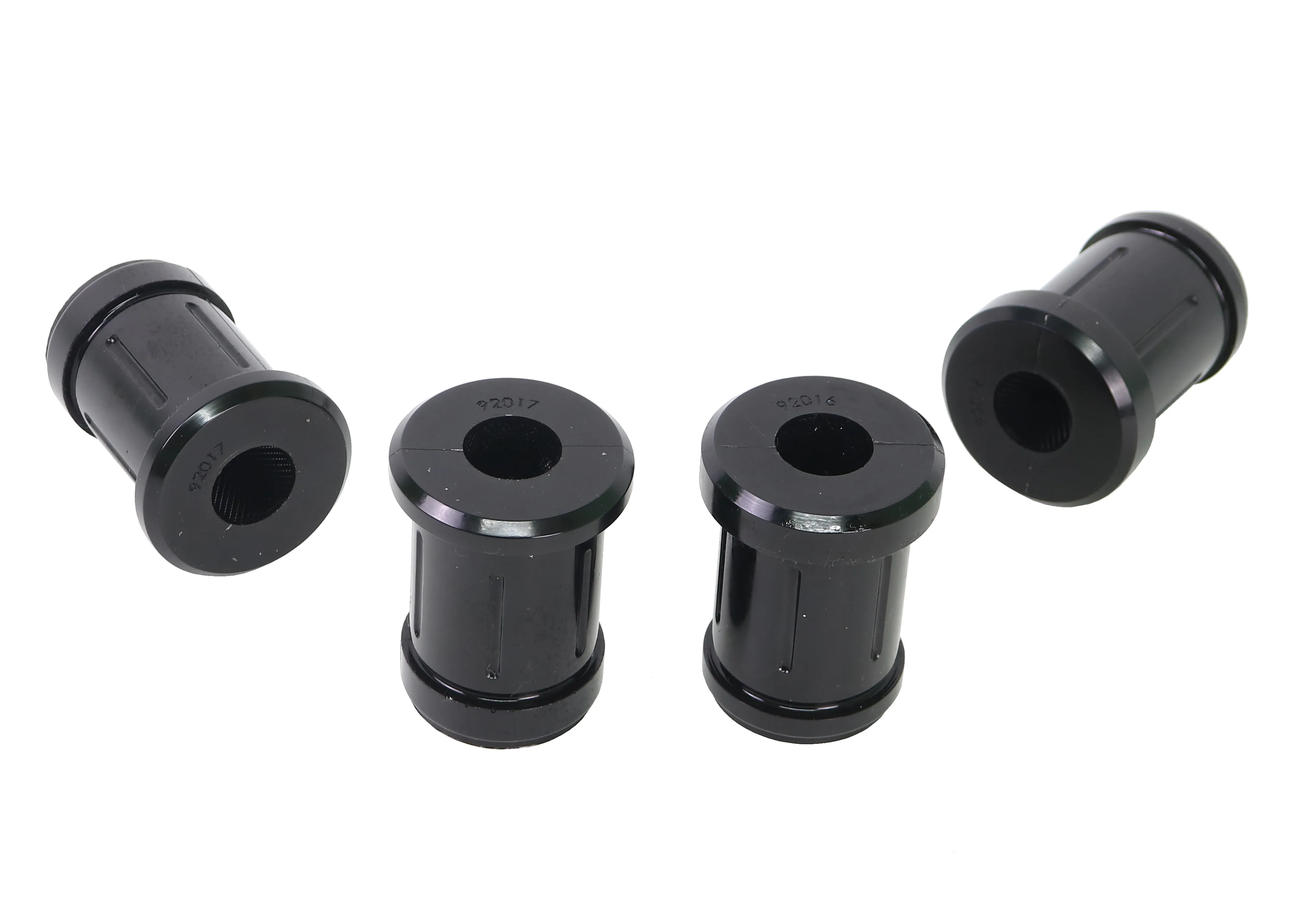
Replacing worn rubber with more rubber starts the same countdown again. Our polyurethane control arm bushings resist the oil, ozone, road salt and deflection that break rubber down, so they hold the arm firmly for far longer. That keeps your alignment steady, protects your tires and removes the worry about how long the bushings have left.
Most of these bushings are backed by our limited lifetime warranty, which says plenty about how long we expect them to last. If you are planning the repair, our guide to control arm bushing replacement cost shows what to budget, and our list of bad control arm bushing symptoms helps you confirm the problem.
FAQs
Looking for more information about control arm bushings? Below we answer the most commonly asked questions
How do you tell if control arm bushings are bad?
Are small cracks in control arm bushings normal?
Can you check control arm bushings without lifting the car?
How do you check lower control arm bushings?
What does a worn control arm bushing look like?
Should I check the ball joints at the same time?
Once you have found the worn positions, choose polyurethane control arm bushings matched to your vehicle and every suspension position.


