
 US
 Australia
 United Kingdom
 Europe
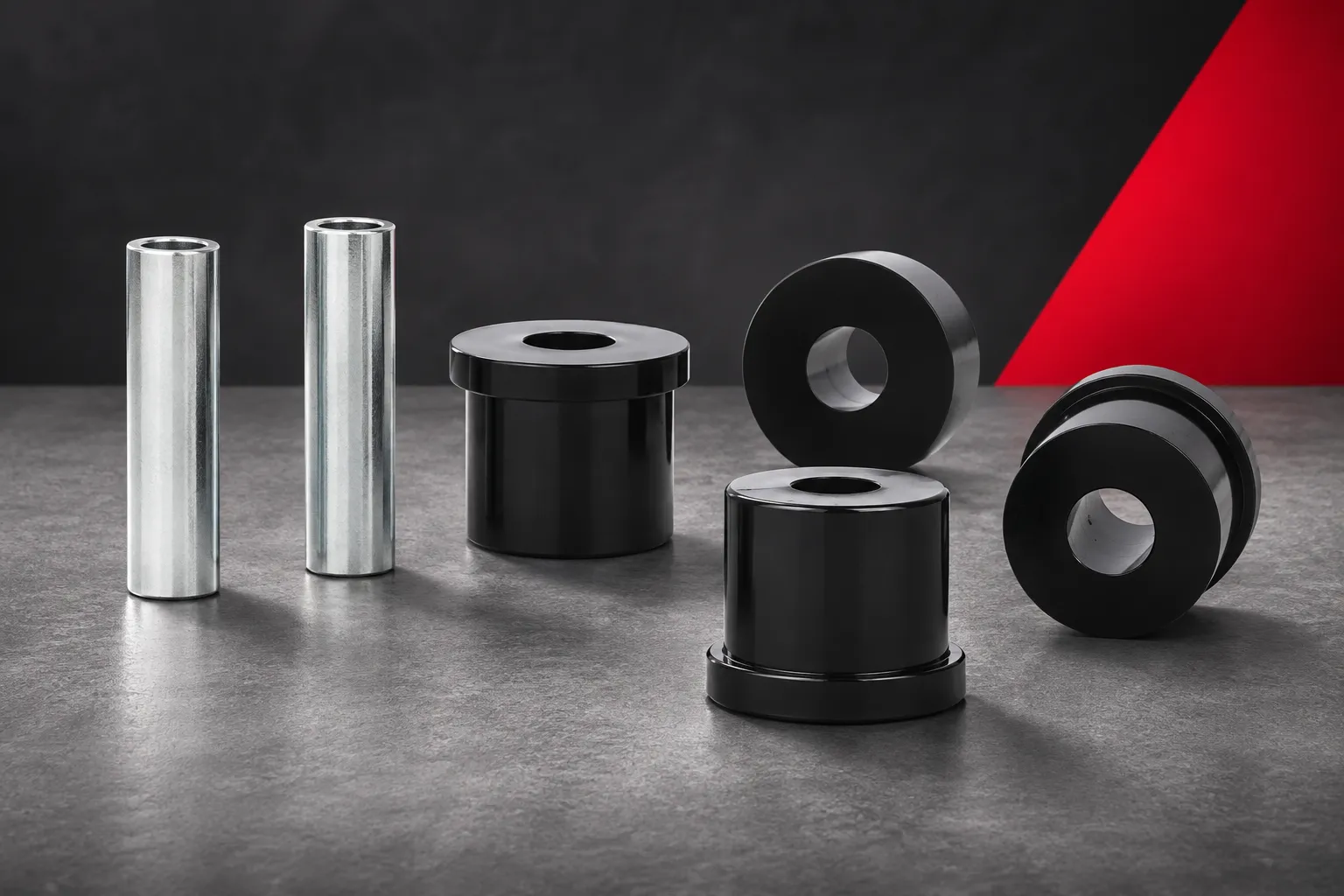

The most common bad leaf spring bushings symptoms are a clunk from the rear when accelerating, braking or crossing bumps, a rear end that feels loose or steers itself, squeaking at the spring eyes, and axle hop under load. Visual signs include cracked or extruded rubber, an off-center bolt in the spring eye and shiny wear marks on the hanger.
Leaf spring bushings hold the springs, and the axle they carry, firmly in place. When they wear out, the axle can move in ways it was never meant to, which affects how the truck accelerates, brakes and tracks down the road. Spotting worn leaf spring bushings early saves wear on tires, shackles and driveline parts. Here is what to look and listen for, and how polyurethane leaf spring bushings put things right.
Clunking From the Rear Under Load
A clunk when you accelerate from a stop, brake firmly or drive over a bump is one of the clearest signs of worn rear leaf spring bushings. The spring eye bushings locate the axle fore and aft, so when they are soft or torn, the axle shifts slightly each time the load changes direction. That movement ends with a knock you can often feel through the seat.
Towing and carrying heavy loads make the clunk more obvious, because the extra weight increases the forces on the bushings. Rear differential and driveline noises can sound similar, so check the bushings and the U-joints at the same time.
Rear Steer and a Wandering Rear End
When the bushings at one end of a spring are more worn than the other, the axle can sit slightly out of square with the frame. Under cornering or over uneven roads, it may shift sideways or steer a little on its own. You feel that as a rear end that wanders, follows ruts or feels vague on the freeway.
This symptom is easy to blame on tires or alignment, but a quick check of the spring eye bushings often reveals the real cause. A truck that tracks slightly crooked down the road is another hint that the axle is not sitting where it should.
Axle Wrap and Wheel Hop
Under hard acceleration, a leaf spring can twist into an S shape as the axle tries to rotate. That is called axle wrap, and worn bushings let it happen more easily. The result is shudder or wheel hop when pulling away hard or towing up a slope, which can stress U-joints and other driveline parts. Firm leaf spring eye bushings help the spring resist that twisting.
Squeaks at the Spring Eyes
Hardened rubber bushings squeak as the spring pivots. A squeak on its own may simply mean dry rubber, but combined with clunks or wander it points to real wear. Our guide to squeaky leaf springs explains how to pinpoint the source.
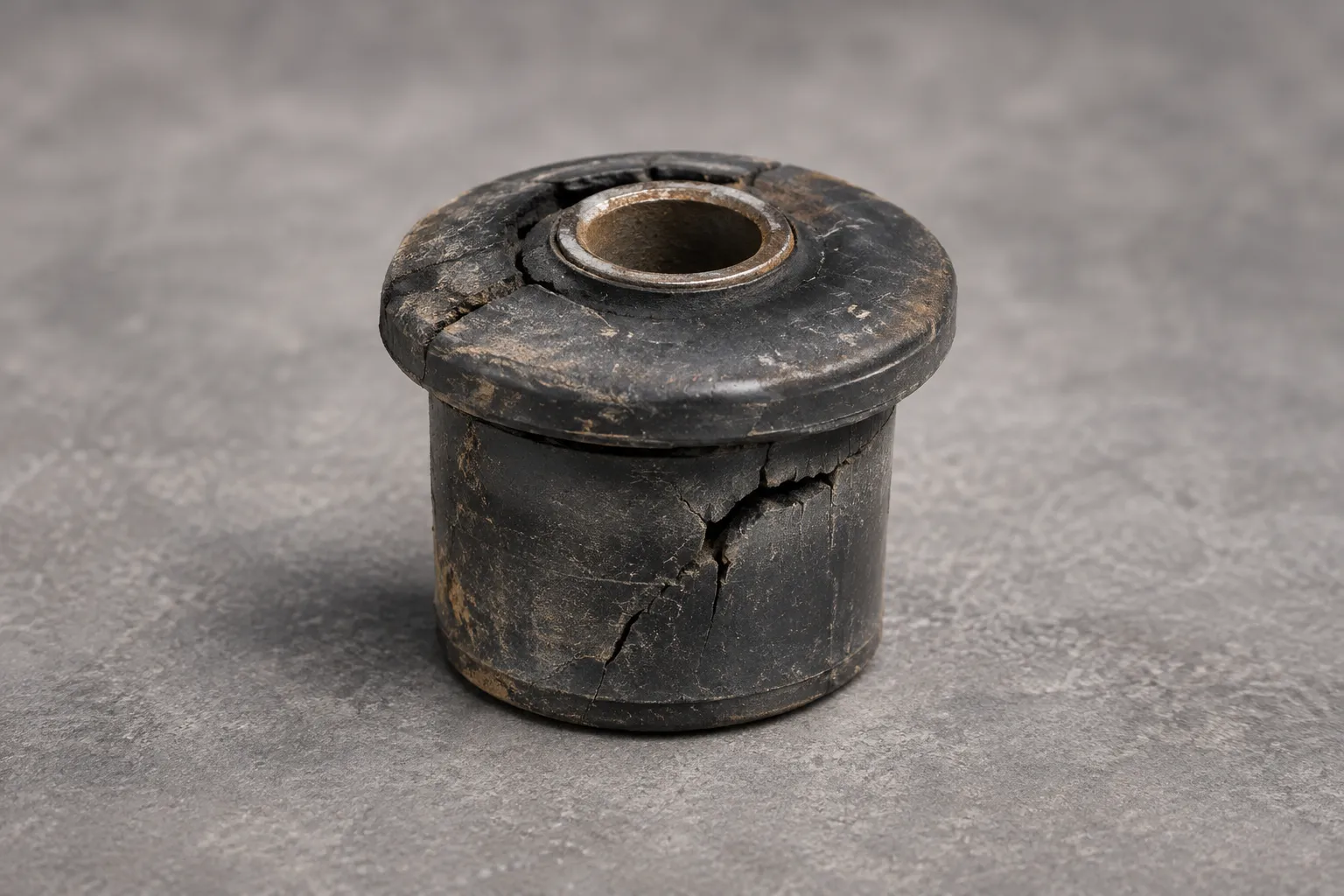
Visual Signs of Worn Leaf Spring Bushings
With the vehicle safely supported, inspect each spring eye and the shackle with a flashlight. Look carefully for any of these warning signs:
- Cracked or split rubber: Deep cracks running right through the bushing material.
- Extruded rubber: Rubber squeezed out past the edges of the spring eye.
- Off-center bolt: The bolt or sleeve sitting toward one side of the eye instead of in the middle.
- Metal to metal contact: Shiny wear marks on the hanger, shackle or spring eye.
- Rust tracks: Orange streaks that show the parts are moving against each other.
A pry bar placed between the spring eye and hanger is a good final check. A healthy bushing gives slightly, while a worn one lets the eye move freely.
Leaf Spring Bushing Symptoms at a Glance
|
Symptom |
When it happens |
Likely cause |
|
Rear clunk |
Accelerating, braking or crossing bumps |
Worn spring eye bushings letting the axle shift |
|
Wandering rear end |
On the freeway or over ruts |
Uneven wear between front and rear eyes |
|
Shudder or wheel hop |
Hard acceleration or towing |
Axle wrap made worse by soft bushings |
|
Squeaking |
Over bumps and driveways |
Dry or hardened rubber bushings |
|
Shiny metal or rust tracks |
During inspection |
Parts moving against each other |
Fixing Worn Leaf Spring Bushings
Replacing worn rubber with polyurethane stops the movement and keeps it stopped. Our polyurethane spring eye bushings resist cracking, compression and road salt, so the axle stays firmly located for far longer. We offer front and rear spring eye kits, combined spring eye and shackle kits and greaseable main spring eye kits in vehicle-specific and dimensionally specified sizes.
If the clunks come from the shackle end, our range of leaf spring shackle bushings covers that too. When you are ready to do the job, our guide on how to replace leaf spring bushings walks through the process.
FAQs
Looking for more information about leaf spring bushings? Below we answer the most commonly asked questions
What are the symptoms of bad leaf spring bushings?
Can bad leaf spring bushings cause a clunk?
Can worn leaf spring bushings affect steering?
Is it safe to drive with bad leaf spring bushings?
Should I replace front and rear leaf spring bushings together?
Do polyurethane leaf spring bushings help with axle wrap?
Keep your axle square and your truck tracking true. Shop polyurethane leaf spring bushings matched to your truck's model or to your measured spring eye size.


