
 US
 Australia
 United Kingdom
 Europe
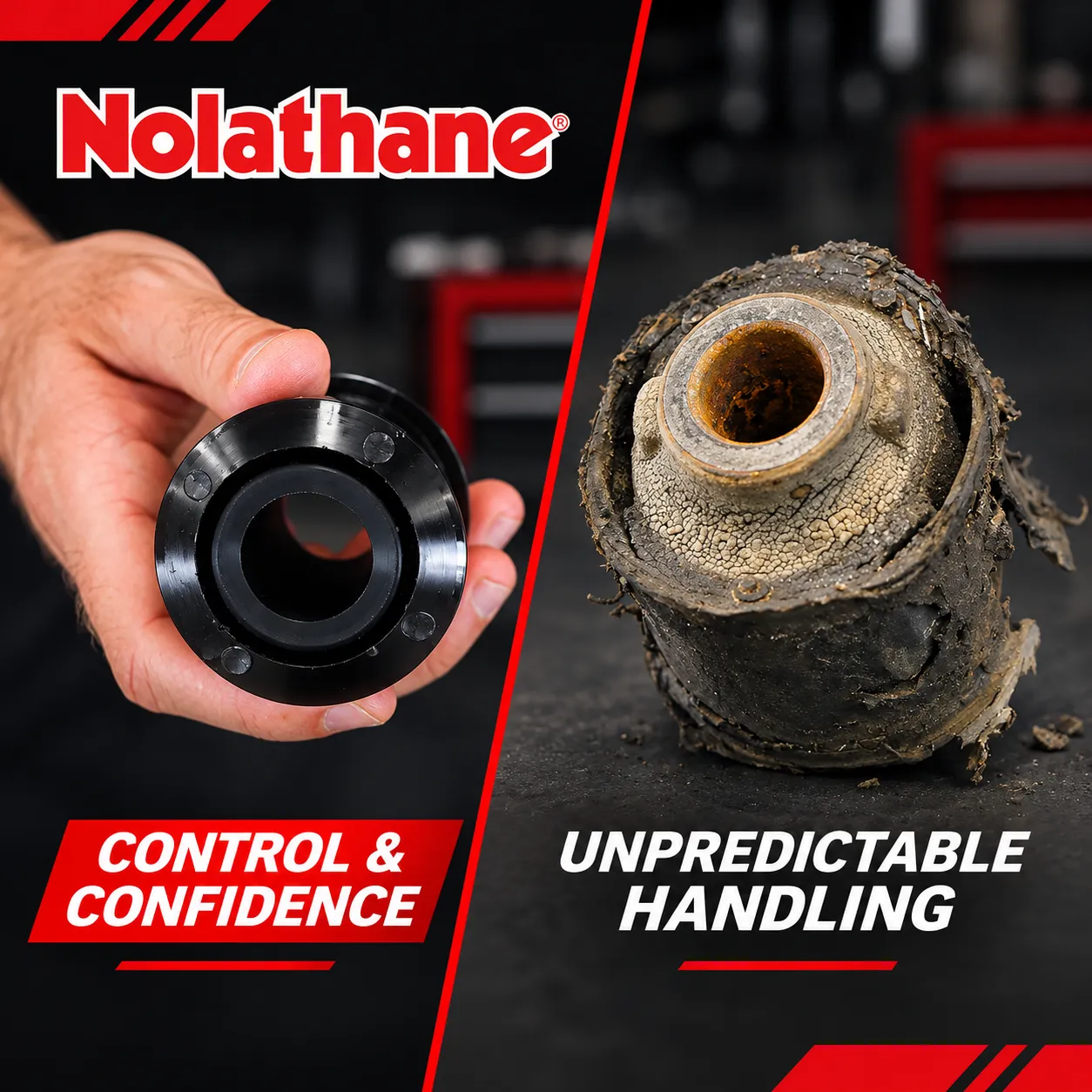

In the polyurethane vs rubber leaf spring bushings comparison, polyurethane lasts longer and locates the axle more firmly. It resists the cracking, compression and road salt damage that wear out rubber leaf spring bushings, which reduces clunks, rear steer and axle wrap under load. Correctly greased polyurethane stays quiet, and greaseable designs make maintenance easy.
When a leaf spring bushing at the eyes or the shackles wears out, the replacement material decides how long the fix lasts and how the truck behaves with a load on. Rubber is what most trucks leave the factory with, and polyurethane is the most popular upgrade. Here is how they compare on durability, towing, comfort and noise, and why we make our leaf spring bushings from polyurethane.
How Rubber Leaf Spring Bushings Behave Over Time
Rubber leaf spring bushings are soft and quiet when new, which suits a factory focus on comfort. Rubber is bonded to the inner sleeve and outer shell, so the bushing twists as the spring pivots rather than rotating on a surface. That works well while the rubber is fresh.
Leaf spring rubber bushings live in a harsh spot, though. Mud, water, road salt and oil attack the rubber, while the weight of the truck and every load it carries squeezes it constantly. Over time the rubber hardens, cracks, extrudes out of the spring eye and tears from its sleeve. The axle starts to shift under braking and acceleration, and squeaks and clunks follow.
How Polyurethane Leaf Spring Bushings Perform
Polyurethane is tougher and far more resistant to compression set, so it keeps its shape and holds the spring eye firmly for much longer. That firmer location keeps the axle square under the truck, which reduces rear steer and helps the spring resist twisting into axle wrap when you accelerate hard or tow up a hill.
Polyurethane also shrugs off the mud, water, road salt and oil that destroy rubber. Instead of twisting a bonded rubber cushion, our polyurethane bushings pivot on a steel sleeve with the grease specified in our installation guide, which keeps the movement smooth and quiet. For trucks that work hard, our greaseable main spring eye kits let you add fresh grease during routine servicing.
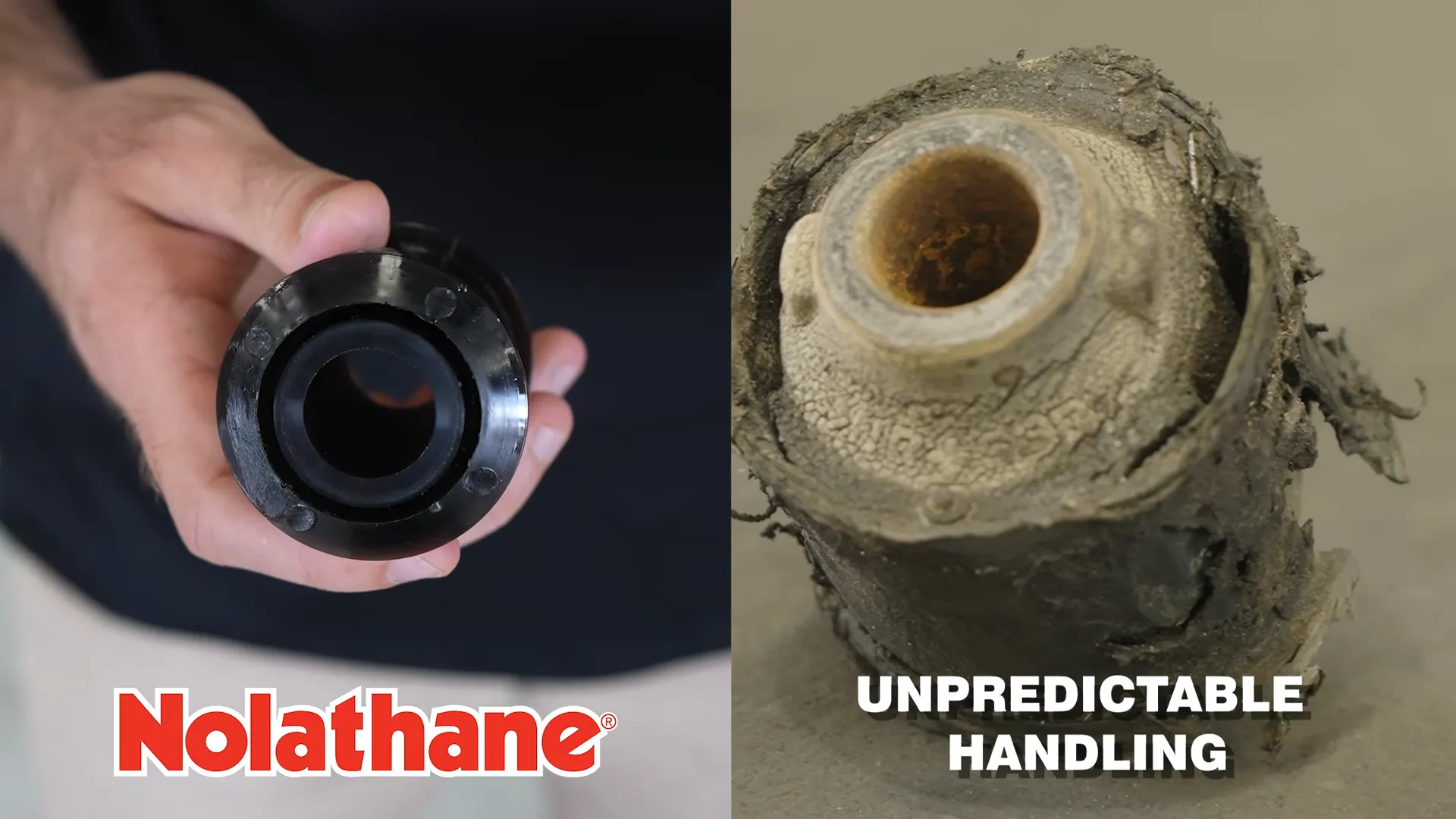
Polyurethane vs Rubber Leaf Spring Bushings Compared
|
What matters |
Rubber leaf spring bushings |
Nolathane polyurethane leaf spring bushings |
|
Axle location under load |
Softens as rubber wears |
Firm and consistent |
|
Resistance to rear steer and axle wrap |
Decreases with age |
Strong |
|
Resistance to mud, water and road salt |
Poor |
Excellent |
|
Resistance to compression set |
Poor, extrudes from the eye |
Holds its shape |
|
Noise over time |
Squeaks as it hardens |
Quiet with correct lubrication, greaseable options available |
|
Towing and payload |
Shifts under heavy loads |
Holds the axle steady |
|
Warranty |
Varies by supplier |
3 years to limited lifetime, depending on product |
Does Polyurethane Make the Ride Harsher?
Most owners notice a firmer, more planted rear end rather than a harsher ride. Leaf spring bushings control location more than they absorb bumps, since the springs and shocks do most of the cushioning. With fresh polyurethane, the axle simply stops moving around, so the truck feels tighter and more predictable, especially with a load in the bed or a trailer behind.
Who Should Choose Polyurethane Leaf Spring Bushings?
- Towing and payload trucks: Firm axle location improves stability under heavy loads.
- Off-road 4x4s: Resistance to mud, water and salt suits trail use.
- Work trucks and fleets: A longer service life means less downtime for the vehicle.
- Classic trucks and restorations: A durable fix where original rubber has perished.
- Trucks with axle wrap: Firmer bushings help the spring resist twisting under power.
Our range covers front and rear spring eye kits, combined spring eye and shackle kits, greaseable main spring eye kits and dimensionally specified kits for less common sizes. If you are matching an unusual spring, see our guide to leaf spring bushings by size. For the shackle end, explore our leaf spring shackle bushings.
FAQs
Looking for more information? Below we answer the most commonly asked questions
Are polyurethane leaf spring bushings better than rubber?
Do polyurethane leaf spring bushings squeak?
Do polyurethane leaf spring bushings ride rougher?
Do polyurethane bushings help with axle wrap?
How long do rubber leaf spring bushings last?
Can I mix rubber and polyurethane leaf spring bushings?
Give your truck a rear end that stays firm under load. Find polyurethane leaf spring bushings for your vehicle, by model or by size.


