
 US
 Australia
 United Kingdom
 Europe
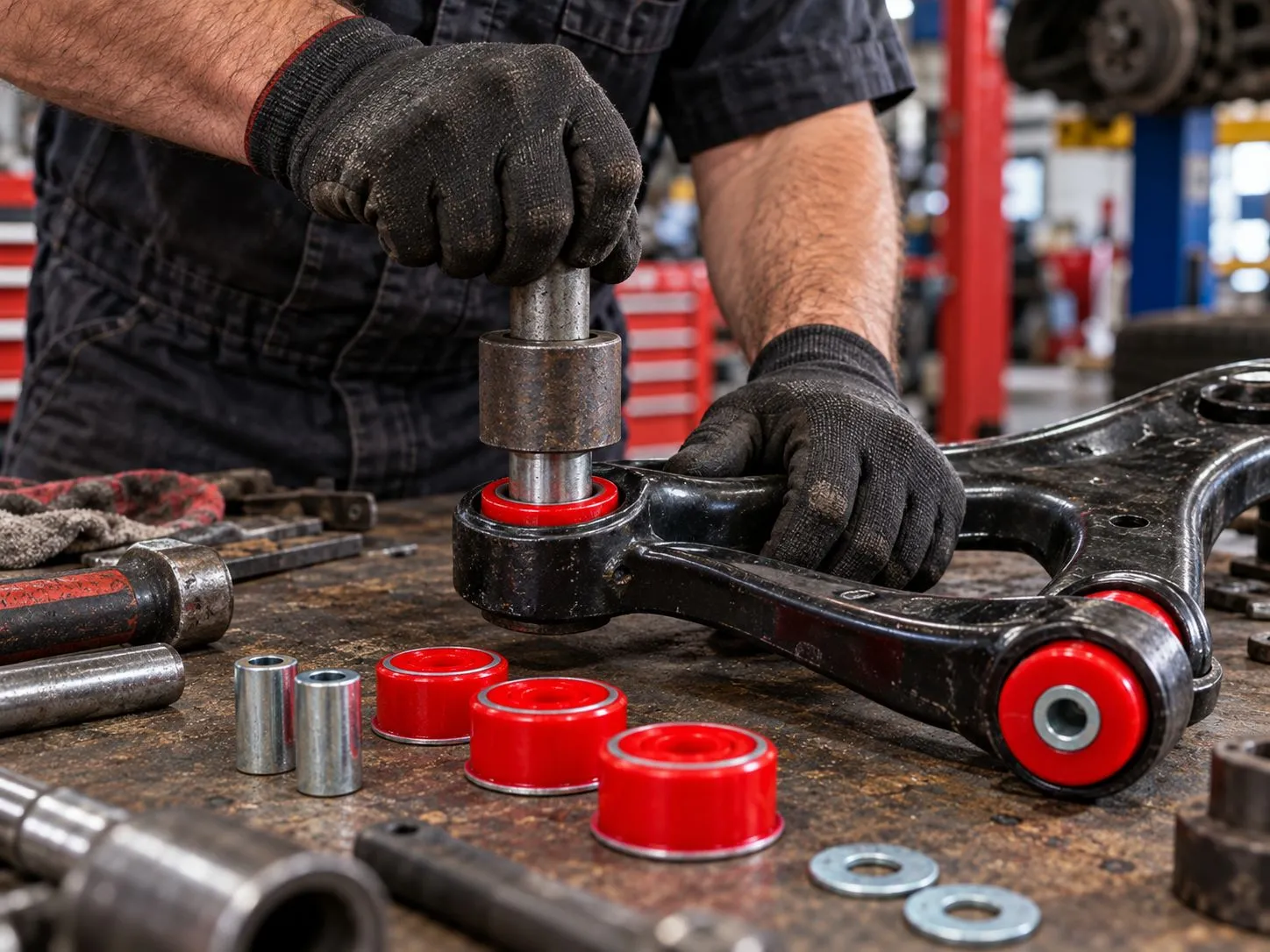

In the solid body mounts vs polyurethane debate, polyurethane suits most street and trail trucks best. It holds the body firmly, resists cracking and compression set, and still isolates road noise. Solid mounts pass every vibration into the cab and suit dedicated race or rock rigs, while rubber body mounts are quiet but wear out fastest.
When your factory body mounts or cab mounts are done, from the radiator support to the rear cab mount, you have three materials to choose from: rubber, polyurethane or solid metal. Each one changes how the cab feels, how much noise reaches you and how long the mounts last. We engineer our body mount bushings in polyurethane for a reason, and below we explain exactly why it is the right fit for most trucks, SUVs and 4x4s.
Why the Body Mount Material Matters So Much
Body mounts carry the full weight of the cab and bed while the frame twists and flexes underneath. The material at each position decides how much movement is allowed, how much vibration gets through and how well the mount survives heat, oil and road salt. Get the balance wrong and you either rattle your fillings loose or end up replacing the mounts again in a few years.
The ideal mount locates the body firmly, absorbs high-frequency vibration, allows a small amount of controlled flex and keeps doing all three for years. That is the benchmark we use to judge each material.
Rubber Body Mounts: Quiet When New, Short-Lived
Rubber is what most trucks wear from the factory. It is soft, cheap to produce and very good at soaking up vibration when it is fresh. The trouble is how quickly that rubber degrades in service. Heat, ozone, oil and road salt harden the rubber until it cracks, and constant load squashes it flat in a process called compression set.
Once that happens, the bolts lose clamping force and the body starts to move on the frame. You get clunks, squeaks, rising cabin noise and panel gaps drifting out of line. Replacing rubber body mounts with more rubber resets the clock, but the same decline starts again from day one.
Solid Body Mounts: Maximum Rigidity, Maximum Noise
Solid body mounts are machined from aluminum or steel and bolt the body almost directly to the frame. They never compress and they never wear, which is why some dedicated race trucks and competition rock crawlers use them. Every bit of movement between the body and frame is eliminated.
The trade-off is severe for a vehicle you drive every day. Solid mounts transmit engine vibration, driveline hum, tire noise and every road impact straight into the cab. Without any cushion, the frame's flex is forced into the body structure itself, which can stress cab corners, floor pans and sheet metal over time. For a street-driven truck or an overland rig, that is a lot of comfort and long-term durability to give up.
Polyurethane Body Mounts: The Practical Middle Ground
Polyurethane gives you the firm body location of a solid mount with much of the isolation of rubber. It is far more resistant to compression set, so it keeps its height and clamping force for years instead of slowly sagging. It also shrugs off the oil, ozone and road salt that break rubber down.
Our high-strength polyurethane formulations are engineered for the compressive loads body mounts see in everyday, loaded and off-road use. The cab sits tight and square on the frame, door and hood gaps stay put, and road noise stays under control. A little more road feel than brand-new rubber is normal, but most owners find the cab feels more solid rather than harsher. It is the definition of our tagline: softer, stronger, smarter.
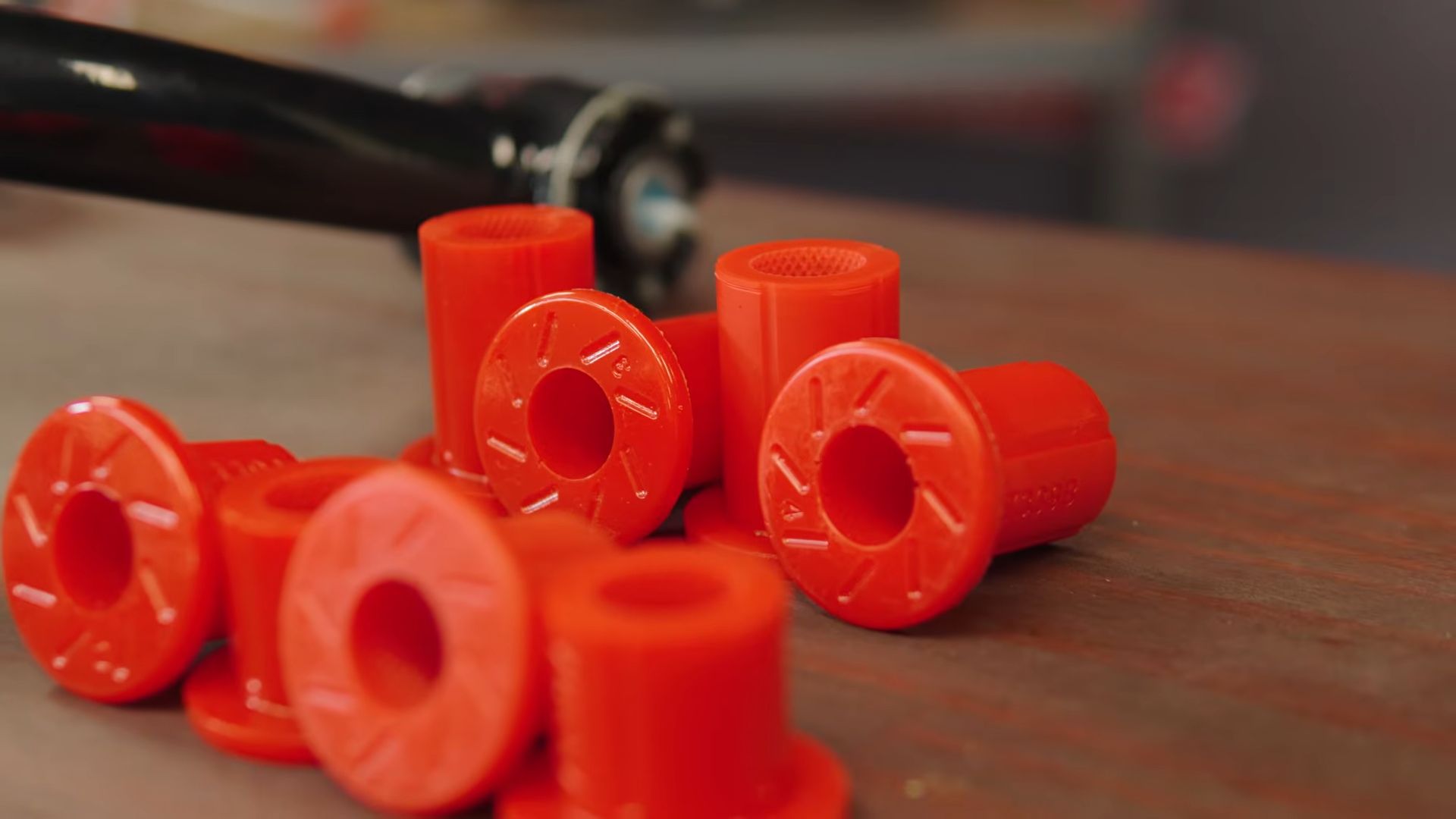
Body Mount Materials Compared Side by Side
|
What matters |
Rubber body mounts |
Nolathane polyurethane |
Solid aluminum or steel |
|
Body location on the frame |
Good when new, loosens with wear |
Firm and consistent |
Rigid, no movement |
|
Noise and vibration isolation |
High when new, fades with age |
Good and consistent |
Very low |
|
Resistance to compression set |
Poor |
Excellent |
Not applicable |
|
Resistance to oil, salt and ozone |
Poor |
Excellent |
Corrodes if unprotected |
|
Stress on cab and floor structure |
Low |
Low |
High |
|
Best suited to |
Stock trucks on a budget |
Daily drivers, work trucks, towing and trail rigs |
Dedicated race and competition vehicles |
|
Our warranty |
Not applicable |
Limited lifetime warranty |
Not applicable |
For most owners the table makes the decision simple. Polyurethane is the material that fixes the original problem without creating new ones.
What About Universal Body Mounts for Custom Builds?
Restomods, frame swaps and custom builds often need universal body mounts rather than vehicle-specific kits. We offer a universal square-profile polyurethane body mount bushing in a dimensionally specified size, so builders can fabricate brackets around a known, durable bushing. The same material benefits apply, so the body stays located without the harshness of solid mounts.
Not sure what your current mounts are made of, or how worn they are? Our explainer on what body mounts on a truck do covers the basics, and our guide to body mounts and body lifts explains what changes when you raise the body.
FAQs
Looking for more information about polyurethane vs rubber body mounts? Below we answer the most commonly asked questions
Are polyurethane body mounts better than rubber?
Do polyurethane body mounts make the ride harsher?
Are solid body mounts safe for a daily driver?
Why do rubber body mounts wear out?
Do polyurethane body mounts squeak?
How long do polyurethane body mounts last?
If you want a cab that stays tight without rattling your teeth loose, polyurethane is the answer. Browse our full range of body mount bushings to find the matched set for your truck.


