
 US
 Australia
 United Kingdom
 Europe
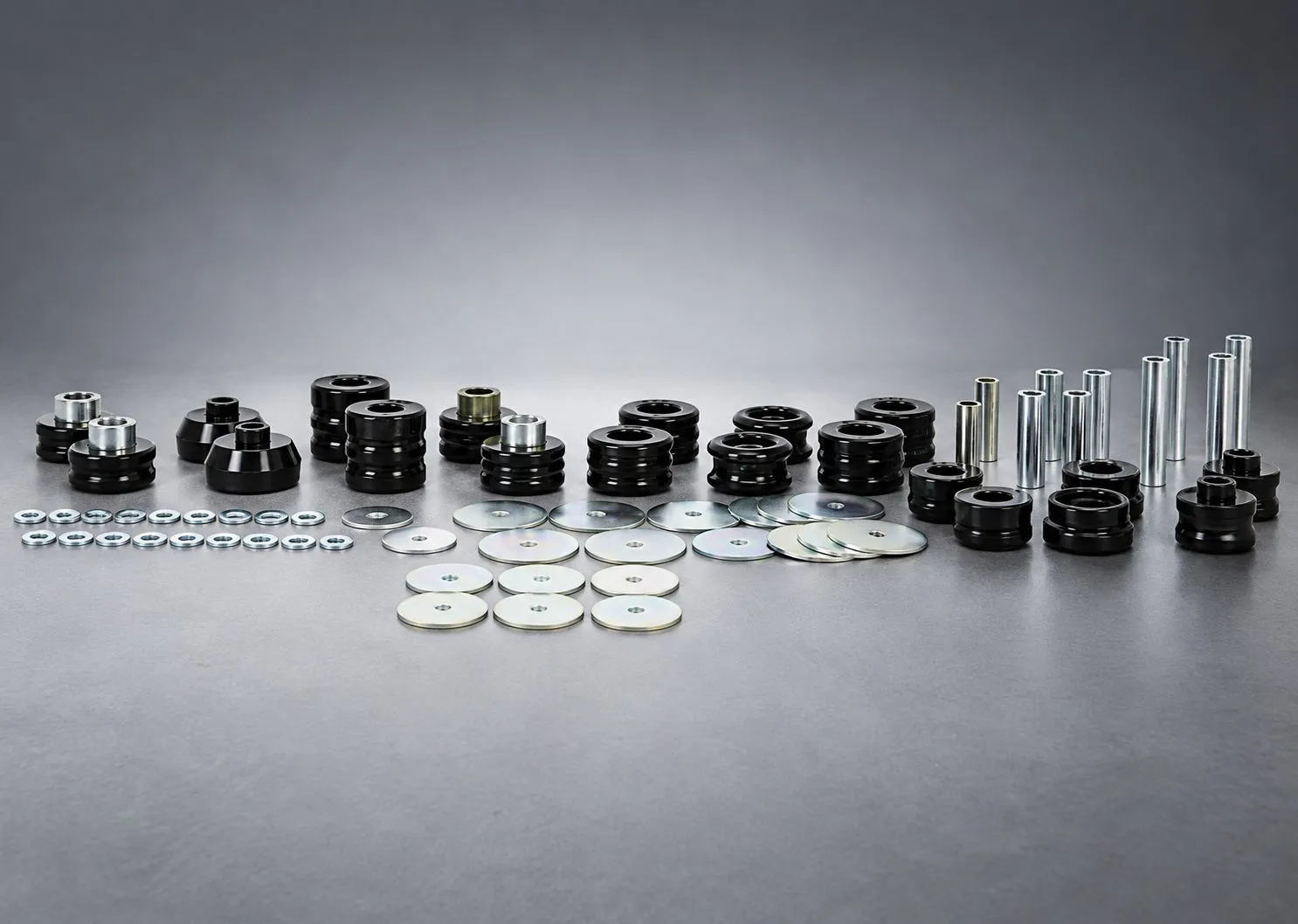

Jeep TJ body mounts and YJ body mounts hold the Wrangler's body tub to its frame through rubber bushings at each mount position. After decades of trail flex, mud and road salt, that rubber cracks and compresses, the bolts rust and the tub starts to clunk. Polyurethane replacement bushings restore a tight, quiet tub that holds up to off-road use.
The Wrangler YJ and TJ are two of the most modified 4x4s ever built, and plenty of them are still working hard on trails and back roads. Most have never had their body mounts touched. If your Jeep knocks from under the tub, squeaks over every rut or has doors that no longer close cleanly, worn body mounts are a likely cause. We make polyurethane body mount bushings for Wrangler TJ and YJ models, and below we cover what to look for and how to fix it properly.
How Jeep Wrangler Body Mounts Work
Like any body-on-frame 4x4, the Wrangler's body tub sits on a series of mounts along the frame rails. Each position stacks a lower and upper bushing around a steel bracket, clamped by a bolt that threads into a nut or retainer in the tub. The bushings locate the tub, soak up vibration and let the frame twist underneath when one wheel climbs a rock.
Jeep owners ask more of these mounts than most drivers ever will. Articulation twists the frame constantly, mud and water sit against the brackets, and many Wranglers carry body lifts that add leverage to every position. The result is that Jeep Wrangler body mounts often wear out faster than those on a road-only pickup.
Common Problems With Jeep TJ Body Mounts
Rust is the headline issue on the TJ. Body mount brackets on the frame and the nuts or retainers in the tub corrode, especially on Jeeps from salt-belt states. A bolt that snaps or a retainer that spins can turn a simple bushing swap into a longer repair, so inspect carefully before you start.
Typical signs of worn mounts on a TJ include the following:
- A clunk from under the tub: Most noticeable over driveway lips, washboard roads and when braking.
- Squeaks during articulation: Dry, hardened rubber rubs as the frame flexes on uneven ground.
- Door and hardtop fit changes: Doors that need slamming or a top that no longer seals evenly.
- Visible gaps at the mounts: Daylight between the tub and bracket where the rubber has compressed.
Our full guide to bad body mount symptoms explains how to separate body mount noise from other suspension clunks.
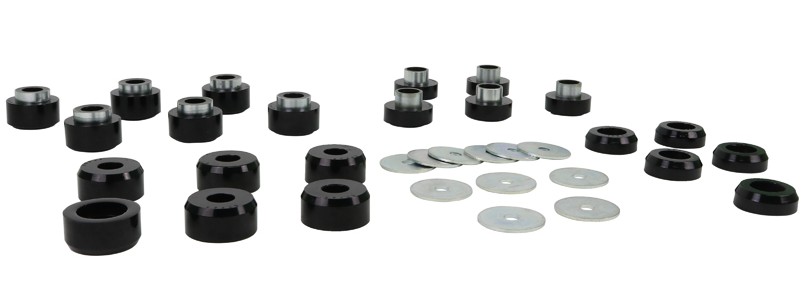
Body Mount - Bushing Kit to Suit Jeep Wrangler TJ
Jeep YJ Body Mounts: What to Watch For
The YJ is older, so the rubber in its body mounts has usually aged even further. Expect hardened, cracked or flattened bushings at most positions and plenty of surface rust on the hardware. Many YJs have also had body lifts fitted over the years, often on top of the original rubber, which multiplies the movement once those bushings fail.
If a previous owner fitted a body lift, check the condition of every spacer stack and the length of the bolts. Our guide to body lifts and body mounts covers what to look for. Renewing the bushings is the best way to bring an older lifted YJ back to a tight, quiet feel.
There are downsides worth weighing before any cutting starts. The modification is permanent, it needs quality welding, and some owners are uneasy about altering a factory support point. With very large tires the firewall itself can still rub, which may need additional bodywork. Bolts on relocated mounts should be rechecked after the first week or two of driving.
Rubber vs Polyurethane for Wrangler Body Mounts
|
What matters on a Wrangler |
Factory rubber |
Nolathane polyurethane |
|
Holding the tub firmly through articulation |
Weakens as rubber compresses |
Stays firm and consistent |
|
Resistance to mud, water and road salt |
Hardens and cracks |
Highly resistant |
|
Behavior under a body lift |
Extra leverage speeds wear |
Holds height under load |
|
Noise from trail use |
Squeaks as it dries out |
Quiet when correctly installed |
|
Warranty |
Varies by supplier |
Limited lifetime warranty |
Polyurethane is the natural fit for a Jeep that sees real off-road use, because it keeps the tub located through constant flex without the harshness of solid mounts. For a deeper comparison, read our breakdown of solid vs polyurethane body mounts.
Jeep Wrangler Body Mount FAQs
Looking for more information about Jeep Wrangler body mounts? Below we answer the most commonly asked questions
How do I know if my Jeep TJ body mounts are bad?
Do Jeep YJ and TJ body mounts interchange?
Can I replace Jeep Wrangler body mounts without removing the tub?
Are polyurethane body mounts good for off-road Jeeps?
Should I replace body mounts when fitting a body lift to my Jeep?
What causes Jeep TJ body mount rust?
Give your Wrangler a tub that stays tight on and off the trail. Find polyurethane body mount bushings for your TJ or YJ, and our support team can confirm the right kit for your Jeep.


