
 US
 Australia
 United Kingdom
 Europe
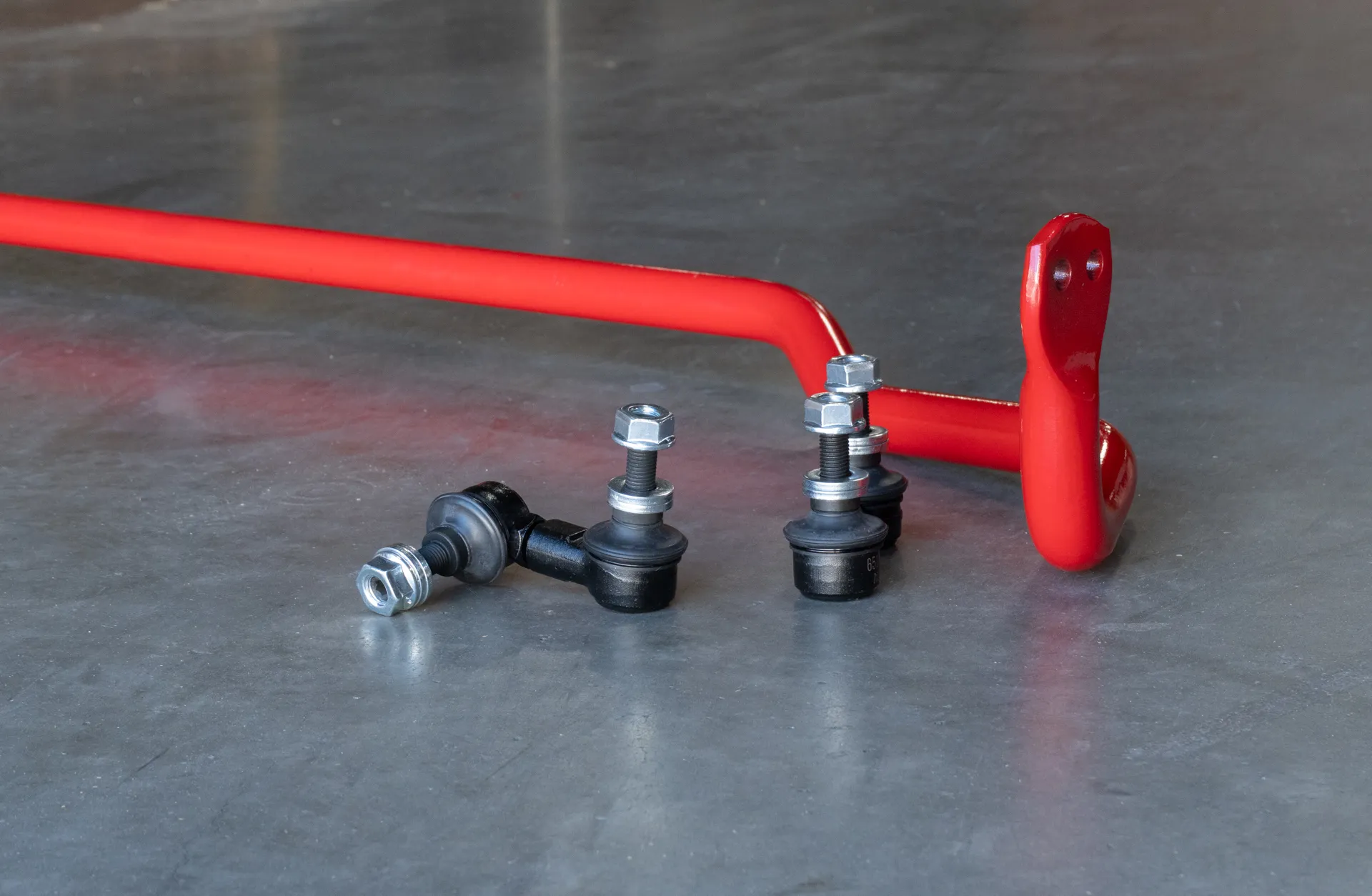

There is no difference between a sway bar and a stabilizer bar. Sway bar, stabilizer bar and anti sway bar are three names for the same part: a steel torsion bar linking both sides of the suspension to reduce lean. A strut bar is a different part that braces the strut towers and does not control vehicle sway.
Search for suspension parts and you will see sway bars, stabilizer bars, anti sway bars, strut bars and track bars, often used loosely and sometimes interchangeably. That makes it easy to order the wrong thing. Here is a clear guide to what each name means, how the parts differ and where our sway bars and sway bar kits fit in.
Sway Bar vs Stabilizer Bar: Same Part, Different Names
What Does a Stabilizer Bar Actually Do?
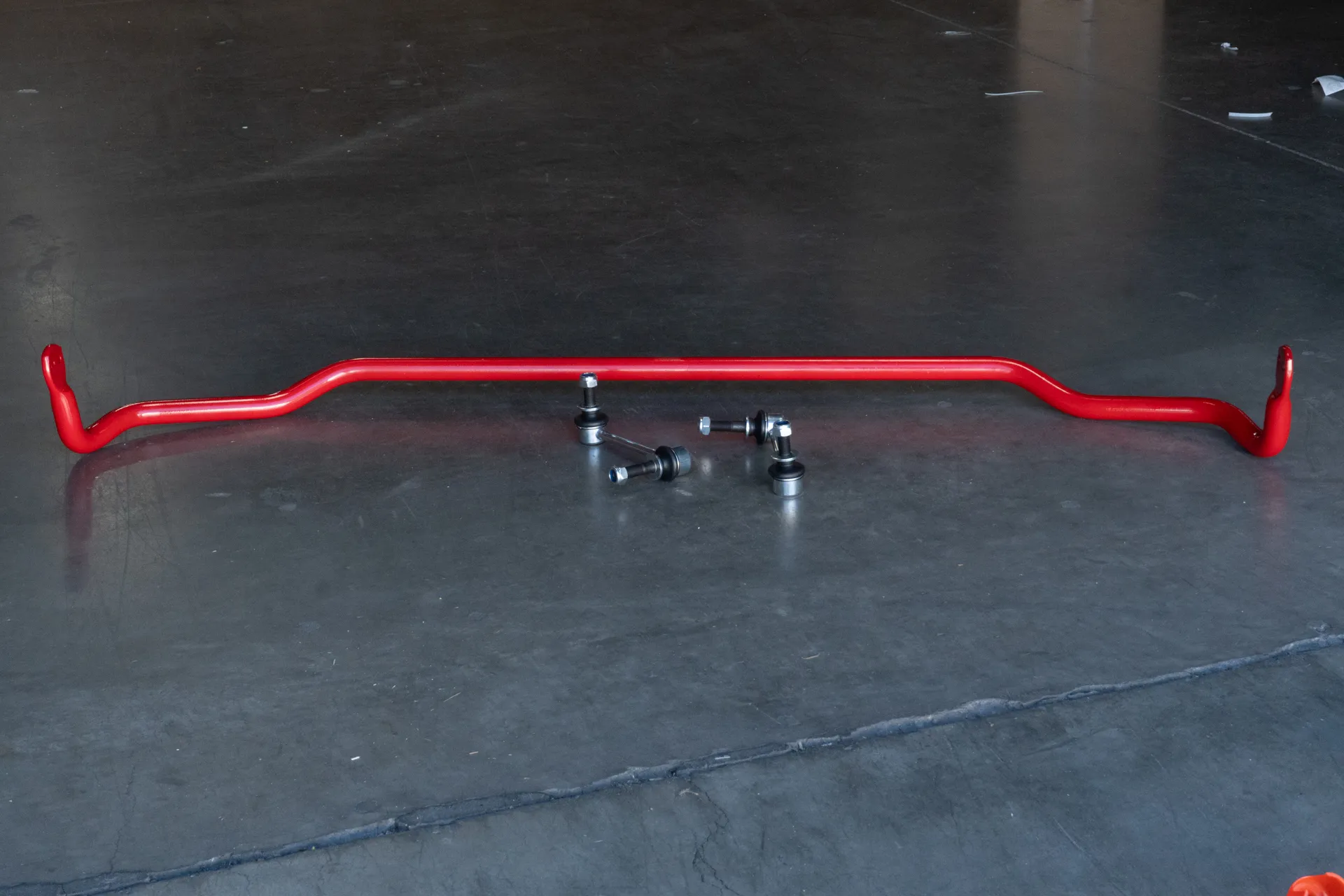
A suspension stabilizer bar is a U-shaped spring steel bar mounted across the vehicle. Its center section is held to the frame by two mount bushings, and each end connects to the suspension through an end link. When the vehicle leans in a corner, one side of the suspension compresses while the other extends, which twists the bar.
The bar resists that twist and transfers force across the vehicle, holding the body flatter and keeping the tires better planted. You get less vehicle sway, quicker steering response and more cornering traction. Our explainer on what a sway bar does covers the mechanics in more depth.
Strut Bar vs Sway Bar: Completely Different Jobs
The strut bar is where most of the confusion starts. A strut bar, also called a strut tower brace, is a rigid bar that bolts across the top of the two front strut towers in the engine bay. It reduces flex in the body shell between the towers, which helps keep suspension geometry consistent under hard cornering.
A strut bar does not connect to the suspension arms and does not twist, so it cannot control lean the way a sway bar does. The two parts complement each other on performance cars, but they solve different problems. If your vehicle leans too much in corners, the sway bar system is where to look.
Other Bars That Get Mixed Up With Sway Bars
|
Part name |
What it connects |
What it controls |
|
Sway bar, stabilizer bar or anti sway bar |
Left and right suspension, through end links |
Lean and vehicle sway in corners |
|
Strut bar or strut tower brace |
Left and right strut towers |
Body shell flex between the towers |
|
Track bar or Panhard bar |
Solid axle to the frame |
Side to side axle movement |
|
Trailer sway bar |
Trailer to the tow vehicle hitch |
Trailer sway behind the vehicle |
Track bars are common on solid-axle trucks and Jeeps, and they keep the axle centered under the vehicle. Trailer sway bars are towing accessories that mount to the hitch, so despite the name they have nothing to do with your suspension.
Choosing the Right Sway Bar Parts for Your Vehicle
Whatever name your manual uses, the parts that wear are almost always the bushings and end links. Rubber bushings harden, crack and stop clamping the bar firmly, which causes clunks, squeaks and extra lean. Our polyurethane sway bar bushings resist oil, road salt and ozone, keep the bar firmly located and carry a limited lifetime warranty.
We offer mount bushings in a wide range of bar diameters, combined mount and end link kits, brackets, end links and complete front and rear sway bar kits, including adjustable options. If you are deciding between upgrading the front or rear, read our guide to front vs rear sway bars.
FAQs
Looking for more information? Below we answer the most commonly asked questions.
Is a stabilizer bar the same as a sway bar?
What is an anti sway bar?
Is a strut bar the same as a sway bar?
Are stabilizer bar links the same as sway bar links?
What is a car stabilizer bar made of?
Is a trailer sway bar the same as a suspension sway bar?
Whatever you call it, we have the parts to keep it working. Browse our sway bars and sway bar kits to find bushings, links and bars for your vehicle.


