
 US
 Australia
 United Kingdom
 Europe


In the front vs rear sway bar question, the front bar controls lean at the nose and adds understeer as it gets stiffer, while the rear sway bar controls lean at the tail and helps the vehicle turn in. Balancing the two sets the overall handling, and front-wheel drive cars usually gain most from a rear upgrade first.
Most vehicles have a front sway bar, and many have a rear sway bar as well. Each one affects handling in a different way, and changing either one shifts the balance of the whole vehicle. Understanding the difference helps you choose the right upgrade, whether you drive a front-wheel drive commuter, a muscle car or a loaded pickup. We offer front, rear and matched front and rear sway bars and sway bar kits, so here is how to decide where to start.
What Does a Front Sway Bar Do?
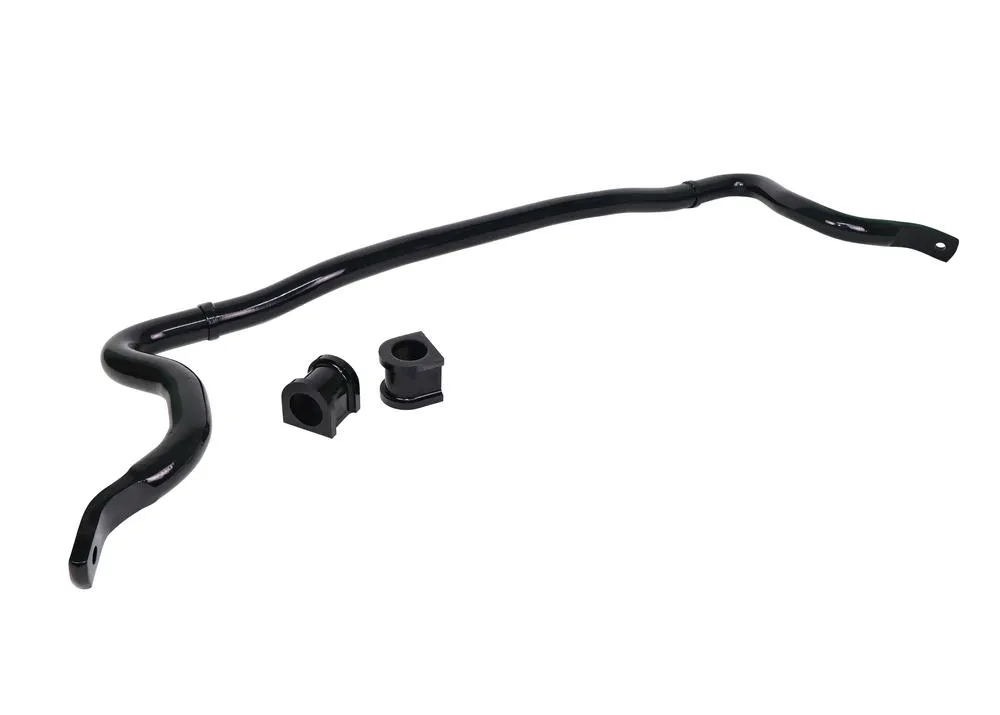
The front sway bar, or front stabilizer bar, links the two front wheels and resists lean at the front of the vehicle. A stiffer front bar keeps the nose flatter and makes steering feel more immediate. Because it transfers more load across the front axle in a corner, it also makes the front tires work harder, which pushes the vehicle toward understeer.
Understeer means the front tires reach their limit first, so the vehicle runs wide instead of following the steering. Most factory setups lean toward mild understeer because it feels safe and predictable for everyday drivers. That is why many vehicles leave the factory with a fairly stout front bar and a lighter rear bar, or none at all.
What Does a Rear Sway Bar Do?
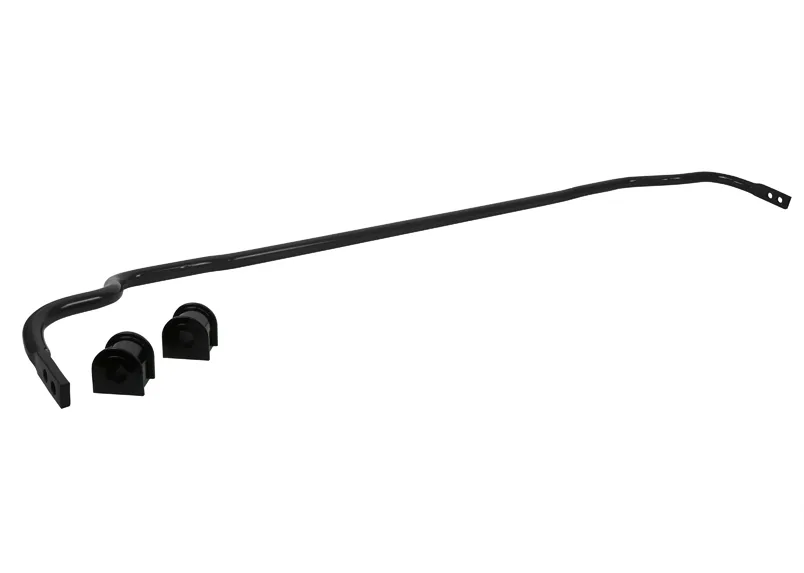
The rear sway bar, or rear stabilizer bar, resists lean at the rear of the vehicle. Adding or stiffening it shifts some of the cornering load onto the rear tires, which helps the vehicle rotate into a turn and reduces understeer. The result feels more balanced and more willing to change direction.
There is a limit to how far you can push it. Go too stiff at the rear and the rear tires can reach their limit before the fronts, which creates oversteer. That is why a stiffer rear sway bar should be matched sensibly to the front, and why adjustable bars are so useful for fine tuning.
Front vs Rear Sway Bar Upgrades by Vehicle Type
|
Vehicle type |
Typical factory balance |
Where to start |
Why |
|
Front-wheel drive cars |
Strong understeer |
Rear sway bar |
Helps the car rotate and reduces nose-heavy push |
|
Rear-wheel drive and muscle cars |
Moderate understeer, light rear bar |
Front bar, then match the rear |
Flattens the nose while keeping rear traction under power |
|
SUVs and crossovers |
Soft, noticeable lean |
Front and rear together |
Reduces vehicle sway at both ends of a tall body |
|
Pickups and towing trucks |
Lean under load |
Rear sway bar |
Steadies the rear when loaded or towing |
|
Solid-axle 4x4s |
Front bar limits articulation |
Rear bar, with front disconnects |
Keeps on-road stability without losing trail flex |
These are starting points rather than fixed rules. Tire choice, ride height and how you drive all play a part, which is where adjustable bars earn their keep.
Should You Upgrade Front and Rear Sway Bars Together?
Upgrading both at once keeps the factory balance while reducing lean overall, which suits tall vehicles and anyone who wants a flatter ride without changing the handling character. Our matched front and rear sway bar sets are designed to work together for exactly that reason.
Upgrading only one end changes the balance as well as the amount of lean. That can be exactly what you want, such as adding a rear bar to a front-wheel drive car that pushes wide in every corner. Adjustable two and three position bars let you change the rate after installation, so you can tune the balance to your tires and driving style without buying another bar. Our guide to aftermarket sway bar upgrades goes deeper on choosing a rate.
Do Not Forget the Bushings and End Links
A stiffer bar only works if it is held firmly. Worn rubber bushings let the bar shift in its clamps, and tired end links add slack at each end, so part of the bar's twist is lost before it reaches the suspension. That makes a new bar feel weaker than it should.
Fit fresh polyurethane bushings and quality end links with any front or rear sway bar upgrade. Our polyurethane bushings resist oil, road salt and ozone, keep the bar tightly located and carry a limited lifetime warranty. If your current bars clunk or squeak, check our guide to bad sway bar symptoms before you upgrade.
FAQs
Looking for more information. Below we answer the most commonly asked questions.
What does a rear sway bar do?
Is a front or rear sway bar more important?
Will a stiffer rear sway bar cause oversteer?
Does a rear sway bar help with towing?
Can I add a rear sway bar if my vehicle never had one?
Should I upgrade the front stabilizer bar on a front-wheel drive car?
Find the right balance for the way you drive. Explore our front, rear and matched sway bars and sway bar kits, including adjustable options.


