
 US
 Australia
 United Kingdom
 Europe
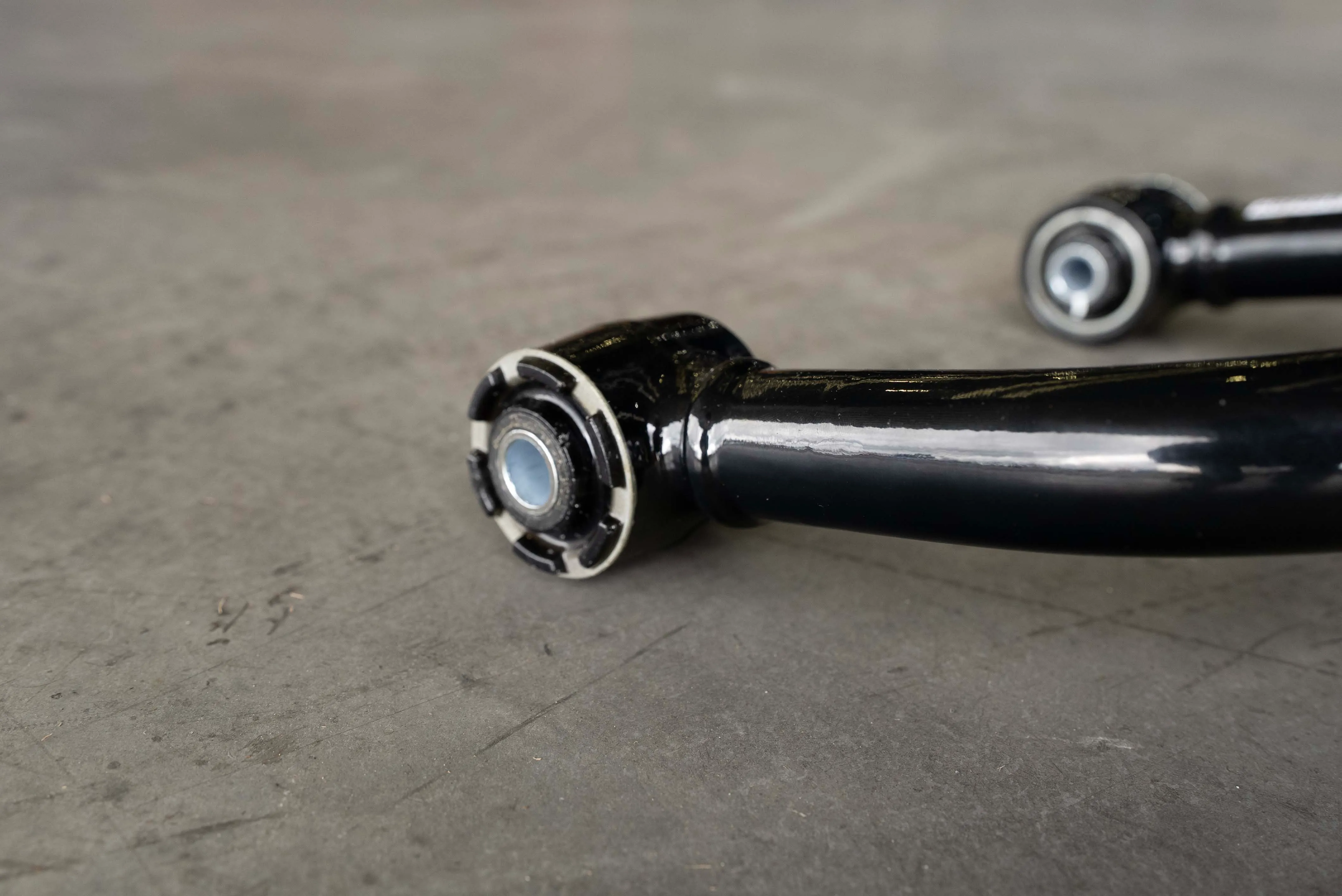

Control arm bushings are the cushioned pivots that connect each control arm to the vehicle's frame or subframe. They let the arm swing up and down as the suspension moves while holding the wheel in its correct position and absorbing road vibration. When they wear, alignment shifts, steering gets vague and clunks appear over bumps.
Every corner of your suspension relies on a few small bushings to keep the wheel exactly where it should be. They rarely get attention until something feels wrong, yet they shape steering precision, tire wear and ride comfort every mile you drive. So what are control arm bushings, where do they sit and why do they matter so much? We make polyurethane control arm bushings for a huge range of cars, trucks and SUVs, and here is the clear explanation.
What Is a Control Arm Bushing?
A control arm is the hinged link that connects the wheel hub or steering knuckle to the chassis. At the chassis end it pivots on two or more bushings, and at the wheel end it usually connects through a ball joint. A control arm bushing is the cushioned sleeve pressed into the arm at each pivot point, with a bolt running through it into the frame or subframe bracket.
Each suspension control arm bushing has a simple build. An inner metal sleeve carries the pivot bolt, a cushion of rubber or polyurethane surrounds it, and on many designs an outer metal shell presses into the arm. The cushion lets the arm rotate as the suspension moves while stopping the arm from shifting forward, backward or sideways.
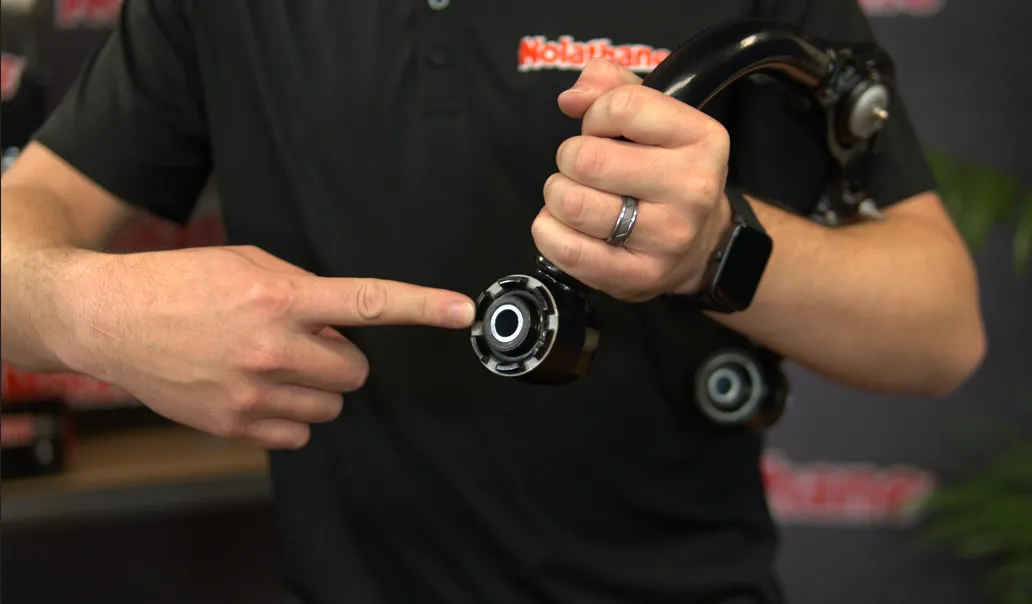
Control Arm Bushing Diagram: Where Each Bushing Sits
Picture the front suspension from above, and the layout becomes easy to follow. Most vehicles use some combination of the following bushing positions:
- Lower control arm front bushing: The forward inner pivot of the lower arm, which mainly locates the wheel sideways.
- Lower control arm rear bushing: The rearward inner pivot, often larger, which absorbs fore and aft forces from braking and bumps.
- Upper control arm bushings: Two inner pivots on vehicles with a double wishbone design, controlling camber as the wheel moves.
- Outer bushings: Found on some designs where the arm meets the knuckle or carrier instead of a ball joint.
- Rear control arm bushings: Upper, lower and trailing arm pivots that locate the rear wheels or axle.
If you are looking at a lower control arm bushing diagram for your vehicle, these are the positions it will label. The exact count changes with the suspension design, which is why our kits are matched to each vehicle and position.
What Do Control Arm Bushings Do?
Control arm bushings do three jobs at once. They locate the arm precisely, so the wheel holds its camber, caster and toe settings as the suspension moves. They absorb road shock, tire noise and vibration before it reaches the chassis. And they allow the arm to pivot smoothly through its full travel without binding.
That balance between flexibility and control is what makes them so important. A bushing that is too soft or worn lets the wheel shift under braking and cornering, while a healthy bushing keeps the geometry steady and the steering precise. Every input you feel through the wheel passes through these small parts.
Why Control Arm Bushings Wear Out
Factory control arm bushings are usually rubber, sometimes with fluid-filled hydraulic chambers on newer vehicles. Rubber degrades with heat, ozone, oil contamination and constant flexing. Over time it hardens, cracks, tears away from its sleeve and loses the stiffness it needs to hold the arm in place. Hydraulic bushings can also leak, leaving them soft and sloppy.
Potholes, heavy loads, towing and lifted ride heights speed up the process. Once a bushing is worn, the arm moves on every bump and braking event, which wears tires, upsets alignment and can strain ball joints and other suspension parts. Our guide to bad control arm bushing symptoms lists the warning signs to watch for.
Rubber vs Polyurethane Control Arm Bushings
|
What matters |
Factory rubber bushings |
Nolathane polyurethane bushings |
|
Holding alignment under load |
Deflects more as it ages |
Resists deflection and keeps geometry |
|
Resistance to oil, ozone and road salt |
Hardens and cracks |
Highly resistant |
|
Service life |
Wears, tears and separates |
Built for long service life |
|
Steering feel |
Softens over time |
Precise and consistent |
|
Warranty |
Varies by supplier |
Most products carry a limited lifetime warranty |
Polyurethane gives you the precision of a firm bushing without the harshness of a solid one. For the full comparison, read our guide to polyurethane vs rubber control arm bushings.
FAQs
Looking for more information about control arm bushings? Below we answer the most commonly asked questions
What is a control arm bushing?
How many control arm bushings does a car have?
Where is the lower control arm bushing located?
Are control arm bushings part of the control arm?
What are control arm bushings made of?
Do control arm bushings affect alignment?
Keep every wheel pointing exactly where it should. Browse our full range of control arm bushings to find the right kit for your vehicle.


