US
 Australia
 United Kingdom
 Europe
Radius Arm Bushings for 1981 Ford E-350 Econoline Club Wagon Base
IMPROVE GRIP, HANDLING & PERFORMANCE.
Radius arm bushings hold the arm that stops your Ford E-350 Econoline Club Wagon front wheels moving forward and backward. Every time you brake, that load has to be absorbed somewhere, and these are what absorb it. The term covers two quite different components depending on what you drive, so identifying which you have is the first thing to sort... Read more
Radius arm bushings hold the arm that stops your Ford E-350 Econoline Club Wagon front wheels moving forward and backward. Every time you brake, that load has to be absorbed somewhere, and these are what absorb it.
The term covers two quite different components depending on what you drive, so identifying which you have is the first thing to sort out.
Two Different Ford E-350 Econoline Club Wagon Radius Arms, Two Different Jobs
On a solid front axle truck, the radius arm is a substantial forged or fabricated piece running from the axle housing back to a frame bracket. It locates the axle fore and aft and controls how far the housing rotates under brake torque, which is what sets caster. Ford Super Duty trucks are the most common application in the United States, and a Ford radius arm bushing diagram will show the large bushing at the frame end plus the hardware at the axle.
On an independent front suspension, the radius arm is a slimmer rod running forward or rearward from the lower control arm to a chassis mount. Catalogs list it as a strut rod, a tension rod, a compliance rod or a caster rod depending on the manufacturer, and a strut rod bushing and a radius arm bushing are the same item on these vehicles.
Both do the same fundamental job of resisting fore and aft movement. They differ enormously in size, load and how they fail, and the parts do not cross over between the two designs.
What Radius Arm Bushings Control on a Solid Front Axle
The bushing at the frame end of a truck radius arm has an unusually demanding brief.
It has to hold the arm firmly against braking and acceleration loads, because any movement there rotates the axle housing and changes caster. At the same time it has to allow the arm to twist, because when one front wheel climbs and the other drops, the axle rotates relative to the frame and the arm has to accommodate that without binding the suspension solid.
Those two requirements pull in opposite directions, and factory rubber resolves the conflict by being soft, which handles the articulation well and controls the caster poorly, and gets worse at both as it ages and hardens.
When that bushing lets go on a truck, the housing rotates slightly on every stop. Caster changes as you brake, the steering stops settling properly, and on a lifted truck with larger tires the result is a vehicle that wanders badly at highway speed and needs constant correction.
Strut Rod Bushings on Independent Front Suspension
On a passenger car or light truck with independent front suspension, the same principle applies at a smaller scale and with one important difference.
The control arm cannot resist fore and aft load, because it runs across the vehicle rather than along it. The strut rod does, and its bushing takes essentially all of the braking reaction for that corner on its own.
Manufacturers make this bushing deliberately soft, because it is the main path for impact harshness into the cabin. Hit an expansion joint and the force arrives through this rod, so softening it here does more for ride comfort than softening almost anywhere else.
The result is that the softest bushing in the front suspension is the one taking your braking load. When it perishes, the wheel moves rearward under brakes, the front end feels vague and floaty when you need it sharp, and turn-in goes lazy because the wheel is still settling as you ask it to change direction.
Why Ford E-350 Econoline Club Wagon Radius Arm Bushings Take More Abuse Than Most
Position and duty cycle both work against these.
On a truck, the frame end bushing sits low and forward where it collects water, road salt, mud and whatever the front tires throw at it. Trucks that tow or carry weight load it harder on every stop, and dirt road use cycles it constantly rather than occasionally.
On an independent front end, the bushing lives directly behind or in front of the wheel, in the same spray pattern, doing the same job with considerably less material.
Contamination is what usually finishes them rather than load alone. Grit works into the interface, and from there the bushing is being ground rather than flexed. That is why a vehicle used on unsealed roads goes through these while a city car of similar age and mileage does not.
How Ford E-350 Econoline Club Wagon Radius Arm Bushings Differ From Control Arm Bushings
Worth separating, because the two get confused and the symptoms do not overlap as much as people assume.
A control arm bushing sits at a pivot running across the vehicle, resisting lateral load and letting the arm swing vertically. When it wears, the wheel moves sideways under cornering load and the noise shows up over bumps.
A radius arm bushing sits at a pivot running along the vehicle, resisting fore and aft load. When it wears, the wheel moves backward under braking and the noise shows up when you use the pedal.
Vehicles with a two piece lower suspension have both, and it is common for one to be finished while the other has plenty of life left. A radius arm bushing diagram for your specific vehicle shows which positions exist and how they are arranged, and it is worth looking at before ordering anything, particularly on a design where a single lower arm assembly carries three separate bushings.
If the vehicle clunks over bumps but brakes cleanly, look at the control arm. If it brakes badly but rides normally, look at the radius arm.
Symptoms of Worn Ford E-350 Econoline Club Wagon Radius Arm Bushings
- Steering that wanders and needs constant correction, worse as speed rises
- A front end that feels vague or floaty specifically under braking
- Squirming or side to side movement when braking from speed
- Caster shimmy or shake coming back through the steering wheel
- Clunking from the front on take up of drive and under brakes
- Delayed turn-in, where the vehicle takes a moment to respond
- Tire wear that returns after every alignment
- Bushing material cracked, split or squeezed out at the frame mount
- Bent washers or elongated holes at a mounting point
The braking symptom is the one that separates this from everything else. Control arm bushings announce themselves over bumps, ball joints knock when the wheel is turned under load, and a worn radius arm bushing shows up when you use the brake pedal, because resisting that force is the job it exists to do.
Why an Alignment Check Will Not Find Worn Ford E-350 Econoline Club Wagon Radius Arm Bushings
This is what leaves people chasing the fault for years.
An alignment is measured with the vehicle stationary. The loads that make a worn radius arm bushing deflect are braking, acceleration and articulation, and none of those are present while the truck sits on the rack. The printout comes back within spec, the shop reports nothing wrong, and the vehicle still wanders the moment it moves.
If caster reads low on the printout, that usually points at ride height having changed rather than the bushings. If the numbers read correctly and your Ford E-350 Econoline Club Wagon still will not track straight, look at the bushings.
Ford E-350 Econoline Club Wagon Caster Bushings and Offset Designs
Some versions of this part are not straight replacements.
An offset or caster bushing has its bore machined away from center, so installing it shifts the arm pivot and changes caster deliberately rather than simply restoring what was there. On a lifted truck that has washed off caster, that is often the cheapest correction available.
Because the offset is directional, orientation determines what it does. Fitted the wrong way around it moves caster in the opposite direction to the one you wanted, and the alignment ends up further out than when you started.
There is a limit worth knowing before you order, because an offset bushing typically returns only a degree or two. Beyond that, the correction has to come from an arm with the geometry built into it or from relocating the mounting point entirely, and no bushing will bridge the gap.
Ford E-350 Econoline Club Wagon Radius Arm Bushing Replacement and What It Involves
On a truck, the frame end bushing usually presses into the arm or the bracket and needs the arm dropped to access it. Expect corrosion at the fasteners, since these live in the worst position on the vehicle for it, and budget time for the hardware rather than the bushing.
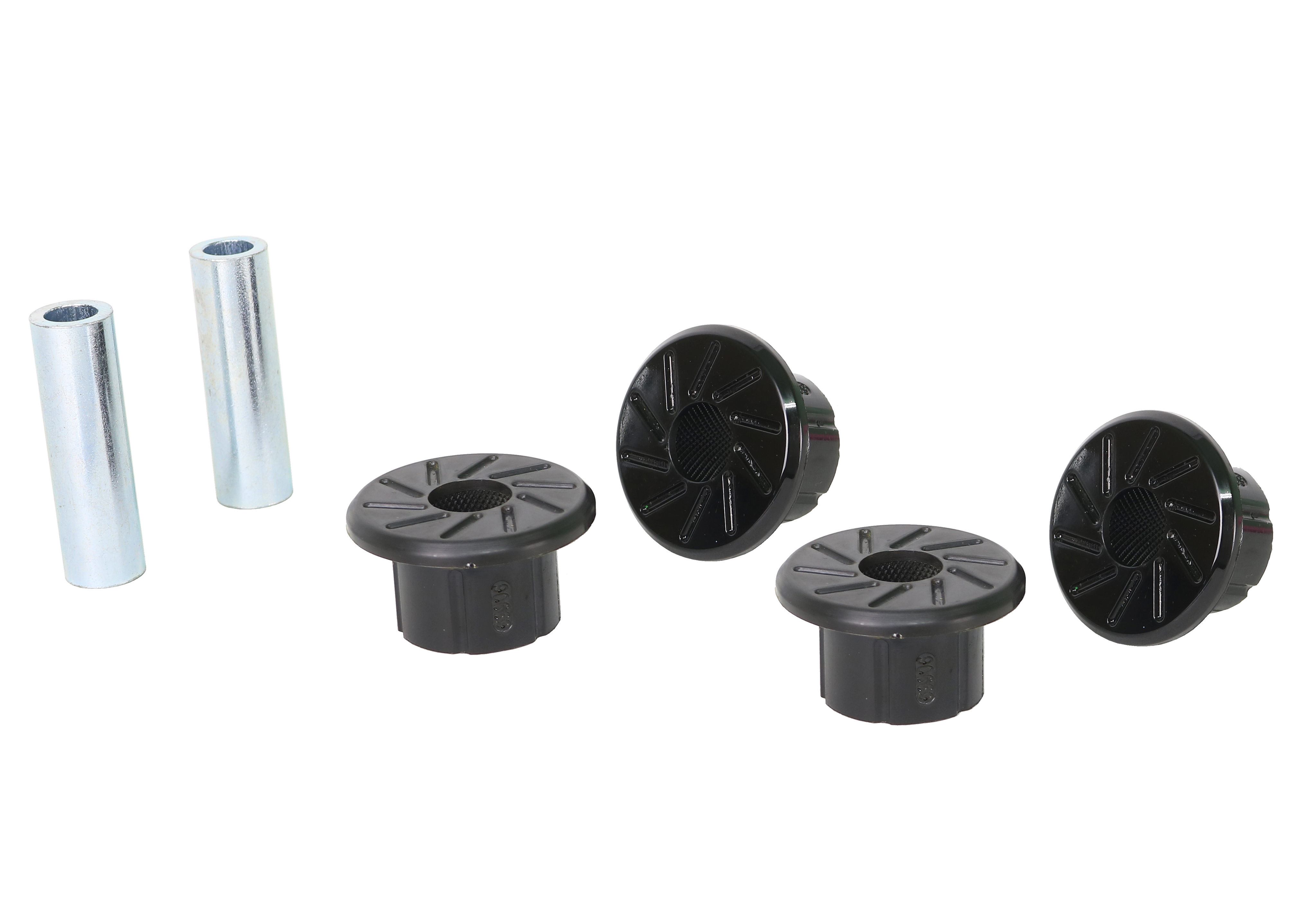
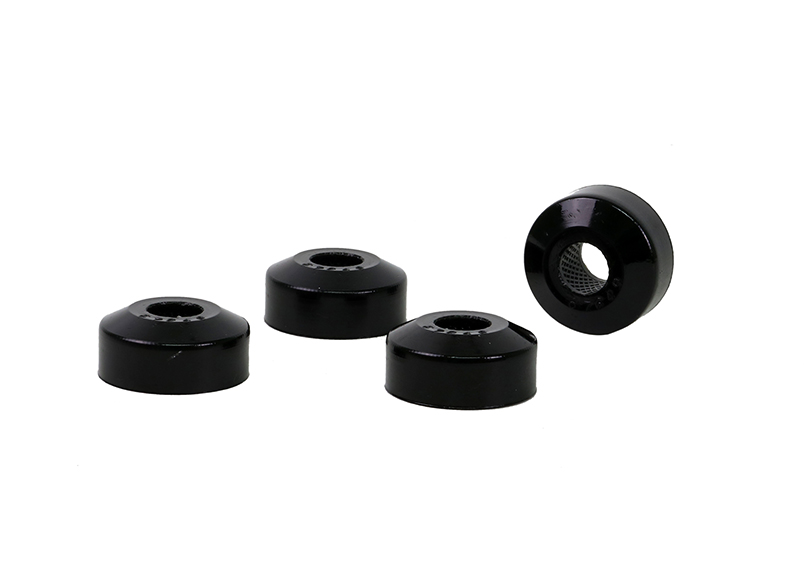
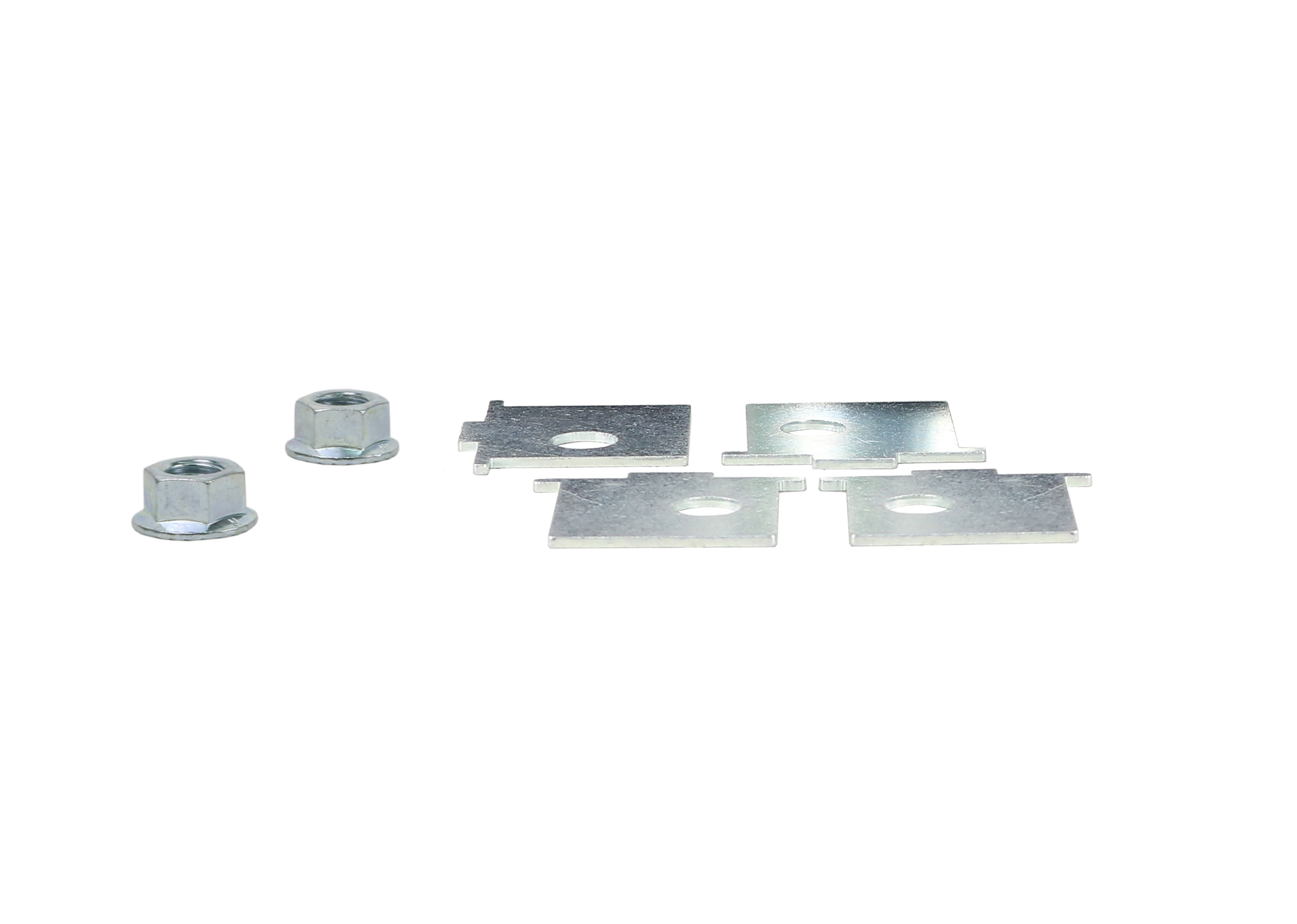
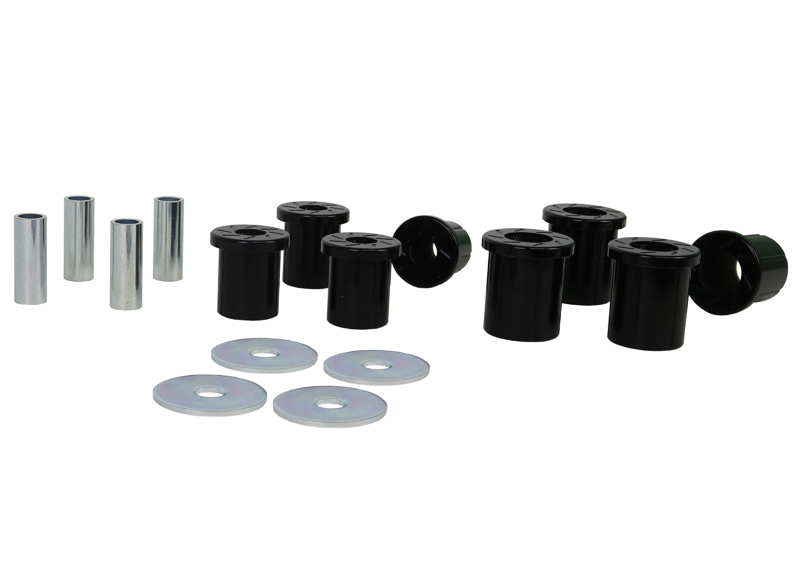
On an independent front end, the strut rod often comes out as an assembly with stacked bushings and washers over a threaded end, which makes it one of the more accessible bushing jobs there is. A strut rod bushing kit typically supplies both bushings, washers and the nut.
Whichever you have, check the eye or mounting bore once the old bushing is out. Anything worn out of round will not retain a new bushing securely.
Pay close attention to orientation on offset designs, and mark the intended position before pressing rather than trusting memory partway through the job.
Grease polyurethane on assembly with a silicone or PTFE based product rather than lithium or petroleum, which breaks the material down over time.
Torque with the vehicle sitting on its wheels rather than hanging, which matters more here than almost anywhere else because the arm carries constant fore and aft load and a bushing clamped in the wrong position binds from the first mile.
Do both sides, then have the alignment set. Caster changes the moment these go in, and the alignment is what confirms both sides match.
Find Radius Arm Bushings for Your Ford E-350 Econoline Club Wagon
Radius arm bushings sit within Nolathane's polyurethane bushings selection, and C-bushings are the caster fix for many solid axle trucks.
Select your Ford E-350 Econoline Club Wagon to see the radius arm bushing kits listed for it, in standard and offset caster designs, along with strut rod bushing kits for independent front suspension applications. Every Nolathane component is backed by our warranty, a fitment guarantee and 60 day returns.
1 item
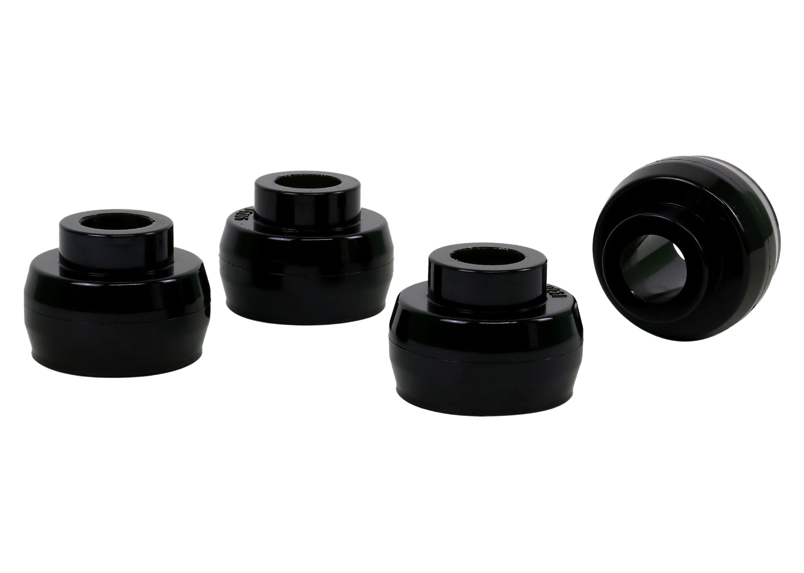
Front Strut Rod - To Chassis Bushing
✅ Fits 1981 Ford E-350 Econoline Club Wagon Base In StockShips within 24hrs.Ships within 24hrs.SKU: REV022.0080Front Strut Rod - To Chassis Bushing
✅ Fits 1981 Ford E-350 Econoline Club Wagon BaseIn StockShips within 24hrs.Ships within 24hrs.Qty Required 1$23.87
Your vehicle
Matching vehicles
No match — try selecting it below.
Refine your search
Clear allNo categories match.
Can’t find what you’re looking for?
Our team can help you find the right part — or tell us what was missing so we can improve the site.
Call Us +1 909-476-2860 Give Feedback (opens in a new tab)