
 US
 Australia
 United Kingdom
 Europe
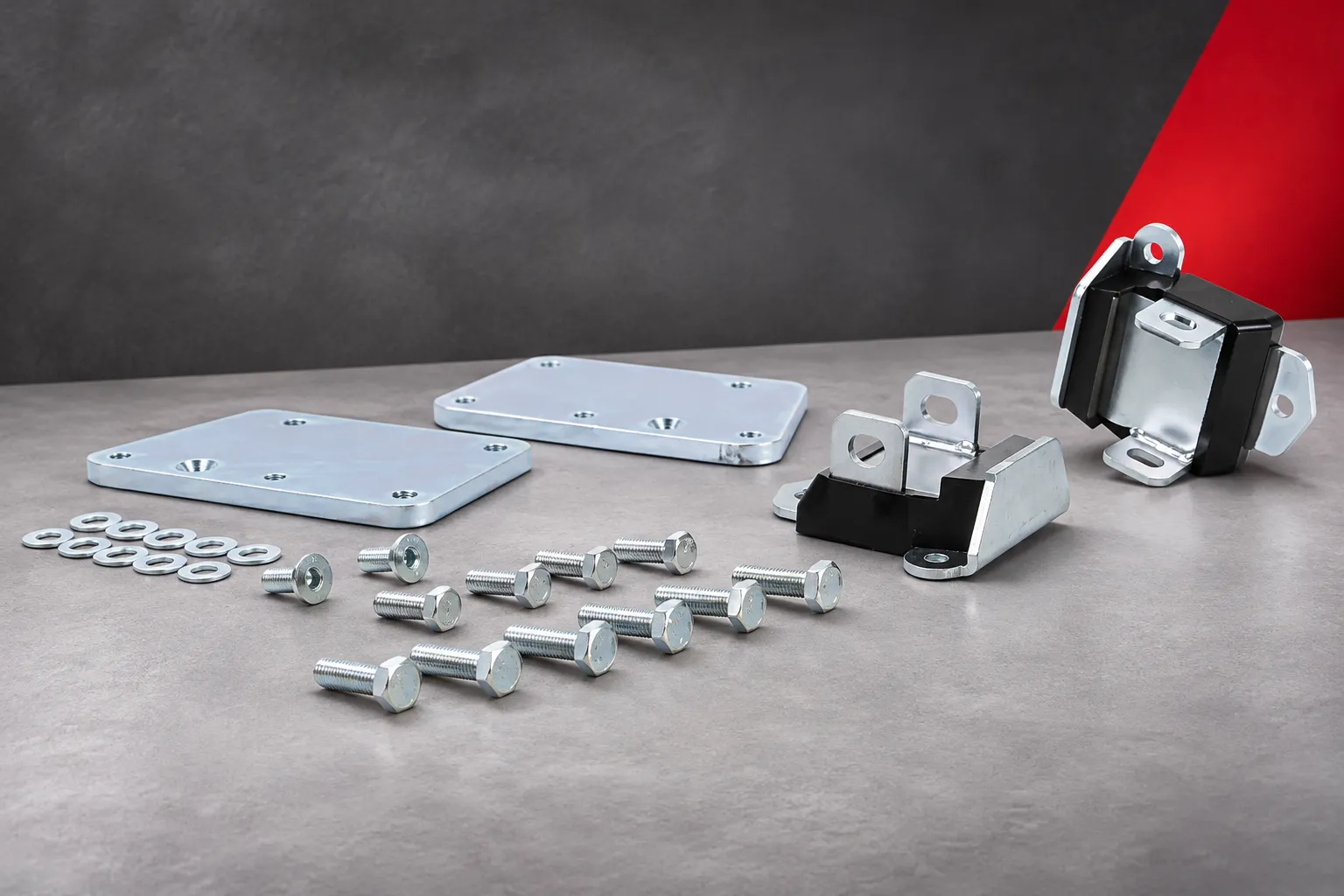

Motor mount inserts are polyurethane pieces that fit into the voids or shell of an existing engine mount, firming it up and replacing worn rubber without removing the whole mount. They reduce engine movement, cut the thump when shifting and resist heat and oil. On applicable platforms our engine mount inserts install in under an hour.
Replacing a complete engine mount means supporting the engine, unbolting brackets and sometimes removing other parts to reach it. Motor mount inserts offer a quicker route on many vehicles. They are popular with diesel truck owners, V8 drivers and anyone whose rubber mounts keep tearing. Here is how they work, when they suit your vehicle and how they fit into our range of engine mount bushings.
Why LS Swaps Need Different Motor Mounts
LS engines use a different block mounting pattern from the older small block engines many classic chassis were designed around. The factory mount brackets on your frame were built for the original engine, so the LS will not bolt straight in. Something has to bridge the gap between the LS block and the chassis mounting points.
Engine position matters just as much as bolt pattern. Move the engine too far forward and it may hit the radiator or crossmember, too low and the oil pan hangs below the frame, too far back and the headers foul the steering or firewall. LS engine mounts set the engine's height, fore and aft position and angle in one go.
Many factory engine mounts are built with voids, gaps molded into the rubber that make the mount softer and quieter. Those voids also let the engine move further under torque, and the thin rubber around them is often where cracks and tears start. A motor mount insert fills those voids with polyurethane, or replaces the worn cushion inside the mount's metal shell.
The result is a mount that resists engine movement much more firmly while still cushioning vibration. The original brackets and shell stay on the vehicle, so the factory mounting points and engine position are retained.
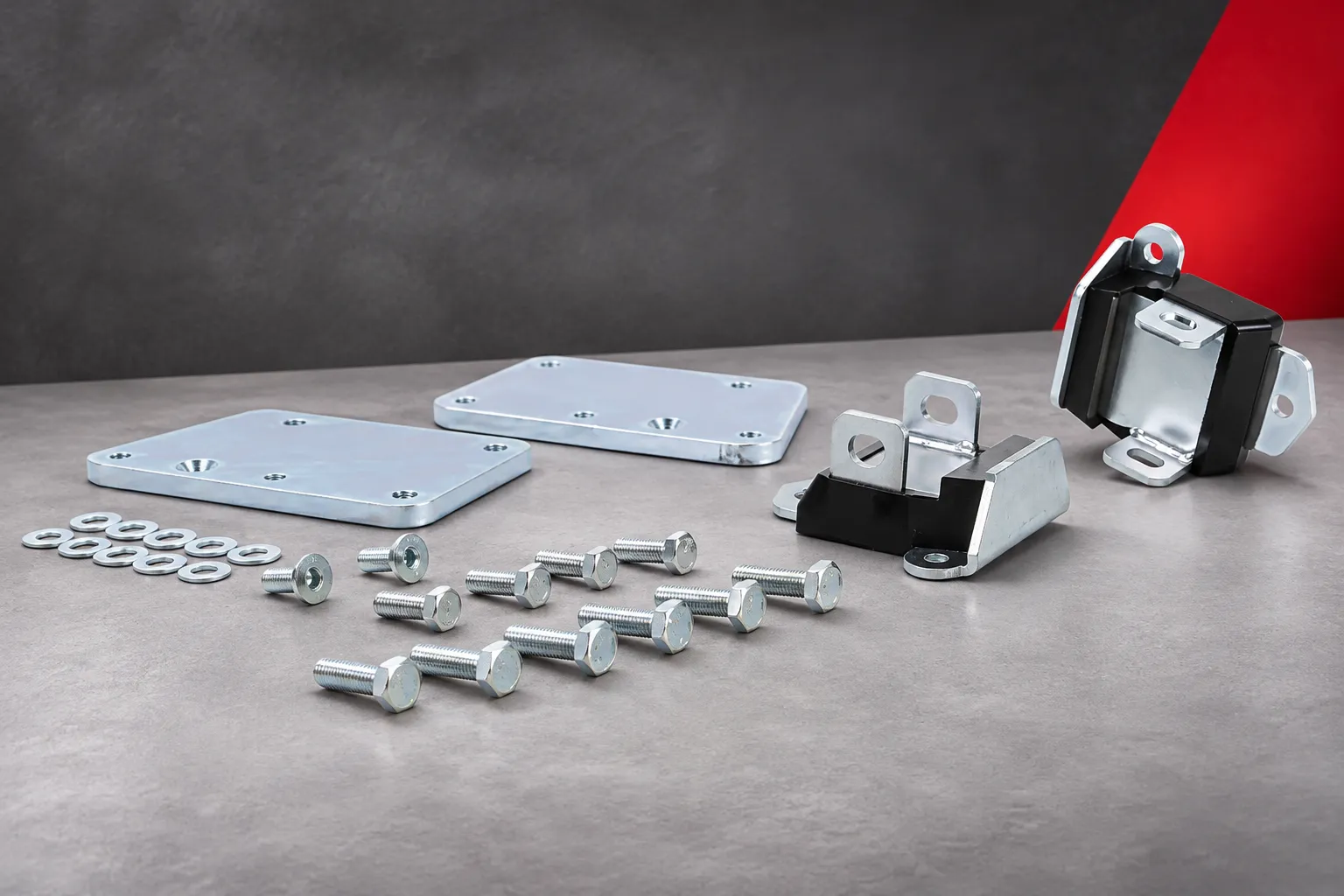
LS-Series Motor Conversion Set
The Main Types of LS Swap Motor Mounts
|
Insert type |
Where it fits |
Typical use |
|
Motor mount insert bushings |
Into the voids of existing engine mounts |
Passenger and performance platforms |
|
Diesel motor mount inserts |
Diesel engine mounts, including clamshell designs |
High-torque diesel trucks |
|
Front and rear motor mount inserts |
Specific front or rear mount positions |
Platforms with separate front and rear mounts |
|
Engine mount rear insert bushings |
The rear mount shell, without full mount removal |
Applicable performance and passenger vehicles |
|
Four-mount insert sets |
Every mount position on the vehicle |
Complete renewal in one kit |
|
Manual transmission mount inserts |
Transmission mount on manual gearbox models |
Reducing shift-related drivetrain movement |
|
Torque arm insert bushings |
Engine torque arms and struts |
Controlling engine rock |
Whatever you choose, plan the oil pan, headers and accessory drive at the same time. These parts all interact with engine position, and changing one can force changes to the others.
Engine Position and Clearance Checks
Before you finalize your LS motor mounts, mock up the engine and check these points:
- Oil pan clearance: Make sure the pan clears the crossmember, steering linkage and ground with suspension movement.
- Header clearance: Check the steering shaft, frame rails and starter for room.
- Hood clearance: Measure from the intake manifold to the underside of the hood.
- Radiator and fan: Allow space for the cooling system ahead of the accessory drive.
- Driveline angle: Set the engine and transmission angle so the driveshaft operates within a sensible range.
- Transmission crossmember: Confirm the transmission mount lines up with the new engine position.
Taking time here saves cutting and rework later. Many builders bolt the engine in with the mounts loosely fitted, check every clearance and only then tighten everything down.
Why Polyurethane Suits LS Swap Engine Mounts
An LS produces strong torque, and many swaps add more power with cam, intake and forced induction upgrades. Rubber mounts that were designed for a milder engine often tear under that load, letting the engine rock, thump on launch and lift on one side. Excessive engine movement can also strain exhaust connections, wiring and throttle linkages.
Polyurethane resists torque reaction, heat and oil far better than rubber, so it holds the LS steady through hard launches and shifts. Our range includes a V8 LS1 motor mount and an LS-series motor conversion set, alongside other V8 motor mount sets and complete engine and transmission mount sets. Check fitment for your chassis and engine combination before ordering, and our support team can help confirm the right parts.
For a deeper look at materials, read our comparison of polyurethane vs rubber motor mounts. If you want to understand how mounts are arranged across a rear-wheel drive layout, see our guide to how many motor mounts a car has.
Do Not Forget the Transmission Mount
An LS swap often brings a different transmission too, such as a modern automatic or a six-speed manual. That changes the transmission mount location and may need a modified or new crossmember. Match the transmission mount to the same firmness as your engine mounts so the drivetrain moves as a unit rather than twisting between them.
FAQs
Looking for more information about LS swap motor mounts? Below we answer the most commonly asked questions
Can I use my old small block motor mounts for an LS swap?
What are the best LS swap motor mounts?
Do LS engine mounts affect engine position?
Are polyurethane motor mounts good for an LS swap?
Do I need a new transmission mount for an LS swap?
How do I check driveline angle after an LS swap?
Build your LS swap on mounts that can handle the power. Explore our engine mount bushings, including our LS1 motor mount and LS-series conversion set.


