
 US
 Australia
 United Kingdom
 Europe
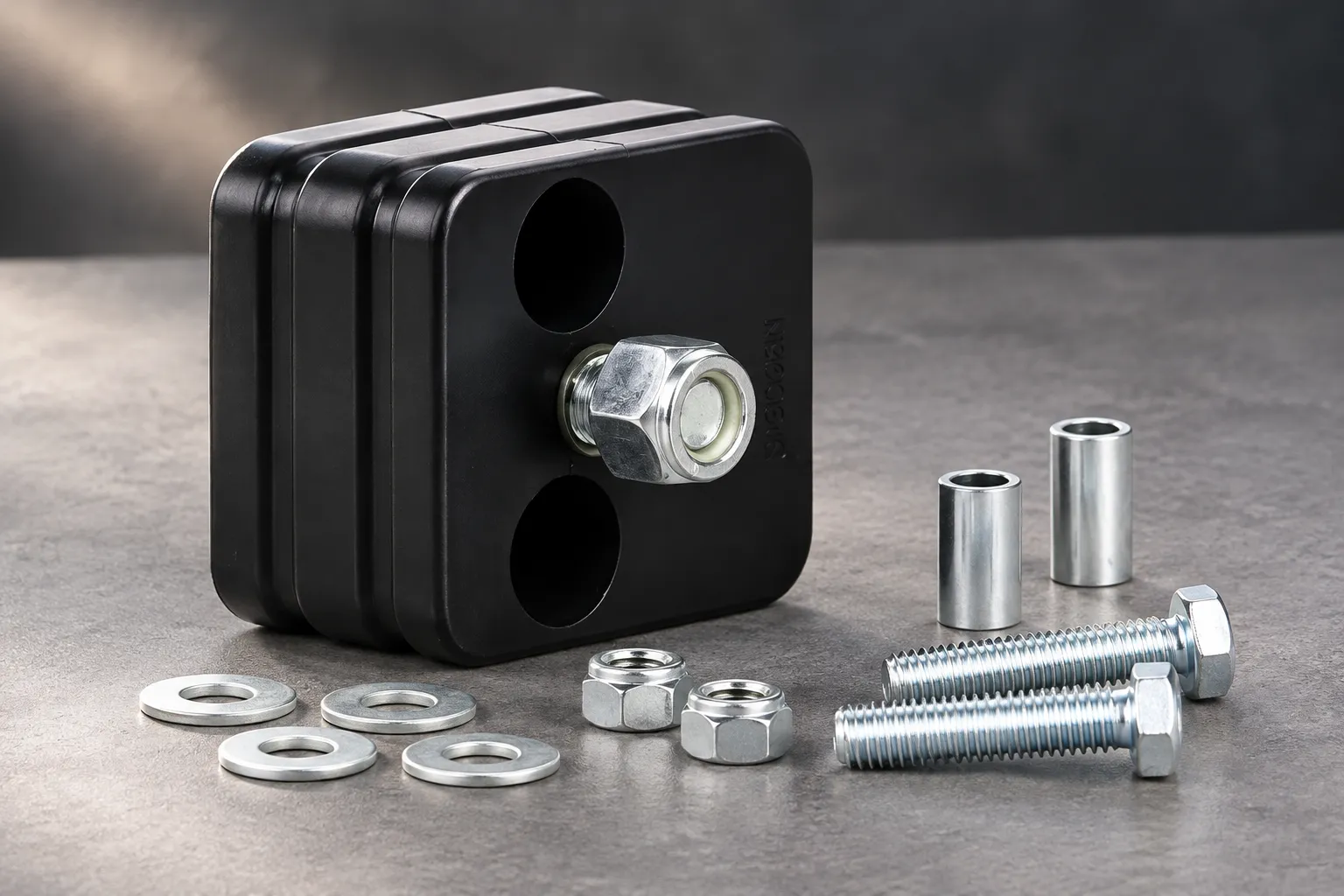

Most cars have between two and four motor mounts in total. A rear-wheel drive vehicle with a lengthwise engine usually has two engine mounts plus a transmission mount, while a front-wheel drive car with a sideways engine typically combines side mounts with one or more torque mounts. The exact count depends on the engine and drivetrain layout.
When a shop says one of your motor mounts has failed, it helps to know how many there are and where they sit. The answer changes from vehicle to vehicle, but the layouts follow a few predictable patterns. Here is how many motor mounts a car typically has, where to find each one, and how our engine mount bushings cover every position from the front motor mount to the rear engine mount.
How Many Engine Mounts Does a Car Have?
Industry guides such as SlashGear put the typical count at two to four engine mounts, depending on the vehicle and its engine. That total usually includes the mounts that hold the engine itself, the transmission mount and any torque struts or torque arms that control rocking. Larger trucks, performance vehicles and unusual layouts can differ.
The easiest way to understand your vehicle is to start with its drivetrain layout. Whether the engine sits lengthwise or sideways decides where the mounts go and how they share the load.
Motor Mount Locations on Rear-Wheel Drive Vehicles
On most rear-wheel drive cars, trucks and many 4x4s, the engine sits lengthwise in the engine bay. The typical layout for these vehicles uses the following mounts:
- Two engine mounts: One on each side of the engine block, bolting to brackets on the frame or crossmember.
- One transmission mount: At the rear of the transmission, sitting on a crossmember under the vehicle.
That gives three mounts in total, carrying the engine and transmission as a single unit. Muscle cars, classic V8s and full-size trucks commonly follow this pattern. Engine swaps such as LS conversions often change the mount design, which our guide to LS swap motor mounts explains.
Motor Mount Locations on Front-Wheel Drive Vehicles
Front-wheel drive cars and many crossovers mount the engine sideways, with the transmission bolted to one end. The mounts are arranged to resist the strong twisting force that a transverse engine creates as it drives the front wheels:
- Engine side mount: At the end of the engine opposite the transmission, usually near the top.
- Transmission side mount: At the opposite end of the engine, supporting the transmission.
- Front and rear torque mounts: Often called torque struts or dog bones, these stop the engine rocking forward and backward.
Depending on the design, that adds up to three or four mounts. The rear motor mount or rear engine mount on these vehicles often works hardest, because it resists the engine's rocking under acceleration.
Engine Mount Location Diagram Explained
|
Cost item |
Typical range |
Source |
|
Average engine mount replacement |
$643 to $798 |
RepairPal national estimate |
|
Labor portion |
$328 to $481 |
RepairPal national estimate |
|
Parts portion |
About $316 to $317 |
RepairPal national estimate |
|
Labor per mount |
About $100 to $450 |
AutoZone |
|
Simple rubber or steel mount, parts only |
About $10 to $150 |
AutoZone |
|
Hydraulic or active mount, parts only |
From about $50 to $200 and up |
AutoZone |
Why Mount Position Matters When Replacing Them
Each position carries a different load, so mounts are not interchangeable even on the same vehicle. A torque strut bushing is designed to resist push and pull, while a side mount carries weight. When one mount fails, the others take on more work and often wear faster, which is why many owners replace the engine and transmission mounts together on high-mileage vehicles.
Our range covers motor mount kits, front and rear motor mount inserts, engine torque strut bushings, torque arm insert bushings, motor and transmission mount combos and complete engine and transmission mount sets. Our polyurethane resists heat, oil and torque reaction far better than rubber. If you suspect a worn mount, our guide on how to check motor mounts shows you how to find the culprit.
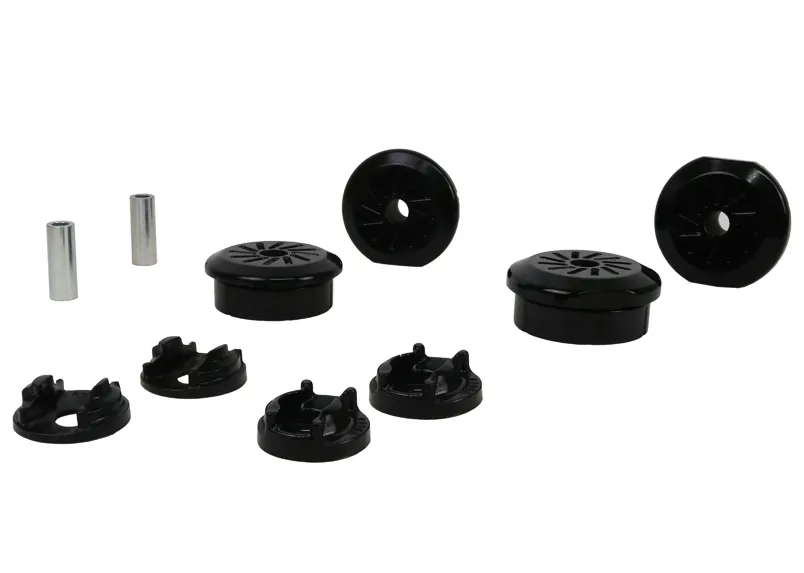
Motor Mount Inserts
FAQs
Looking for more information about motor mount locations? Below we answer the most commonly asked questions
How many motor mounts does a car have?
Where are the motor mounts located?
Is a transmission mount the same as a motor mount?
What is a torque strut mount?
Which motor mount usually fails first?
Should I replace all motor mounts at once?
Cover every mount position with parts built to last. Browse our engine mount bushings, from insert kits to complete engine and transmission mount sets.


