
 US
 Australia
 United Kingdom
 Europe
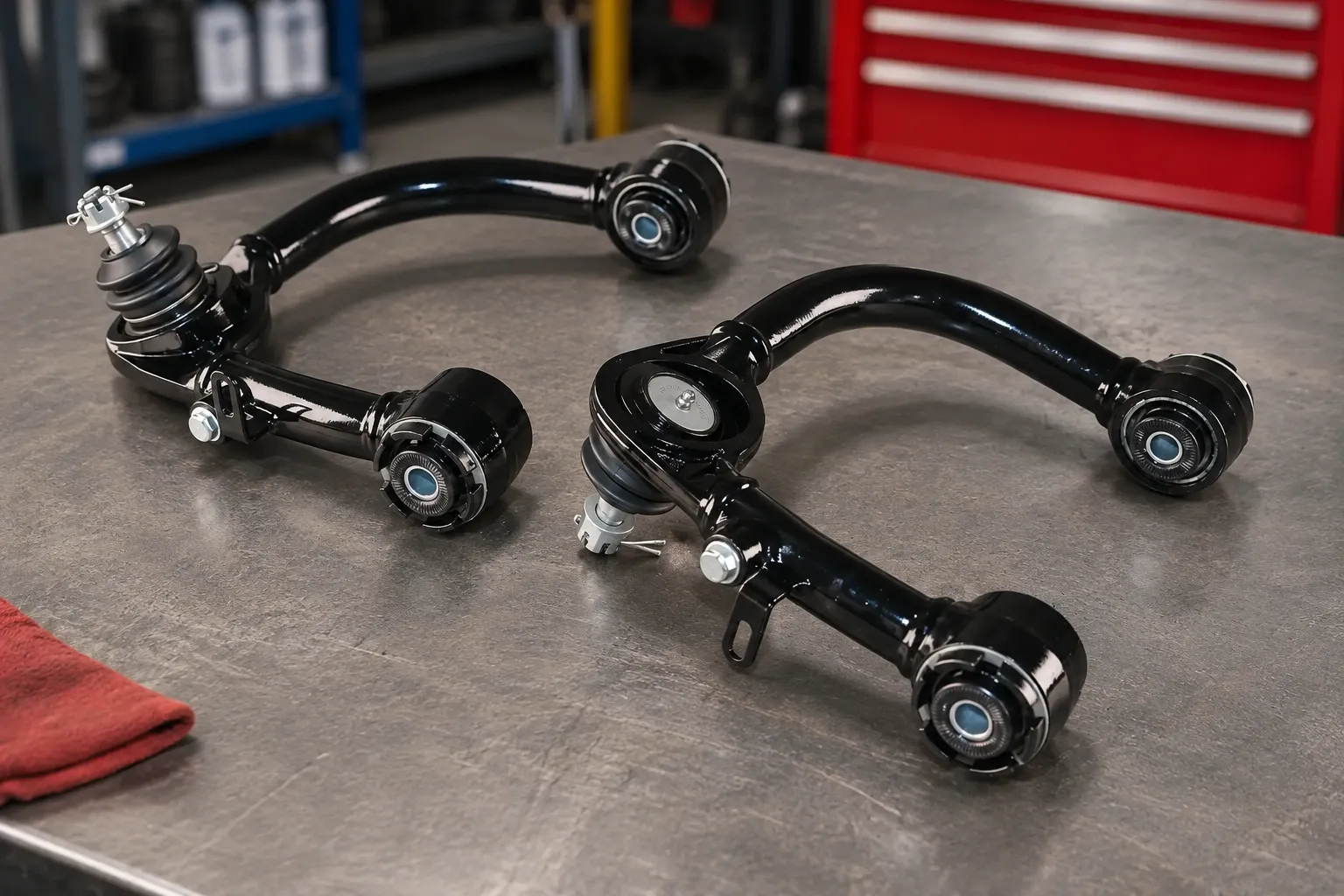

Offset control arm bushings have an off-center inner sleeve that moves the control arm's pivot point slightly. Turned one way or the other, they shift the arm in, out, forward or back, which corrects camber or caster that factory adjusters cannot reach. They suit lifted and lowered vehicles and anything with limited factory alignment adjustment.
Sometimes a wheel alignment cannot get the numbers back into specification. The vehicle may have been lifted or lowered, the factory adjustment may have run out, or the platform may have very little adjustment to begin with. Offset control arm bushings are one of the simplest ways to fix that without replacing the arms. Here is how camber bushings and caster correction bushings work, and when they are the right choice from our range of control arm bushings.
What Are Camber and Caster?
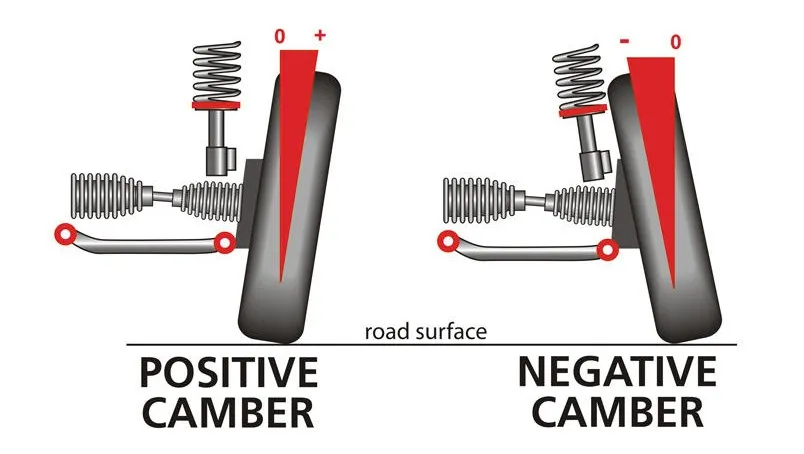
Camber is the inward or outward tilt of the wheel when viewed from the front. Too much negative camber wears the inner edge of the tire, while too much positive camber wears the outer edge. Caster is the forward or rearward tilt of the steering axis when viewed from the side. Positive caster helps the steering return to center and keeps the vehicle stable in a straight line.
Both angles are set by where the control arms locate the wheel. Change the position of an arm's pivot point, even slightly, and the camber or caster changes with it. That is exactly what an offset bushing does.
How Offset Control Arm Bushings Work
A standard bushing holds its inner sleeve dead center, so the pivot bolt sits exactly where the factory designed it. An offset bushing moves that sleeve off center within the bushing. Depending on how you orient the bushing in the arm, the pivot point shifts inward, outward, forward or rearward.
Shifting the pivot of a lower or upper control arm in or out changes camber. Shifting the pivot forward or back changes caster instead. Because the correction comes from orientation, the same bushing can often be set to add or reduce the angle you need, and a wheel alignment then fine tunes the result.
|
Alignment problem |
Common cause |
How an offset bushing helps |
|
Too much negative camber |
Lowered suspension or sagging springs |
Moves the arm pivot to stand the wheel more upright |
|
Too much positive camber |
Lifted suspension on some designs |
Moves the pivot to tilt the top of the wheel inward |
|
Low caster and wandering steering |
Suspension lift on trucks and 4x4s |
Shifts the pivot fore or aft to restore caster |
|
Factory adjusters at their limit |
Limited adjustment range from the factory |
Adds extra range without new arms |
Who Needs Caster Correction Bushings or Camber Bushings?
Lifted trucks and 4x4s are the most common candidates. Lifting the suspension changes the angles of the control arms, which often reduces caster and can push camber out of range. The vehicle may wander on the freeway, feel light in the steering or wear tires on one edge.
Lowered cars face the opposite problem, typically picking up too much negative camber. Vehicles with little or no factory camber adjustment also benefit, as do older vehicles where sagging springs and worn mounts have moved the geometry over time. Offset bushings restore the angles while also replacing the worn factory bushings in the same job.
Replace Control Arm or Just Bushings?
Whether to replace the control arm or just the bushings depends on how much correction you need and the condition of the arm. Offset bushings are a cost-effective way to recover a moderate amount of camber or caster while keeping the factory arms. They also bring all the durability of polyurethane to the job.
For large corrections, such as on heavily lifted trucks, geometry-corrected aftermarket upper control arms may be the better fit. If the arm is bent, cracked or has a worn ball joint, replace the arm. Otherwise, offset bushings are usually the simplest place to start.
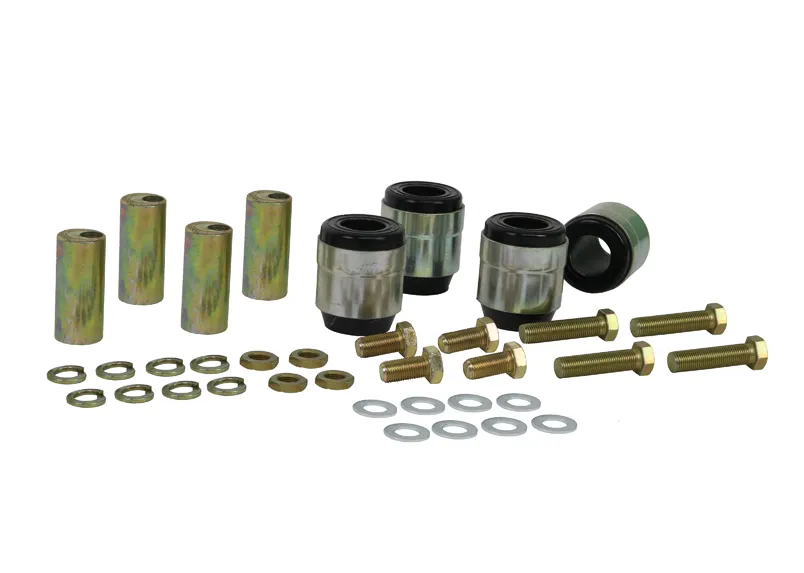
Control Arm - Upper Inner Bushing (Camber/Caster Correction)
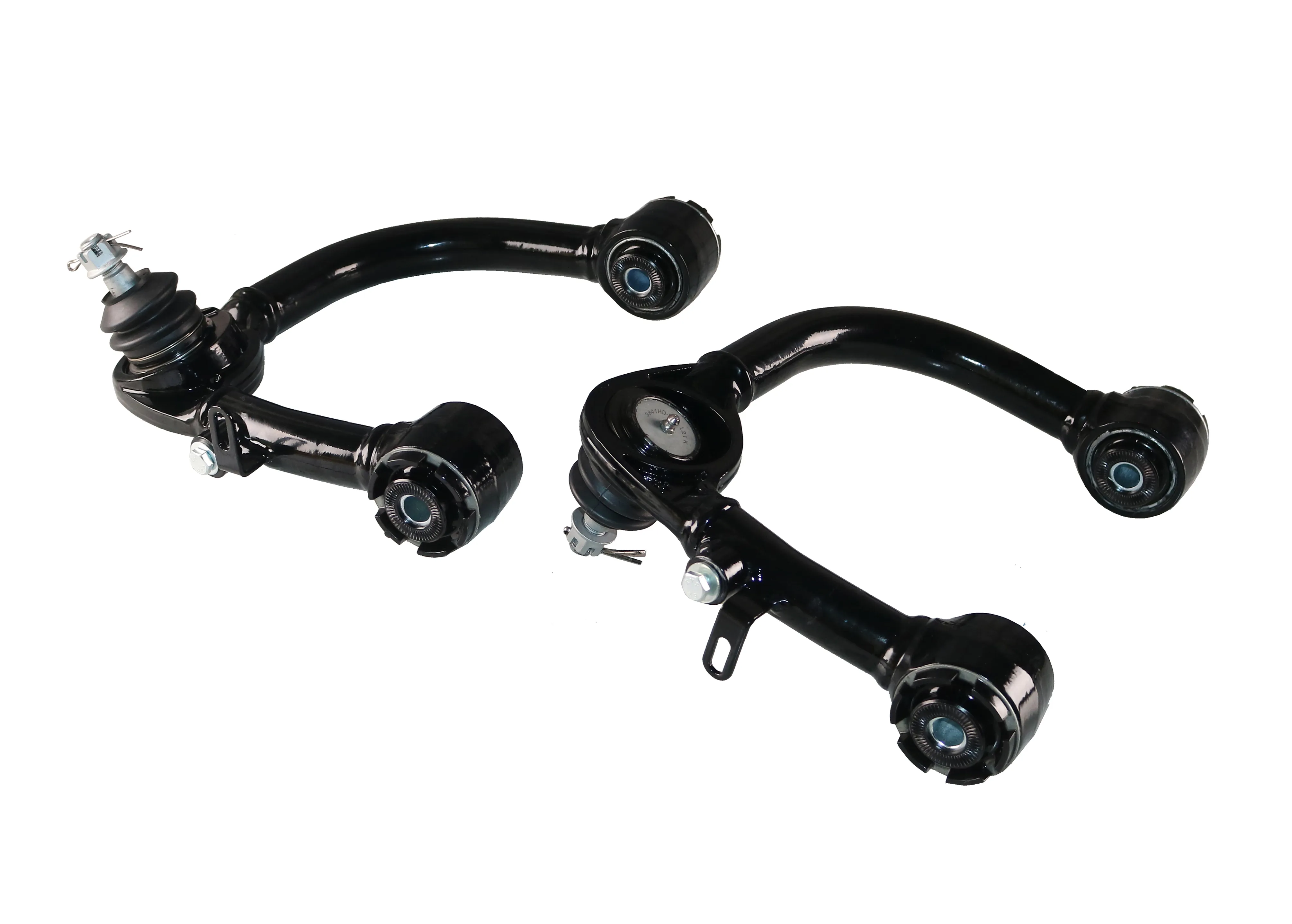
Fixed Offset Camber & Caster Correcting Upper Control Arm Set
Fitting Offset Control Arm Bushings
Install offset bushings exactly as described in our installation guide, paying close attention to orientation, because the direction of the offset determines the correction. Fit them, torque the bolts to factory specification, then have a full wheel alignment done to set the final camber, caster and toe.
Our polyurethane offset bushings resist deflection, oil, ozone and road salt, so the corrected geometry stays put. Most of our control arm bushing products carry a limited lifetime warranty. For the general replacement process, see our guide on how to replace control arm bushings, and for material benefits read polyurethane vs rubber control arm bushings.
FAQs
Looking for more information? Below we answer the most commonly asked questions
What do offset control arm bushings do?
Do camber bushings really work?
Can offset bushings fix caster on a lifted truck?
Should I replace the control arm or just the bushings?
Do I still need an alignment with offset bushings?
Does the orientation of an offset bushing matter?
Get your alignment back where it belongs and keep it there. Explore our range of control arm bushings, including offset designs for camber and caster correction.


