
 US
 Australia
 United Kingdom
 Europe
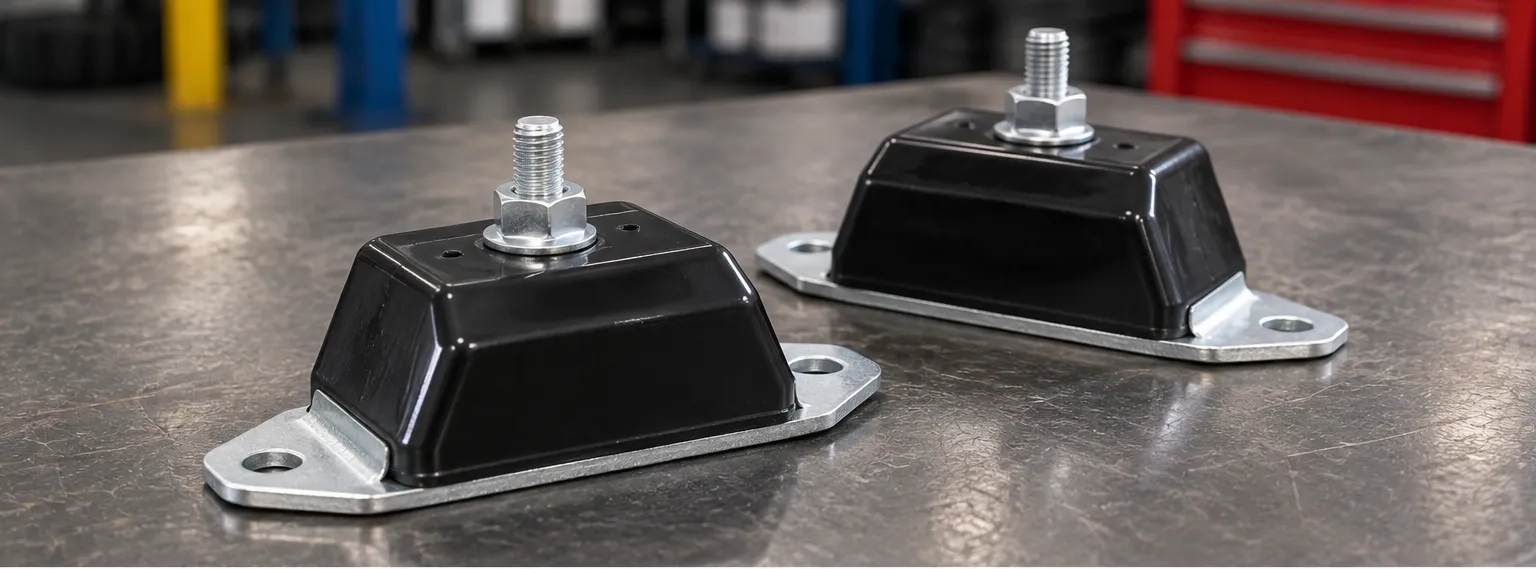

Motor mounts, also called engine mounts, are the brackets and cushioned bushings that bolt your engine and transmission to the vehicle's frame or subframe. They carry the weight of the drivetrain, stop it twisting under torque and absorb engine vibration before it reaches the cabin. When they wear, you feel thumps, shakes and clunks.
Your engine produces a constant stream of vibration and a powerful twisting force every time you accelerate. Something has to hold it firmly in place without shaking the whole vehicle apart, and that is the job of the motor mounts. So what are motor mounts, how do they work and why do they matter so much? We make polyurethane engine mount bushings for performance, muscle, passenger, diesel and commercial applications, and here is the full explanation.
What Is a Motor Mount on a Car?
A motor mount is a mounting point that connects the engine to the chassis. Each one typically has a metal bracket bolted to the engine block, a second bracket or pedestal bolted to the frame, and a cushion between them. That cushion is what does the clever work, and it is usually rubber from the factory.
So what are engine mounts compared with motor mounts? They are the same thing, and you will see both names used for the same part. Many vehicles also have one or more transmission mounts, plus torque struts or torque arms that control how far the engine rocks under load. Together they form the complete drivetrain mounting system.
What Do Motor Mounts Do?
Every engine mount has three jobs, and it has to manage all of them at once:
- Support the weight: The engine and transmission can weigh several hundred pounds, and the mounts carry that load over every bump.
- Control torque reaction: When you accelerate, the engine tries to twist in the opposite direction to the crankshaft's rotation, and the mounts resist that movement.
- Isolate vibration: The cushion absorbs firing pulses and engine vibration so the cabin stays smooth and quiet.
When a car engine mount is healthy, you barely know it is there. The engine stays steady at idle, the vehicle pulls away cleanly and gear changes feel smooth. When it wears, the engine moves more than it should and the vibration reaches you through the floor, steering wheel and seats.
Types of Engine Mounts
|
Engine mount type |
How it works |
Typical use |
|
Rubber |
Rubber bonded between steel brackets |
Most everyday passenger vehicles |
|
Hydraulic |
Fluid-filled chamber adds extra damping |
Many modern cars and SUVs |
|
Active or electronic |
Damping changes with engine speed and load |
Some newer premium vehicles |
|
Polyurethane |
Tougher cushion that resists movement and wear |
Performance, towing, diesel and high-mileage vehicles |
|
Solid |
Metal with little or no cushion |
Dedicated race and drag vehicles |
Polyurethane is the most popular upgrade from worn rubber because it controls engine movement better and lasts longer, without the harshness of a solid mount. Our guide to polyurethane vs rubber motor mounts compares them in detail.
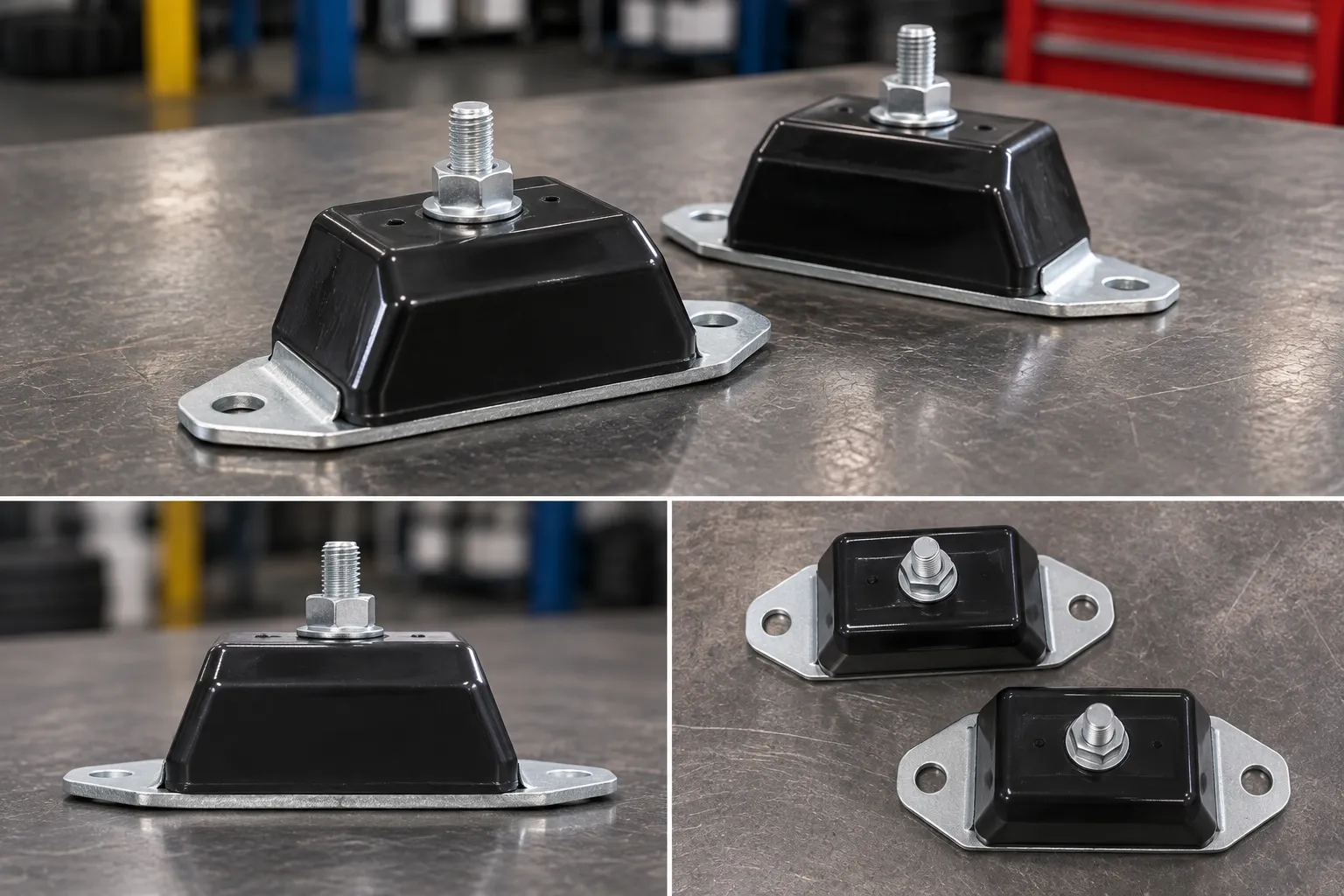
Motor Mount Kit- 6 Cylinder Models
Why Motor Mounts Wear Out
Engine mounts live in one of the harshest environments in the vehicle. Engine heat cooks the rubber, oil and coolant leaks soften it, and the constant twisting of torque reaction stretches it every time you accelerate. Over time the rubber cracks, sags and tears away from its brackets, and hydraulic mounts can leak their fluid.
High-torque engines wear mounts faster, which is why the problem is so common on V8s, turbocharged engines and diesels. Towing, aggressive driving and engine swaps all add to the load. Our checklist of bad motor mount symptoms explains what to look and listen for.
Where Are the Motor Mounts Located?
Most vehicles use somewhere between two and four mounts in total, combining engine mounts, transmission mounts and torque struts. Their position depends on whether the engine sits lengthwise in a rear-wheel drive layout or sideways in a front-wheel drive layout. Our guide to how many motor mounts a car has covers the common layouts and where to find each mount.
FAQs
Looking for more information? Below we answer the most commonly asked questions
Are motor mounts and engine mounts the same thing?
What does a motor mount do?
What is an engine mount made of?
How many motor mounts does a car have?
What happens when a motor mount fails?
Do motor mounts affect performance?
Keep your engine steady and your cabin smooth. Browse our full range of engine mount bushings, including insert kits and complete mount sets.


