
 US
 Australia
 United Kingdom
 Europe
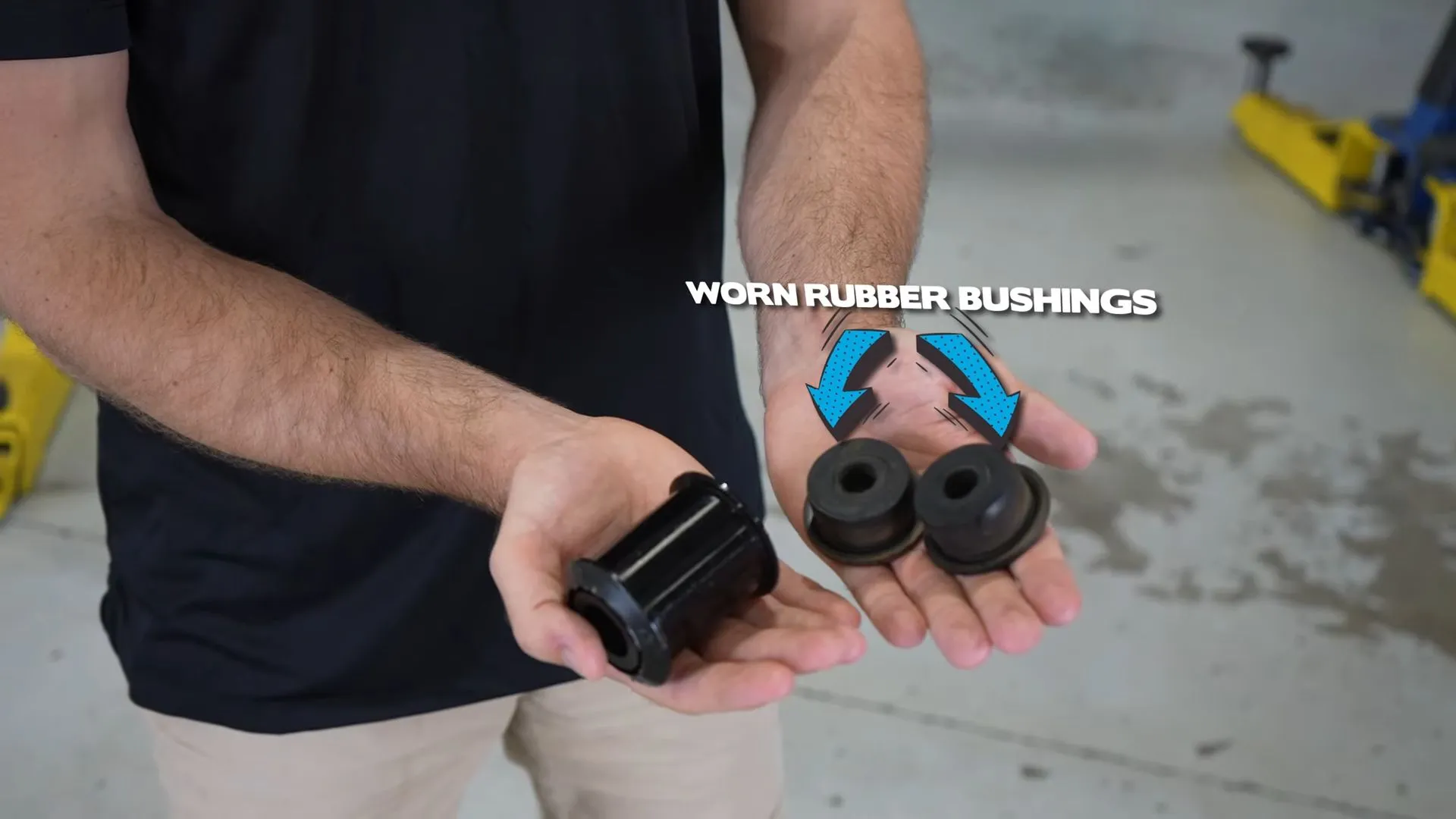

In the polyurethane vs rubber control arm bushings comparison, polyurethane wins on durability and precision. It resists deflection, oil, ozone and road salt, so it holds alignment and steering feel far longer than rubber. Rubber is soft and quiet when new but tears and cracks with age. Correctly lubricated polyurethane control arm bushings stay quiet and suit most vehicles.
When your control arm bushings wear out, you have a choice to make. You can fit rubber, the same material that just failed, or step up to polyurethane. The decision affects steering precision, tire wear, ride comfort and how soon you will be doing the job again. Here is an honest look at both materials, and why we engineer our control arm bushings in polyurethane.
How Rubber Control Arm Bushings Perform
Rubber is what most vehicles use from the factory, usually bonded to steel sleeves. It is soft and very good at isolating small vibrations when new, which is why automakers choose it for a quiet, comfortable ride. Some newer vehicles go further with fluid-filled hydraulic bushings for extra isolation.
The problem with rubber is how long it actually lasts. It is vulnerable to heat, ozone, oil and road salt, and it deflects under load. As it ages it hardens, cracks, tears away from its sleeves and lets the control arm move further with every bump and braking event. Fluid-filled hydraulic bushings can also leak and go soft. The ride stays soft, but the precision disappears, and alignment and tire wear suffer.
How Polyurethane Control Arm Bushings Perform
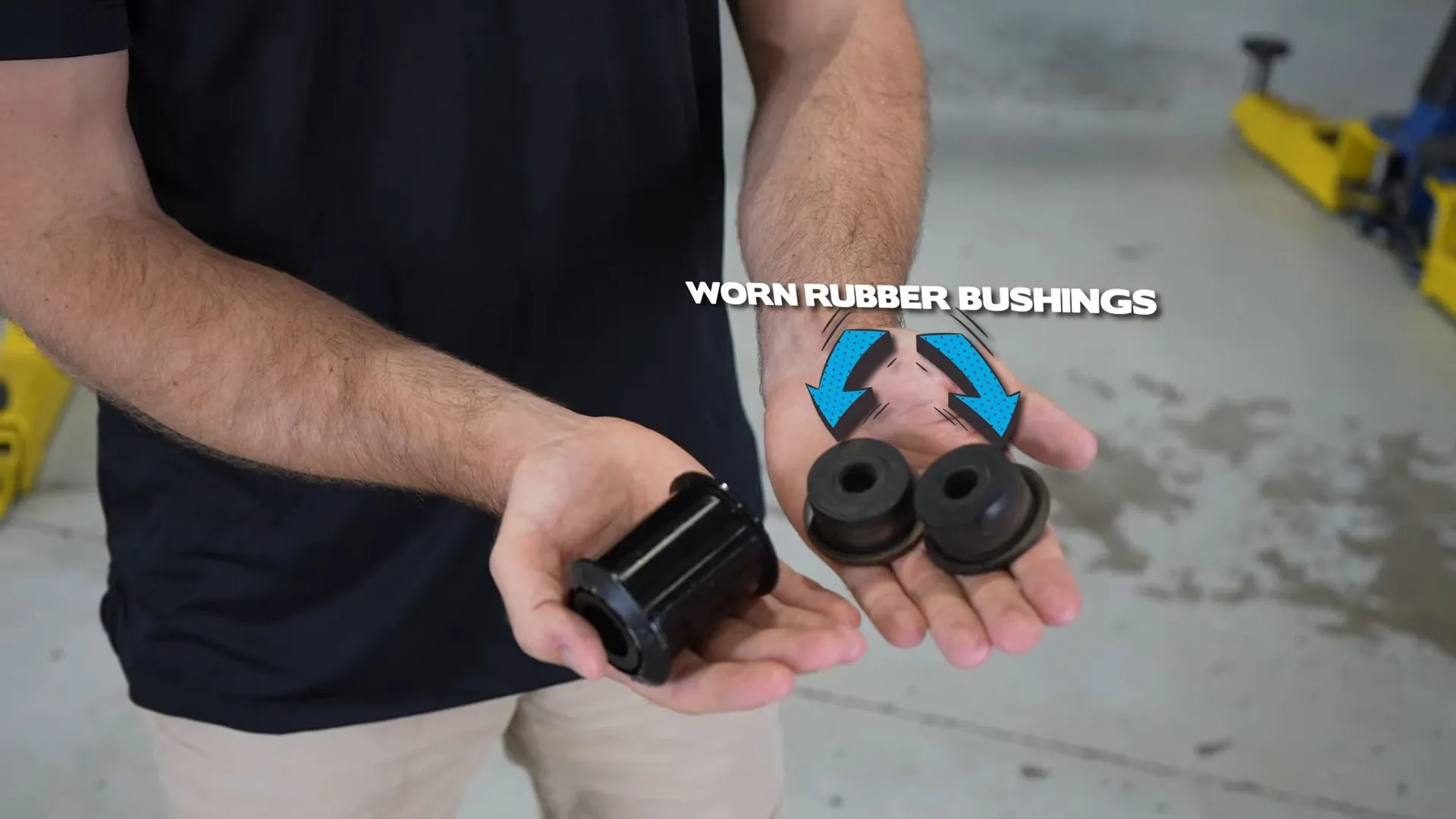
Polyurethane is a tougher, more resilient material that deflects far less under load. It holds the control arm firmly in position, so camber, caster and toe stay where they were set even under hard braking and cornering. Steering feels crisper and more connected, and the vehicle settles faster after bumps and direction changes.
It also stands up to the things that kill rubber. Our polyurethane resists oil, ozone and road salt, and it does not tear away from its sleeves the way aged rubber does. That is why most of our control arm bushing products carry a limited lifetime warranty. Our formulations are engineered to balance control with comfort, which is the thinking behind our tagline: softer, stronger, smarter.
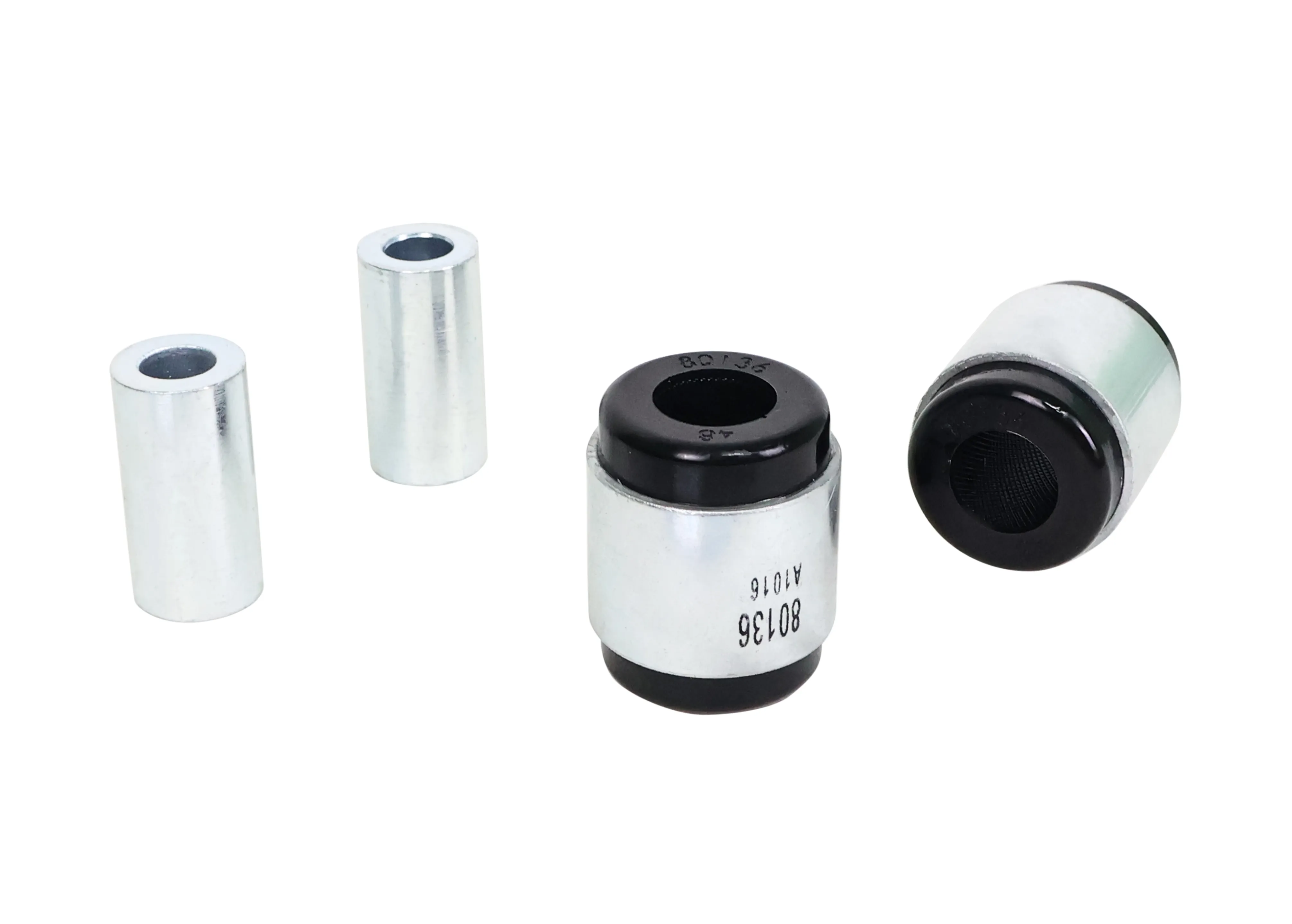
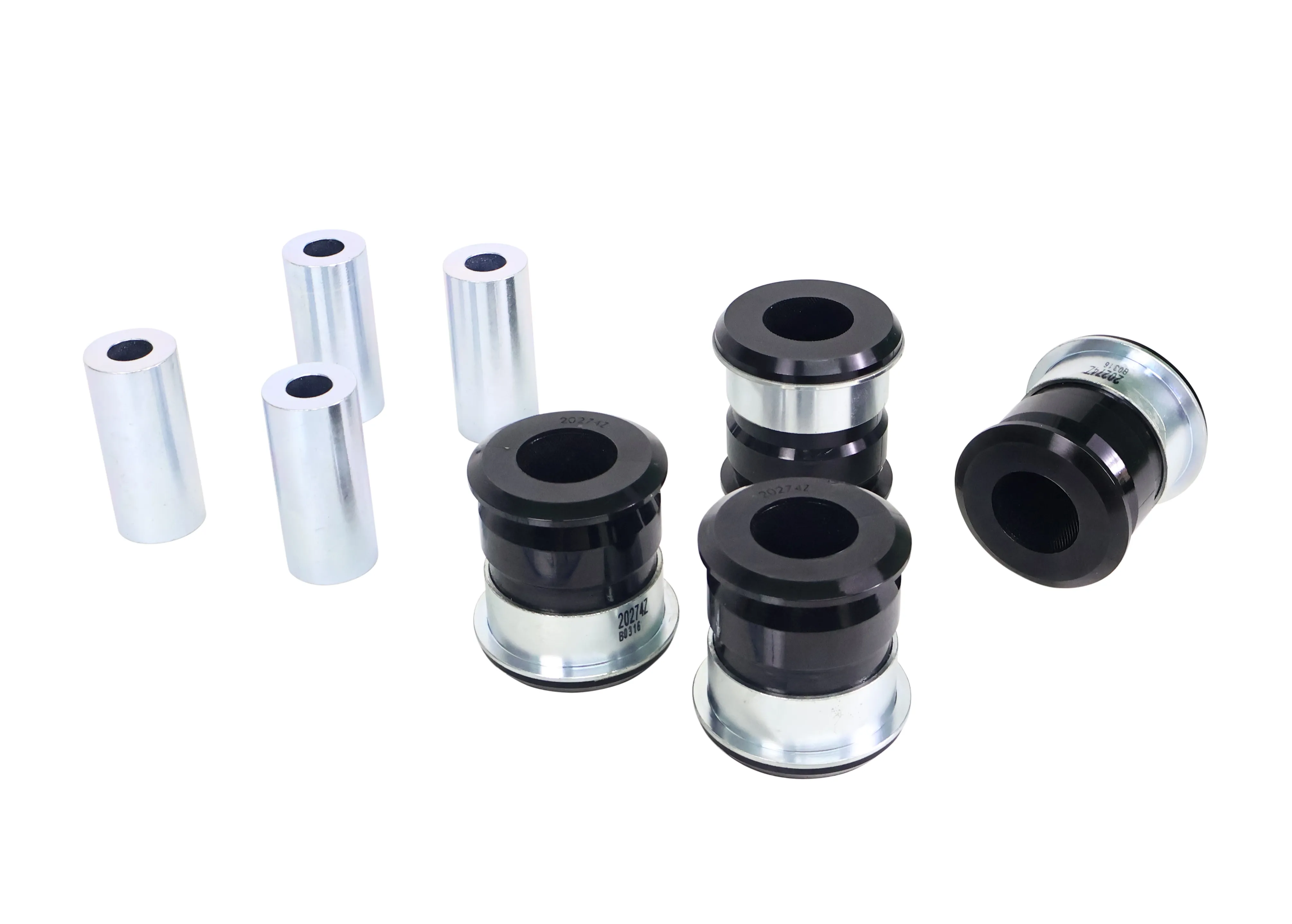
Rear Lower Control Arm Bushing Kit
Polyurethane vs Rubber Control Arm Bushings Compared
|
What matters |
Rubber control arm bushings |
Nolathane polyurethane control arm bushings |
|
Deflection under braking and cornering |
Higher, grows with age |
Low and consistent |
|
Holding wheel alignment |
Drifts as rubber wears |
Holds settings far longer |
|
Resistance to oil, ozone and road salt |
Poor |
Excellent |
|
Typical failure mode |
Cracking, tearing, separating from sleeves |
Long service life with correct installation |
|
Steering feel |
Softens over time |
Precise and connected |
|
Warranty |
Varies by supplier |
Most products carry a limited lifetime warranty |
Do Poly Control Arm Bushings Ride Harsher?
Polyurethane transmits a little more road texture than brand-new rubber, but most drivers describe the change as a tighter, more controlled feel rather than a harsh one. Compared with the worn rubber you are replacing, the vehicle usually feels quieter and more settled, because the clunks and wandering disappear.
Squeaking is the other common concern with poly control arm bushings. It almost always comes from installing them dry or with the wrong grease. Follow our installation guide, use the specified grease on the surfaces it lists, and the bushings stay quiet. Our guide on how to replace control arm bushings covers the process.
Who Should Choose Polyurethane Control Arm Bushings?
Polyurethane suits almost anyone who plans to keep their vehicle:
- High-mileage daily drivers: Restore a tight front end without the same repair coming back in a few years.
- Trucks that tow or carry loads: Firm bushings hold alignment under extra weight and braking forces.
- Lifted 4x4s: Resistance to mud, water and road salt suits off-road use.
- Performance and muscle cars: Crisper steering and less deflection sharpen the handling you already enjoy.
- Classic and restoration projects: A long-lasting fix for vehicles where original rubber has perished.
Our range covers individual positions as well as essential and complete vehicle kits, plus offset designs for camber and caster correction. If you are budgeting the job, see our guide to control arm bushing replacement cost.
FAQs
Looking for more information about polyurethane control arm bushings? Below we answer the most commonly asked questions
Are polyurethane control arm bushings better than rubber?
Do polyurethane control arm bushings squeak?
Do poly control arm bushings make the ride harsher?
How long do polyurethane control arm bushings last?
Can I mix polyurethane and rubber control arm bushings?
Are polyurethane bushings good for daily drivers?
Choose a fix that lasts as long as you own the vehicle. Find polyurethane control arm bushings matched to your vehicle and every suspension position.


