
 US
 Australia
 United Kingdom
 Europe
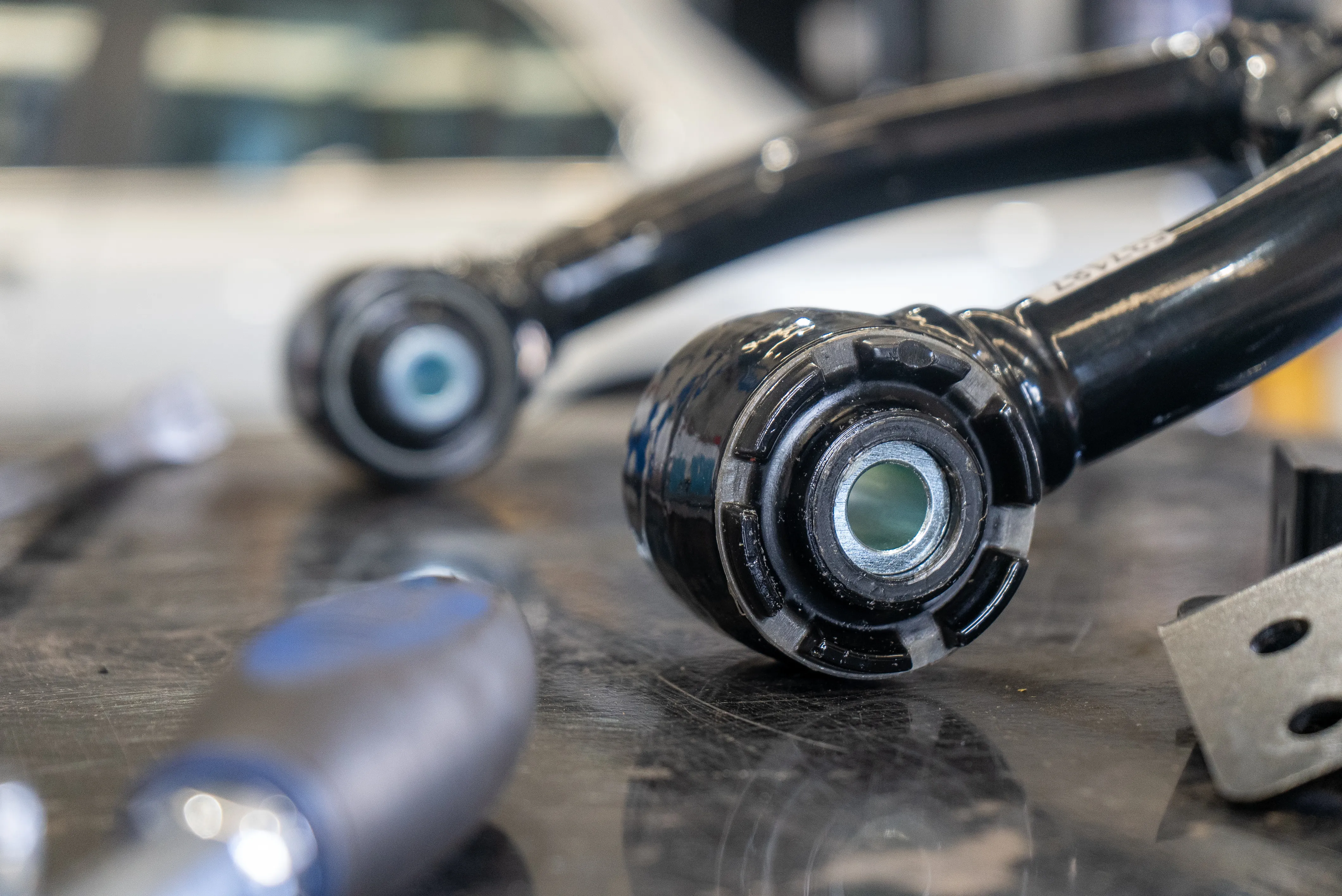

In the upper vs lower control arm bushings comparison, lower control arm bushings carry most of the braking, cornering and road loads and usually wear out first. Upper control arm bushings are smaller and mainly control camber as the wheel moves. Vehicles with strut front suspension often have lower arms only, while trucks and many SUVs use both.
When a shop tells you the control arm bushings are worn, the next question is which ones. Upper and lower arms do different jobs, carry different loads and wear at different rates, so knowing the difference helps you understand the quote and buy the right parts. Here is how upper and lower control arm bushings compare, and how to choose polyurethane control arm bushings for each position.
Does Your Vehicle Have Upper and Lower Control Arms?
The answer depends on the suspension design under your vehicle. Many cars and crossovers use MacPherson strut front suspension, where the strut itself takes the place of an upper arm. Those vehicles have a lower control arm on each side and no upper arm at the front.
Trucks, body-on-frame SUVs and many performance cars use a double wishbone design with both an upper and a lower arm at each front wheel. At the rear, multi-link suspensions can have several upper, lower and trailing arms, each with its own bushings. Check the layout for your vehicle before ordering parts, since our kits are matched to the exact position.
What Lower Control Arm Bushings Do
The lower control arm bushing sits at the inner pivots of the lower arm, usually one at the front and one at the rear of each arm. On many designs the spring or strut also bears on the lower arm, so it carries the weight of the vehicle as well as braking, acceleration and cornering forces.
That heavy workload is why the lower control arm bushing is one of the most searched suspension parts and one of the most common to fail. The rear lower bushing in particular absorbs fore and aft forces every time you brake or hit a pothole. Worn front lower control arm bushings typically cause clunks under braking, wandering steering and uneven tire wear.
What Upper Control Arm Bushings Do
The upper control arm bushing sits at the inner pivots of the upper arm on double wishbone suspensions. The upper arm is shorter and carries less load, so its bushings are usually smaller. Its main role is controlling camber, the inward or outward tilt of the wheel, as the suspension moves up and down.
Upper control arm bushings tend to last longer than lowers, but when they wear you may notice uneven tire wear on the inner or outer edge, vague steering and a knock over sharp bumps. On lifted trucks, the upper arm angle changes with ride height, which can make the bushings work harder and affect alignment.
Upper vs Lower Control Arm Bushings Side by Side
|
What matters |
Lower control arm bushings |
Upper control arm bushings |
|
Found on |
Almost every vehicle |
Double wishbone and some multi-link designs |
|
Typical size |
Larger |
Smaller |
|
Main job |
Locating the wheel, carrying braking and cornering loads |
Controlling camber through suspension travel |
|
Typical wear rate |
Faster |
Slower |
|
Common symptoms |
Clunk when braking, wandering, pulling |
Uneven tire edge wear, knocks over sharp bumps |
|
Alignment needed after replacement |
Yes |
Yes |
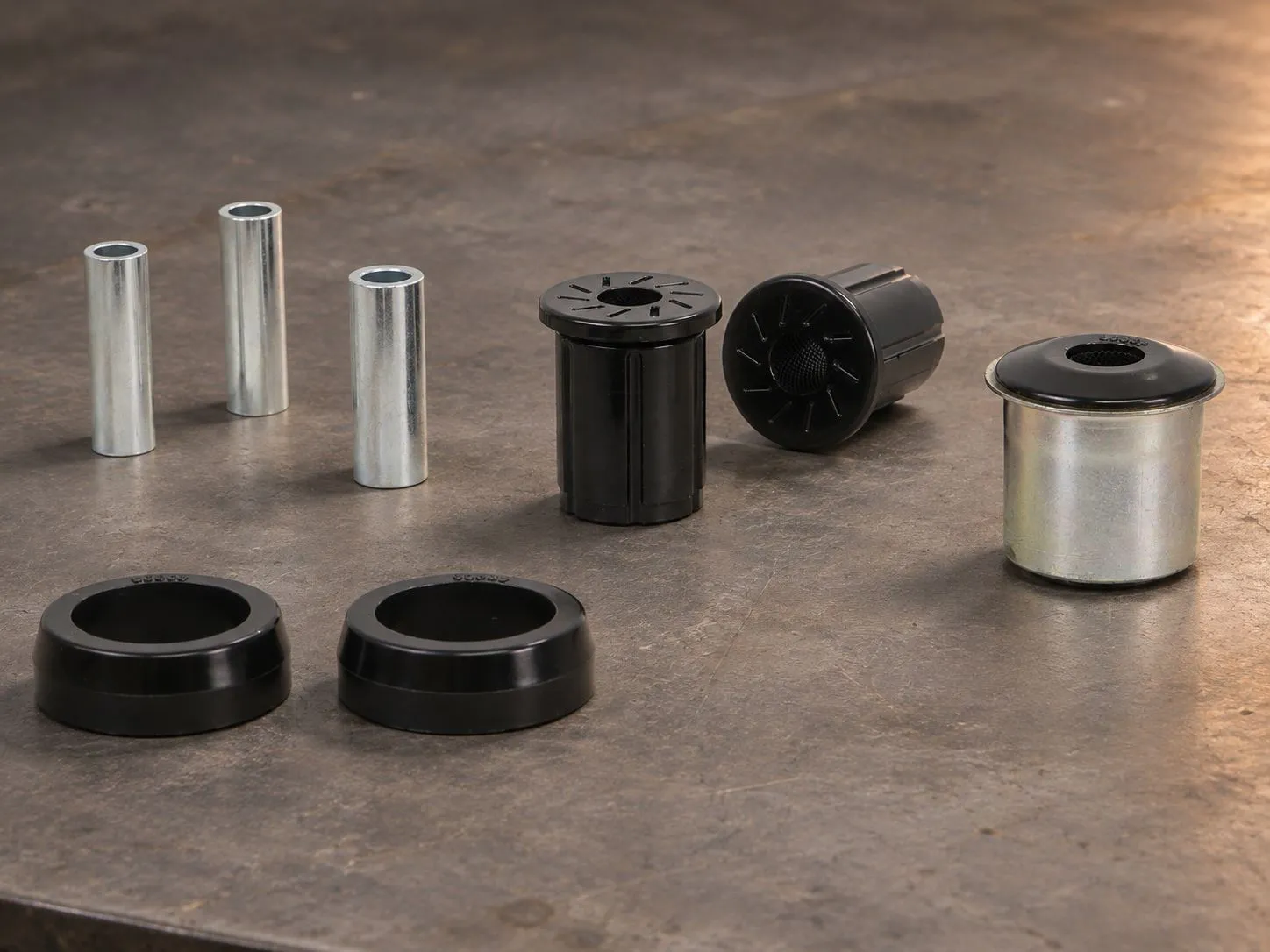
Rear Control Arm Bushing Set
Rear Control Arm Bushings
Rear suspension uses control arm bushings too, especially on independent rear suspensions and solid axles located by trailing arms. A worn rear control arm bushing or rear lower control arm bushing can cause a vague, shifting rear end in corners, clunks over bumps and rear tire wear. On trucks and 4x4s with solid rear axles, worn trailing arm or lower link bushings can also cause axle wrap and shudder under acceleration.
Should You Replace Upper and Lower Bushings Together?
If both are worn, yes, since you only pay for one alignment and the front end is already apart. If only the lower bushings are worn, replacing those alone is reasonable. Always do both sides of the same axle together so the vehicle handles evenly.
Our polyurethane control arm bushings are available for individual positions as well as essential and complete vehicle kits, including offset designs for camber and caster correction. Polyurethane holds each arm firmly against braking and cornering loads, and most of the range carries a limited lifetime warranty. If you are unsure which position is worn, our guide on how to check control arm bushings explains the tests, and our explainer on offset control arm bushings covers alignment correction.
FAQs
Looking for more information about upper and lower control arm bushings? Below we answer the most commonly asked questions
Which wears out first, upper or lower control arm bushings?
Do all cars have upper control arm bushings?
What are the symptoms of a bad upper control arm bushing?
Do I need an alignment after replacing upper control arm bushings?
Are front lower control arm bushings the same as rear ones?
Can I replace lower control arm bushings without replacing the arm?
Upper, lower, front or rear, we have the position covered. Shop our control arm bushings by vehicle and position to find the right kit.


