
 US
 Australia
 United Kingdom
 Europe
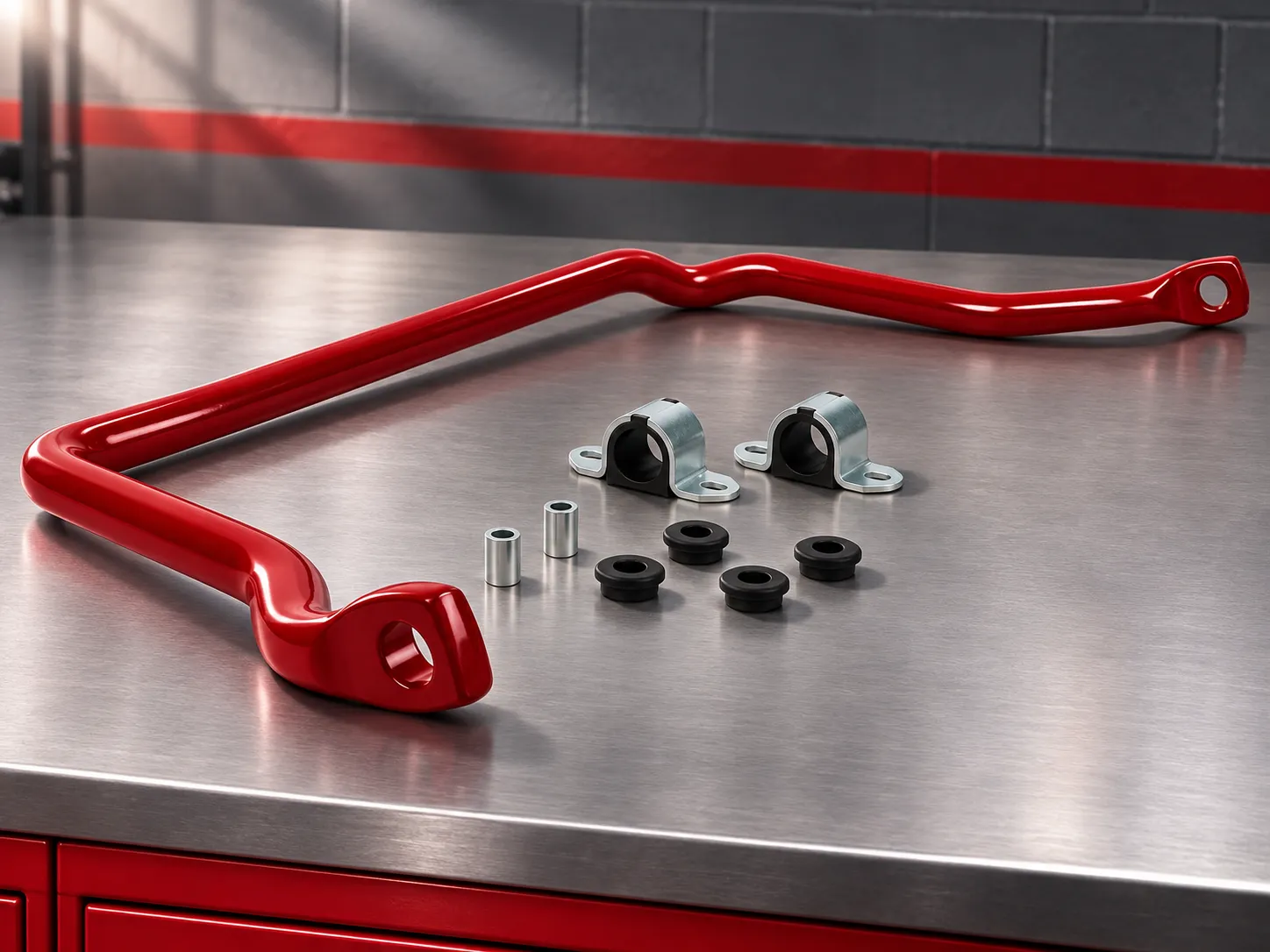

A sway bar is a steel torsion bar that links the left and right sides of your suspension. When the vehicle leans in a corner, the bar twists and pushes back, keeping the body flatter and the tires planted. That reduces vehicle sway, sharpens steering response and improves cornering traction without making the ride stiffer over straight-line bumps.
If you have ever wondered what does a sway bar do, the short answer is that it keeps your car or truck level when you turn. It is one of the simplest parts under your vehicle, yet it has a big effect on how safe and confident the vehicle feels. We engineer a full range of sway bars and sway bar kits for cars, trucks and 4x4s, so here is a clear look at how they work and why they matter.
What Is a Sway Bar on a Car?
A sway bar is a U-shaped length of spring steel that runs across the vehicle, usually at the front and often at the rear as well. The center section is clamped to the frame or subframe through two mount bushings, and each end connects to the suspension through an end link. You will also hear it called a stabilizer bar or an anti-sway bar, and all three names describe the same part.
So what does a sway bar look like if you peer underneath? Look behind the front bumper or near the rear axle for a bent bar running side to side, with short vertical links at each end dropping down to the control arms or axle. On trucks and 4x4s the bar is often thicker and the links longer to suit the extra suspension travel.
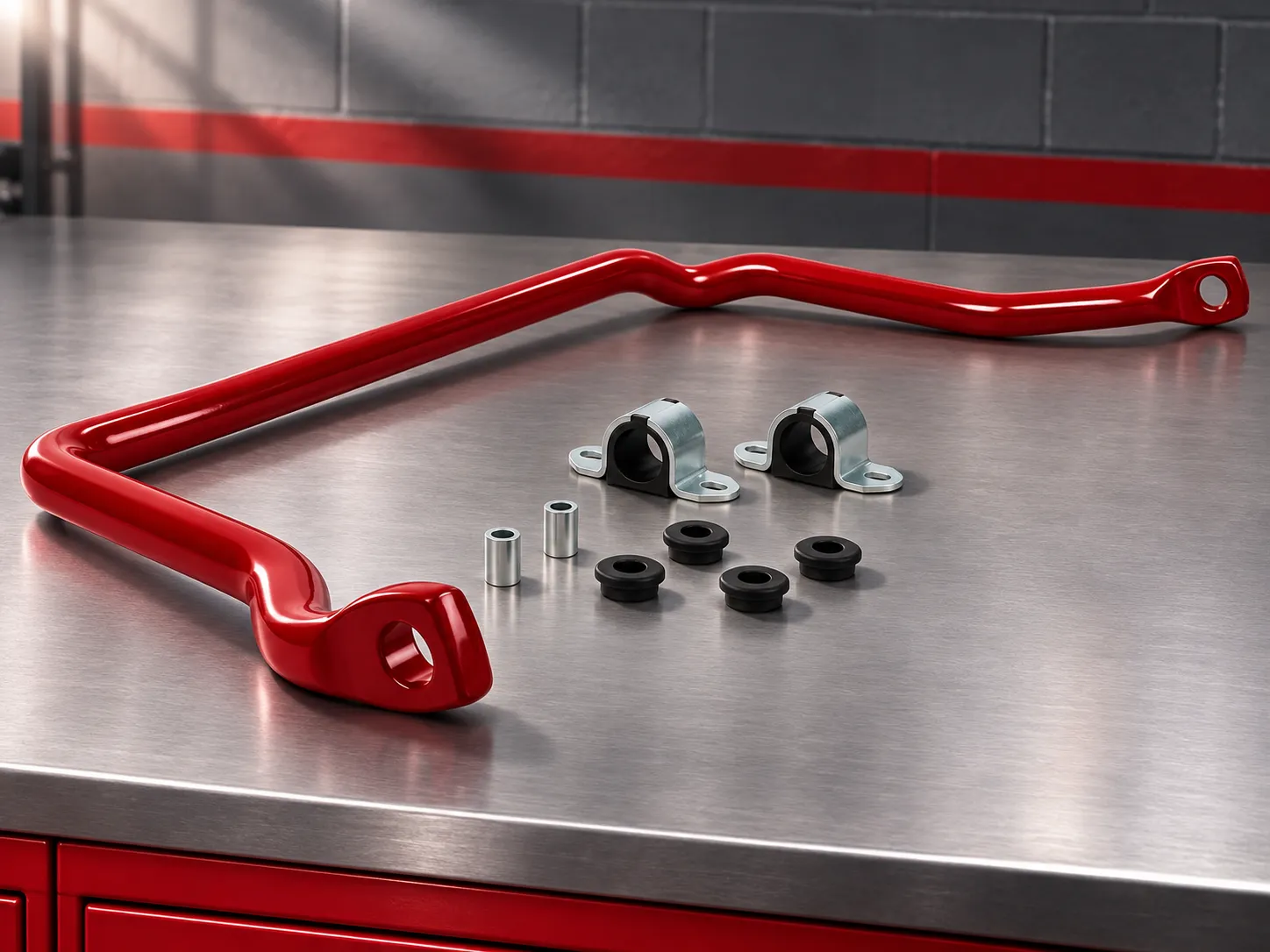
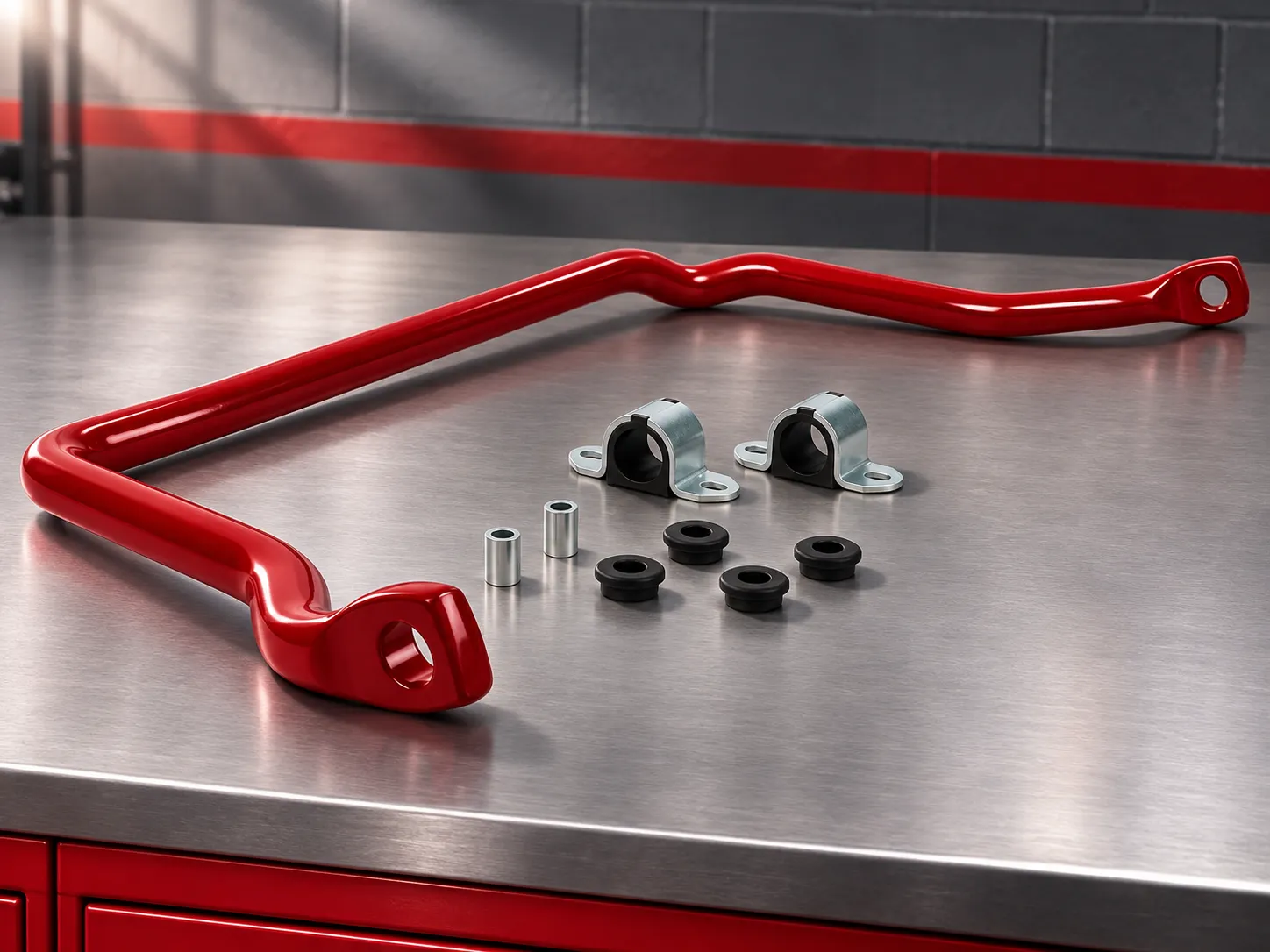
Front Sway Bar - 33mm Non Adjustable to Suit Toyota Land Cruiser 80 and 105 Series
How Does a Sway Bar Work?
The sway bar works as a torsion spring that only comes into play when the two sides of the suspension move differently. When you drive over a bump with both wheels at once, both ends of the bar move together, the bar simply pivots in its bushings and it has almost no effect on the ride.
In a corner, the vehicle leans toward the outside of the turn. The outside suspension compresses and the inside suspension extends, which twists the bar along its length. The bar resists that twist and transfers force across the vehicle, pushing the inside of the body down and holding the outside up. The result is less lean, steadier weight transfer and tires that stay flatter on the road.
|
Sway bar component |
What it does |
|
Bar |
Twists as the vehicle leans and pushes back to keep the body level |
|
Mount bushings |
Hold the bar to the frame while letting it pivot smoothly |
|
End links |
Connect each end of the bar to the control arm or axle |
|
Brackets |
Clamp the mount bushings to the chassis at the correct position |
Each part has to be in good condition for the system to work. A perfect bar connected through worn bushings or loose links simply cannot do its job.
What Do Sway Bars Do for Handling and Safety?
The sway bar purpose is control, and it is one of the most important pieces of your sway bar suspension setup. By limiting vehicle sway, it keeps more of each tire's contact patch on the road, which gives you better cornering traction and more predictable steering. Emergency lane changes feel calmer because the vehicle settles faster instead of rocking from side to side.
Sway bars also help in situations most drivers never think about. Trucks carrying a load or towing benefit from reduced lean in crosswinds and on highway curves, and tall SUVs feel far more planted with healthy bars front and rear. On performance and muscle cars, a stiffer bar is one of the most effective handling upgrades you can make.
Sway Bars on Trucks and 4x4s
On a solid-axle truck or 4x4, the sway bar has a second job to balance. It controls lean on the road, but off-road it can limit how far each wheel drops and climbs over obstacles. That is why many off-road drivers fit disconnect end links to free the bar on the trail and reconnect it before the highway. Our guide to the sway bar disconnect explains how that works.
For road driving, a healthy sway bar is just as important on a truck as on a car. Higher centers of gravity mean more lean, so worn bushings or links show up quickly as wallowing, clunks and vague steering.
Signs Your Sway Bar Needs Attention
Most sway bar problems come from the bushings and end links rather than the bar itself. Clunks over uneven roads, extra lean in corners and a loose feel in the steering are the classic signs. Rubber mount bushings harden, crack and allow the bar to move in its clamps, while worn end links knock with every bump.
Our polyurethane sway bar bushings hold the bar firmly and resist the oil, road salt and age that break rubber down. They are backed by a limited lifetime warranty. For the full list of warning signs, read our guide to bad sway bar symptoms.
FAQs
Looking for more information about sway bars? Below we answer the most commonly asked questions
What is the purpose of a sway bar?
What are sway bars made of?
Does a sway bar affect ride comfort?
Is a stabilizer bar the same as a sway bar?
Do all cars have sway bars?
Can a sway bar improve handling?
Keep your vehicle level, planted and predictable through every turn. Browse our sway bars and sway bar kits to find the right parts for your car, truck or 4x4.


