US
 Australia
 United Kingdom
 Europe
Bushings for 2016 Honda CR-V Touring
IMPROVE GRIP, HANDLING & PERFORMANCE.
Something has started clunking, the steering has gone woolly, or a shop has told you the bushings are shot. Whichever it is, bushings are among the cheapest parts on your Honda CR-V to buy. The expensive part is reaching them, which is why it pays to understand what you are dealing with before anyone starts pulling the suspension apart. What Are... Read more
Something has started clunking, the steering has gone woolly, or a shop has told you the bushings are shot. Whichever it is, bushings are among the cheapest parts on your Honda CR-V to buy.
The expensive part is reaching them, which is why it pays to understand what you are dealing with before anyone starts pulling the suspension apart.
What Are Bushings on Your Honda CR-V, and What Do They Do
Think of a bushing as a controlled joint. Two pieces of metal need to move relative to each other, and something has to sit between them that permits movement in one direction and refuses it in every other.
That something is a sleeve, usually rubber from the factory, held in an eye on one component with a metal tube through the middle for the bolt. The suspension arm swings on it thousands of times a day and the vehicle stays pointed where the alignment put it.
What are bushings used for beyond simply allowing movement? Refinement, mostly, because a soft bushing swallows road noise and vibration before it reaches the cabin, which is why manufacturers choose rubber and why a new vehicle feels refined. The trade is that soft material also lets components move when you would rather they did not.
What are car bushings doing badly once they age? Both of those jobs at once, because perished rubber transmits more noise than it did when new and controls less than it did when new, so you lose the refinement and the precision at the same time.
Why Honda CR-V Bushings Fail on Age Rather Than Mileage
This catches people out, particularly on a vehicle that has not covered big distances.
Rubber degrades on a calendar rather than an odometer. Sunlight, heat cycling, ozone in the air and whatever oil has dripped on it over the years all break the material down whether the vehicle is being driven or sitting in a driveway. A twelve year old car with modest mileage frequently has worse bushings than a six year old one that has been worked hard.
That is why a vehicle brought out of long term storage often needs a full refresh despite the odometer suggesting otherwise, and why restored classics are one of the most common applications for a complete kit.
Mileage still matters, particularly on vehicles that tow, carry weight or spend time on unsealed roads, where loads and grit accelerate everything. It simply is not the only clock running.
Which Bushings Wear First on Your Honda CR-V
Some positions go long before others, and knowing the order narrows down where to look.
Sway bar bushings almost always lead, because they cycle constantly and sit fully exposed. They are also the ones that squeak, which makes them the most frequently replaced bushing on any vehicle by a wide margin.
Control arm bushings are next, with the front lower positions ahead of the rest because that arm takes braking and cornering load directly. Shock and strut mount bushings run a similar timeline, since they work through their range on inputs too small for anything else to notice.
Leaf spring, trailing arm and panhard rod bushings follow on vehicles that have them, though heavy use moves them up the list quickly.
Steering rack, differential, subframe and engine mount bushings usually last longest, and they are the ones nobody checks. On a high mileage vehicle they are often the reason a suspension refresh did not deliver what the owner expected.
Finding the Worn Honda CR-V Bushing Without Guessing
Replacing parts until a noise stops is an expensive way to diagnose. A pry bar and half an hour is cheaper.
Get your Honda CR-V safely supported with the suspension unloaded. Work through each joint in turn, levering the component against its mounting point and watching closely. You are looking for movement at the bushing itself rather than flex in the arm, and the difference is obvious once you have seen both.
Compare left to right as you go, because a healthy side gives you a reference for what normal looks like on that vehicle.
Then inspect each one visually, because rubber bonded to a metal outer sleeve separates as it hardens, so look for a gap where the two have parted company, cracking across the exposed face, or material pushed out past the edge of the housing.
A bushing can be finished without looking dramatic, and it can look ugly while still doing its job. The pry bar is what settles which of the two you are looking at.
Symptoms of Worn Honda CR-V Bushings
- Clunking or knocking over bumps, driveways and parking lot speeds
- Squeaking or creaking that comes and goes with the weather
- Steering that needs constant small corrections to hold a lane
- More vehicle sway through corners, with a body that takes longer to settle
- Uneven tire wear that returns after every alignment
- Pulling to one side under braking
- An alignment that reads correct while the vehicle still drives poorly
- Everything worse when loaded, towing or on rough surfaces
- Inspection failure or a shop report listing play at a joint
Worn suspension bushings rarely announce themselves clearly, because they degrade over years, drivers adapt without noticing, and the fault only becomes obvious when a new set goes in and the vehicle feels like it did when it was younger.
How Long Can You Drive Your Honda CR-V With Bad Control Arm Bushings
Depends how far gone they are, and it is worth being realistic rather than alarmist.
Early wear costs you precision and tire life. The vehicle remains controllable and you can plan the repair around your schedule rather than dropping everything.
Advanced wear is a different matter entirely, because once an arm moves meaningfully at its mounts, the alignment shifts under braking and cornering, so the vehicle behaves least predictably at the moment you most need it not to. The damage also spreads outward into the ball joint, the tires and eventually the mounting eye.
A bushing that has failed completely, with material missing or metal contacting metal, is not something to postpone.
Honda CR-V Bushing Replacement Cost and Why Quotes Vary So Much
Car bushing replacement cost comes down to access rather than parts, and two quotes for the same vehicle can differ enormously for legitimate reasons.
Some positions unbolt in a matter of minutes, while others need the component removed, the old bushing pressed out, the new one pressed in square, and the whole assembly refitted and torqued. A shop quoting the second job properly will always look expensive next to one quoting the first.
An alignment belongs on the end of anything that affects wheel position, and whether it is included or extra explains a good part of the gap between quotes.
The real saving is in grouping the work. Since access is the cost, replacing everything on a corner while it is apart costs a fraction of doing it one position at a time across three visits. Ask for the quote itemized by position, and ask what else could be done while the same parts are off the vehicle.
Polyurethane Bushings or Rubber When It Comes Time to Replace Your Honda CR-V Bushings
You are replacing a worn bushing either way. The only question is what goes back in.
Rubber returns the vehicle to standard and will age out again on a similar timeline to the set you just removed. For a vehicle that will be sold soon, or one where absolute quietness is the priority, that is a reasonable choice.
Polyurethane bushings are a different proposition, because the material resists the oil, ozone and weathering that break rubber down, so it does not perish the way the original did, and it holds its shape under load instead of deflecting further every year. For a vehicle you intend to keep, that is the difference between doing this job once and doing it again in eight years.
The practical gains are steering that stays consistent whether the vehicle is empty or loaded, an alignment that holds between services, and cornering traction that does not fall away as the parts age.
Ride harshness is the concern people raise, and material hardness and bushing design govern that far more than the choice of polyurethane itself, and where a kit is firm enough to be noticeable the listing says so.
What Separates Your Honda CR-V Bushing Repair That Lasts From One That Comes Back
Whatever goes back in, a handful of details separate a repair that lasts from one that comes back.
Inspect the mounting eye with the old bushing removed. An eye that has worn out of round will never hold a new bushing securely, and that component needs replacing rather than rebushing. Finding this out early means ordering the part while everything is still apart.
Use correct diameter tooling for the job, because sockets and improvised drifts damage the eye, and the component costs considerably more than the tool would have.
Include every sleeve and tube supplied in the kit, since those carry the clamping load from the fastener. Leave one out and the bushing gets crushed as soon as the bolt is tightened.
Lubricate on assembly using a product formulated for the material. Silicone based and PTFE greases suit polyurethane, while ordinary lithium and petroleum products break it down over time.
Tighten the fasteners with the weight on the wheels rather than the suspension hanging. A bushing settles into whatever position it is clamped in, and one clamped with the suspension drooping will be under permanent twist at normal ride height. This single detail ruins more new bushings than every other mistake combined.
Finish with an alignment wherever wheel position has changed.
Find Bushings for Your Honda CR-V
Popular repair lines include leaf spring bushings, body mount bushings and radius arm bushings.
Select your Honda CR-V to see every bushing position available for it, as single kits or complete vehicle sets, or search by dimension if you are working on something the fitment guide does not list. Every Nolathane component is backed by our warranty, a fitment guarantee and 60 day returns.
1 item
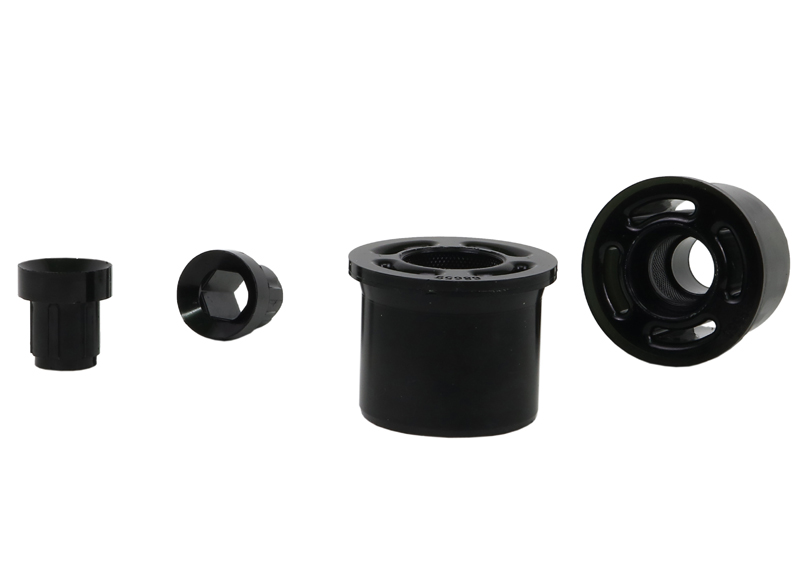
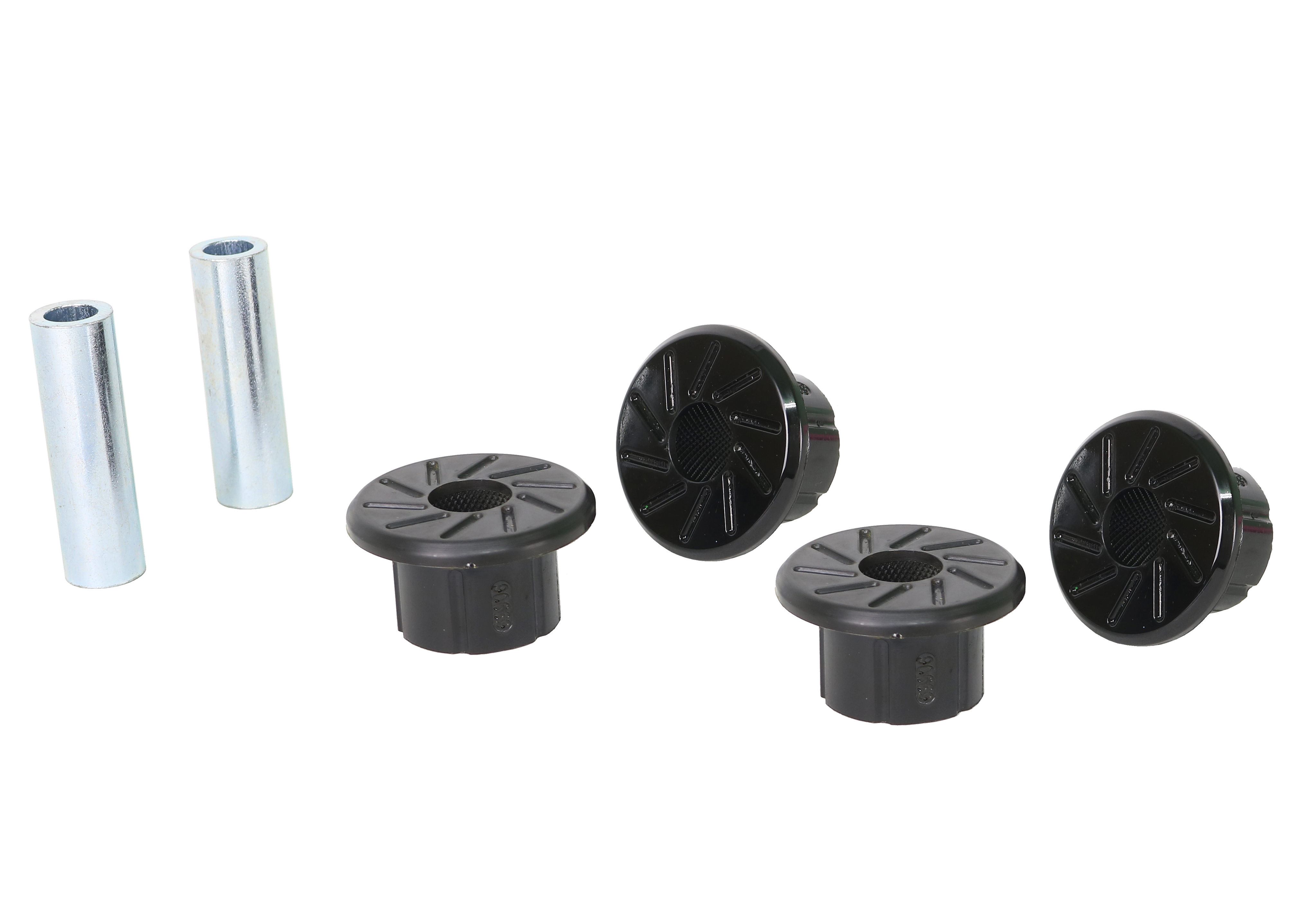
Front Control Arm - Lower Inner Rear Bushing
✅ Fits 2016 Honda CR-V Touring In StockShips within 24hrs.Ships within 24hrs.SKU: REV030.0222Front Control Arm - Lower Inner Rear Bushing
✅ Fits 2016 Honda CR-V TouringIn StockShips within 24hrs.Ships within 24hrs.Qty Required 1$39.87
Your vehicle
Matching vehicles
No match — try selecting it below.
Refine your search
Clear all- Alignment Parts 1
- Camber Bolts 1
- Bushings 1
- Control Arm Bushings 1
- Sway Bar & Sway Bar Kits 1
- Sway Bar Link 1
No categories match.
Can’t find what you’re looking for?
Our team can help you find the right part — or tell us what was missing so we can improve the site.
Call Us +1 909-476-2860 Give Feedback (opens in a new tab)