
 AU
 United Kingdom
 Europe
 United States
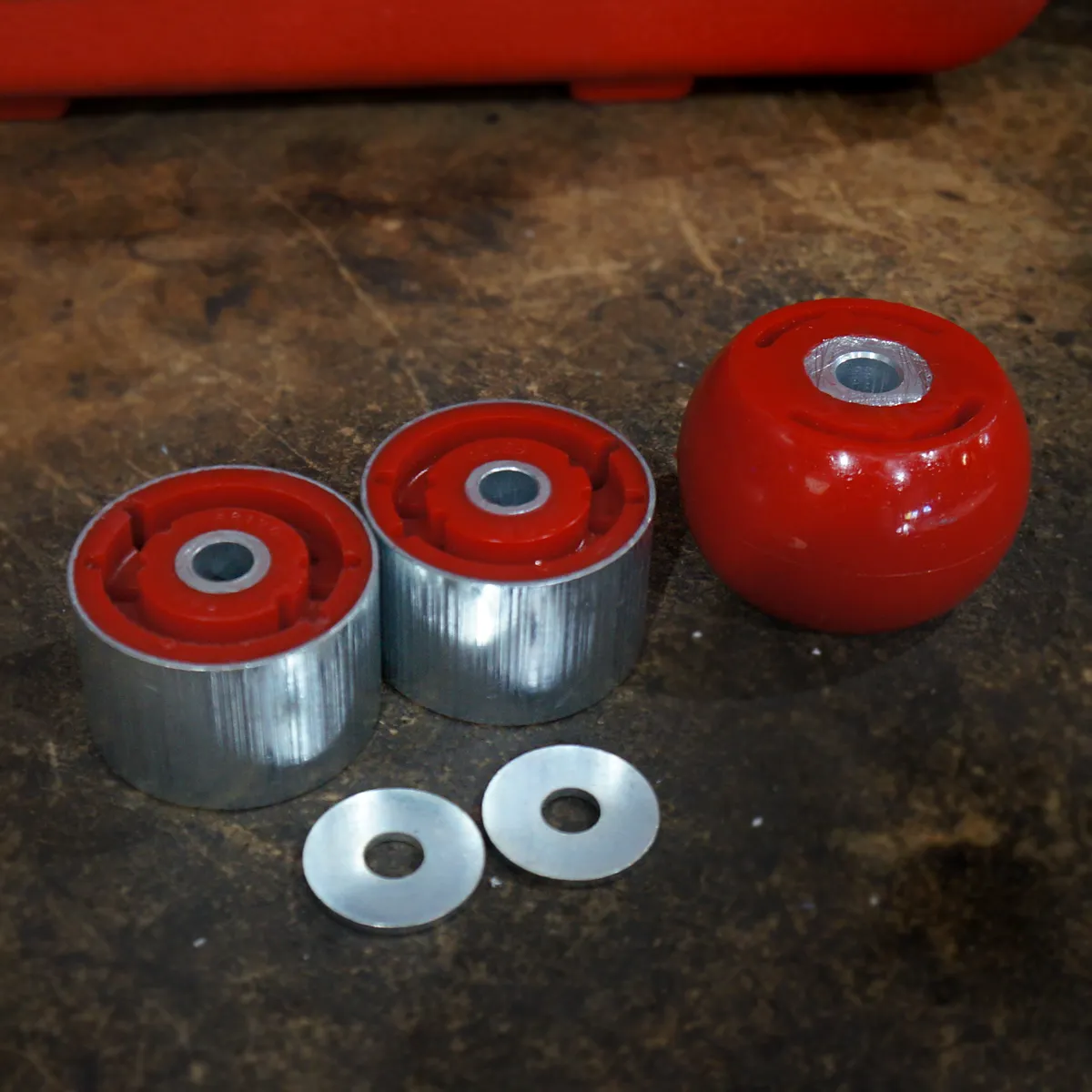

The best replacement suspension bush for most worn vehicles is a polyurethane bush designed to the factory fitment. It restores tight, quiet suspension like new rubber does, but it resists the heat, oil and ozone that wore the original out. New rubber returns factory feel for a while, then starts the same decline again.
When a suspension bush wears out, you have three realistic choices: a genuine rubber part from the dealer, an aftermarket rubber copy, or a polyurethane replacement. Each will stop the clunk and tighten things up on the day it is fitted. The difference shows up a few years later, when one option is wearing out again and another is still doing its job. We have been making polyurethane suspension bushes for more than 50 years, so here is a practical look at each choice and which one makes the most sense for a repair.
What should a replacement bush actually fix?
A good bush repair needs to do three things at once. It removes the play that caused the noise, it puts the wheel back in the right place so alignment holds and tyres wear evenly, and it keeps the vehicle comfortable to drive. A bush that achieves the first two but rides badly, or achieves all three for only a couple of years, is not a complete fix.
So the best replacement bush is the one that restores the vehicle and then keeps it that way for as long as you own it.
How does a new rubber bush compare as a replacement?
Genuine and aftermarket rubber bushes are bonded to steel sleeves and twist as the suspension moves. When new, they are quiet and soft, so the vehicle feels exactly as it did from the factory. That is the main reason people choose them.
The catch is that the new rubber faces the same conditions that wore out the old one. Engine and exhaust heat, oil leaks, ozone and years of flexing all break rubber down. On high kilometre vehicles and utes that work for a living, it is common to be replacing the same bush again within a few years. Rubber is also more likely to deflect under load, so alignment can drift when braking and cornering.
Why is polyurethane a better long term repair?
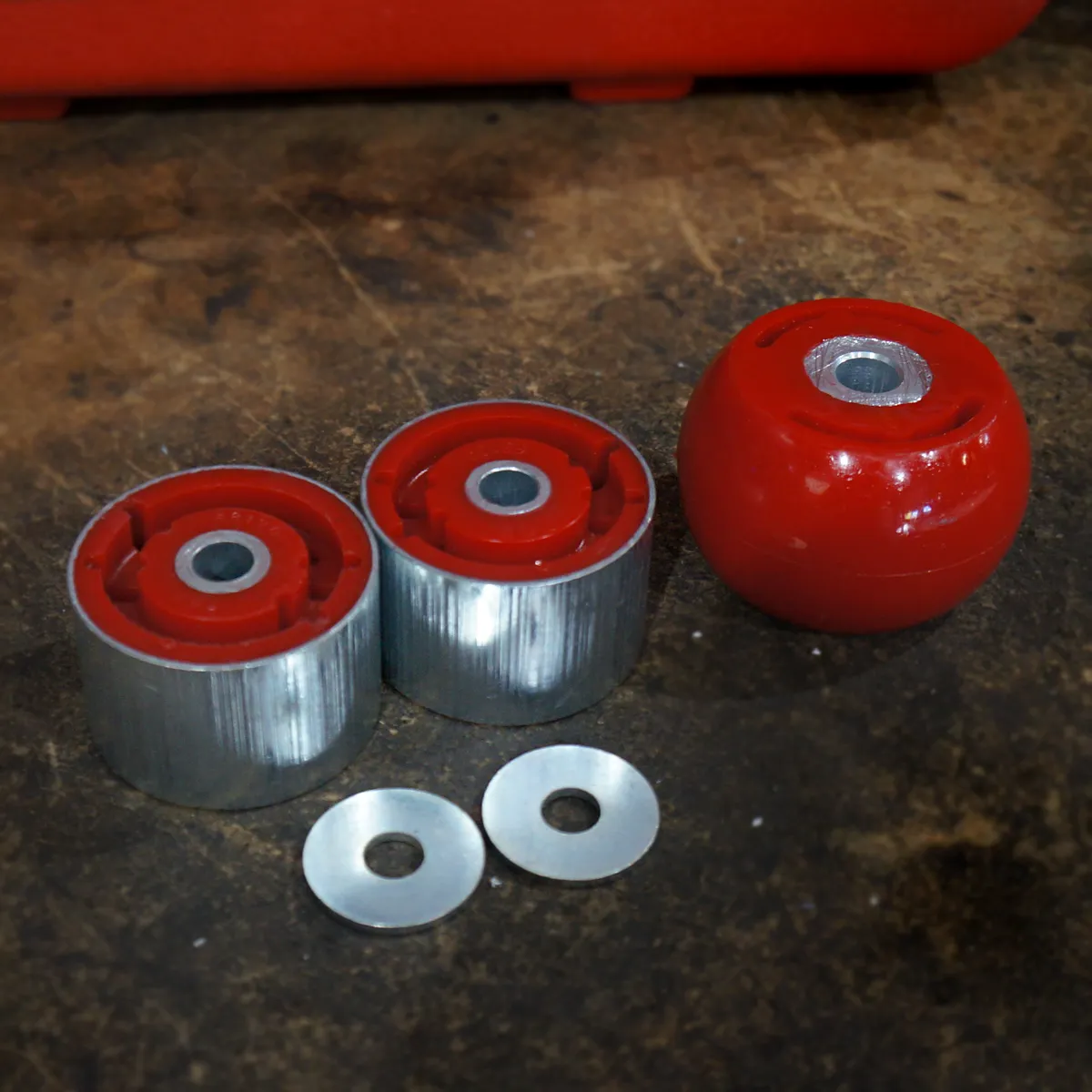
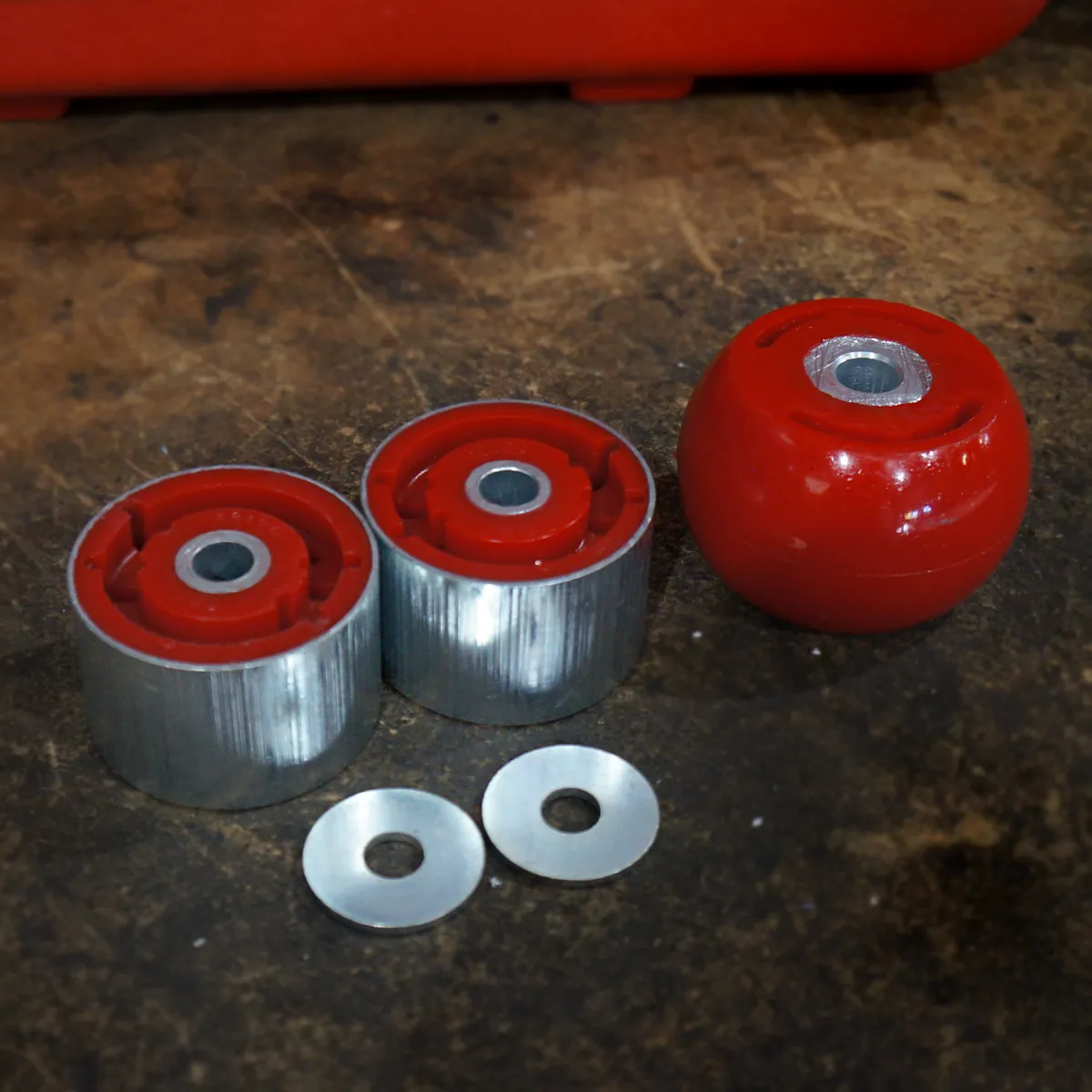
Polyurethane bushes are mechanically fitted rather than bonded, and they pivot on a lubricated centre pin. That design lets the suspension move freely without stretching and tearing the bush every time the wheel travels. Our polyurethane resists abrasion, oil, grease, ozone and weathering, so it does not perish or crack the way rubber does.
For a repair, that means the clunk goes away and stays away. Alignment holds more consistently, tyres wear more evenly and there is less vehicle sway through corners. You get the before and after difference of a fresh suspension, without booking the same job again later.
Is polyurethane harsher than a new rubber bush?
This is the most common worry, and it comes from the early days of polyurethane. Nolathane was originally developed to replace brass bushes in hillclimb cars, and those first formulations were too hard for everyday street use.
Our current formulations are softer, while resisting tearing, abrasion and compression better than the originals. We also make our bushes in several durometers and choose the right hardness for each application. That is the thinking behind our Softer, Stronger, Smarter tagline. Most owners notice a tighter, more settled vehicle rather than a harsher one, and a well chosen polyurethane bush stays comfortable for daily driving.
Replacement bush options compared
|
Replacement option |
Fixes play and noise |
Holds alignment under load |
Ride when new |
Likely life |
Typical use |
|
Genuine rubber |
Yes |
Moderate |
Softest |
Similar to the original |
Owners wanting exact factory feel |
|
Aftermarket rubber |
Yes |
Moderate |
Soft |
Varies with quality |
Budget repairs |
|
Nolathane polyurethane |
Yes |
High |
Slightly firmer, comfortable |
Long, lifetime warranty against defects |
Repairs that should last |
Which vehicles benefit most from polyurethane replacements?
Any vehicle that has worn through one set of bushes is a good candidate, because the conditions that wore them out have not changed. High kilometre daily drivers, family SUVs, utes and 4WDs that carry loads, and classic cars with original rubber all benefit. If you own an older vehicle, our guide to polyurethane bushes for classic cars covers the restoration side.
If your bushes have failed sooner than expected, it is also worth understanding why. Our guide on why suspension bushes keep wearing out explains the common causes so the new set lasts.
How do you choose the right replacement bush?
Search by your make and model to see every Nolathane kit engineered for the vehicle, from single positions to complete vehicle kits. For older or modified vehicles, our bushing size search lets you match by dimensions.
Every Nolathane bush carries a lifetime warranty against manufacturing defects and a fitment guarantee. If you would rather have the job done for you, our Nolathane resellers can supply and fit the right parts, and they will finish the job with a wheel alignment, which we explain in do you need a wheel alignment after replacing bushes.
FAQs
Looking for more information about replacing worn suspension bushes? Below we answer the most commonly asked questions
What is the best replacement for worn suspension bushes?
Should I replace rubber bushes with rubber or polyurethane?
Are polyurethane bushes too hard for a daily driver?
Do polyurethane bushes last longer than rubber?
Are aftermarket bushes as good as genuine?
Can I replace only the worn bushes?
Do polyurethane bushes need grease?
Find the right replacement for your vehicle in our suspension bushes range.