
 US
 Australia
 United Kingdom
 Europe
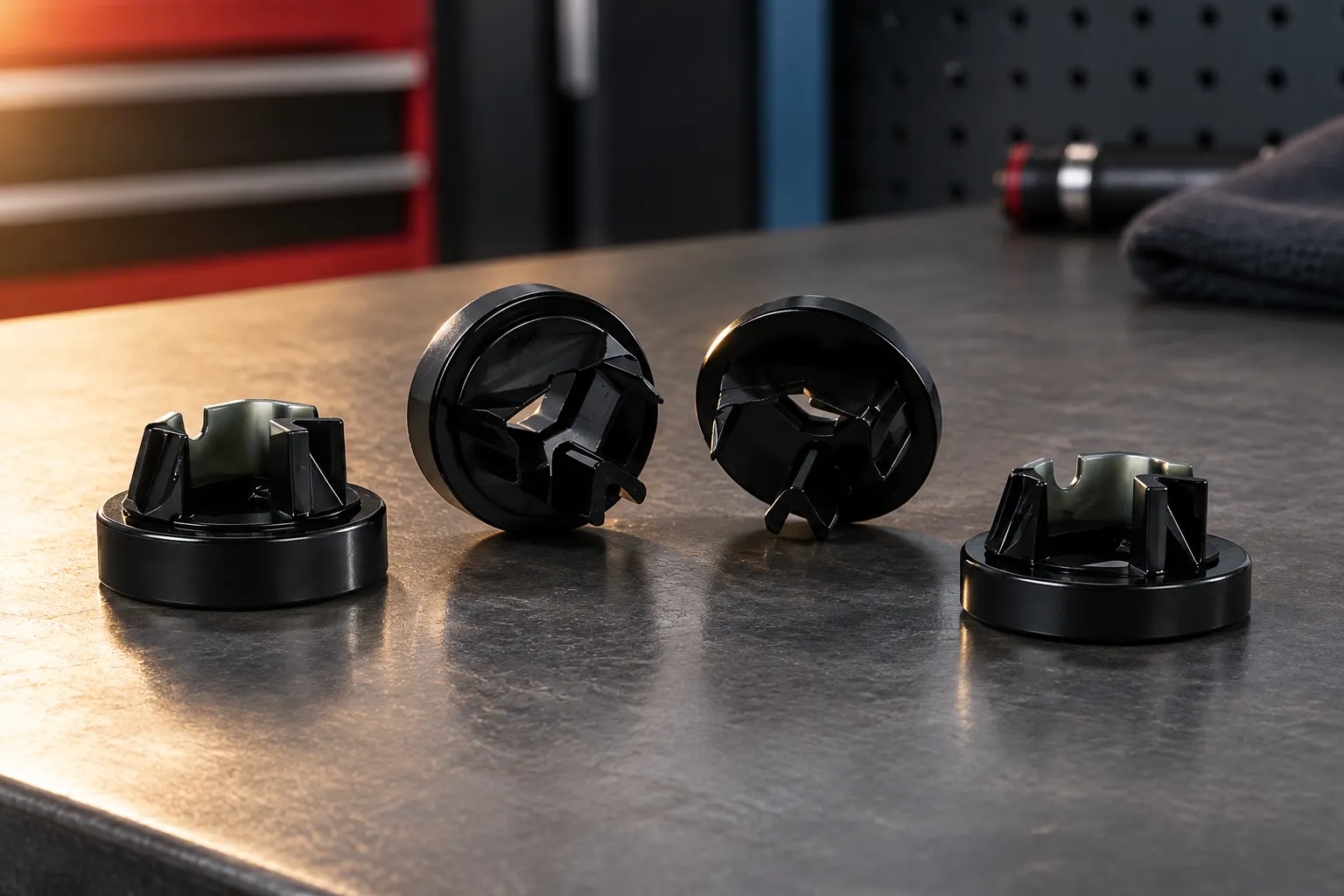

To check motor mounts, inspect each mount with a flashlight for cracks, sagging and leaks, then have a helper hold the brakes firmly and gently apply throttle in drive and reverse while you watch the engine from the side. A healthy engine barely moves, while a bad motor mount lets the engine lift, lurch or clunk.
You do not need special equipment to find out whether your engine mounts are worn. A flashlight, a pry bar and a careful helper will tell you most of what you need to know in a few minutes. Here is how to check motor mounts and how to check engine mounts and torque struts safely, how to tell if motor mounts are bad, and what to do next with our polyurethane engine mount bushings.
Safety First Before You Check Engine Mounts
The torque test involves the engine running in gear, so set up carefully. Park on level ground with plenty of clear space in front and behind, chock the wheels and make sure your helper is comfortable holding the brake pedal firmly. Stand to the side of the engine bay, never in front of or behind the vehicle, and keep hands, hair and loose clothing well away from belts and fans.
Use only short, gentle throttle applications during the test. The aim is to load the mounts, not to launch the vehicle, and a few seconds of light throttle is enough to reveal a problem.
Step 1: Inspect the Motor Mounts Visually
With the engine off and cool, open the hood and locate each mount. You may need to look from underneath for the transmission mount and lower torque mounts. Shine a flashlight on the cushion between the metal brackets and look for:
- A cracked motor mount: Deep cracks or tears running through the rubber cushion.
- Separation: Rubber pulling away from the metal bracket it is bonded to.
- Sagging or collapse: The mount looking squashed or the engine sitting tilted.
- Fluid leaks: Oily residue around hydraulic mounts where fluid has escaped.
- Rub marks: Signs the engine has hit hoses, wiring, the fan shroud or exhaust.
Oil-soaked rubber is worth noting even if it looks intact, because oil softens rubber and leads to early failure.
Step 2: Do the Brake Torque Test
Start the engine and have your helper hold the brake firmly. With the vehicle in drive, ask them to apply light throttle for a second or two while you watch the engine from the side. Repeat in reverse, since the engine twists the opposite way.
A healthy engine shifts only slightly and settles immediately. If the engine lifts noticeably at one side, lurches, or you hear a clunk as the throttle is applied or released, that mount is worn. The side that lifts is usually the mount that has failed.
Step 3: Use a Pry Bar With the Engine Off
Switch the engine off and remove the key. Place a pry bar carefully between the engine bracket and the frame mount near each cushion, then apply gentle pressure. A good mount resists with only a little give, while a worn mount lets the bracket move easily or shows a gap opening in the rubber.
Repeat the same check on the transmission mount from underneath. Transmission mounts wear too and can cause similar clunks when shifting.
Motor Mount Tests at a Glance
|
Test |
Good mount |
Bad motor mount |
|
Visual inspection |
Solid rubber, no cracks or leaks |
Cracks, tears, sagging or oily residue |
|
Brake torque test in drive and reverse |
Slight movement that settles immediately |
Engine lifts, lurches or clunks |
|
Pry bar test |
Firm with little give |
Bracket moves easily or rubber gaps open |
|
Engine position |
Sits level in the bay |
Tilted or lower on one side |
Rule Out Other Causes of Vibration
Engine vibration does not always mean bad mounts. A misfiring cylinder, worn spark plugs, unbalanced wheels or a damaged driveshaft can all cause similar shakes. If the mounts pass every test but the vibration remains, have the ignition and fuel systems checked before replacing parts.
If the mounts are worn, our list of bad motor mount symptoms helps confirm what you found, and our guide to motor mount replacement cost helps you plan the repair.
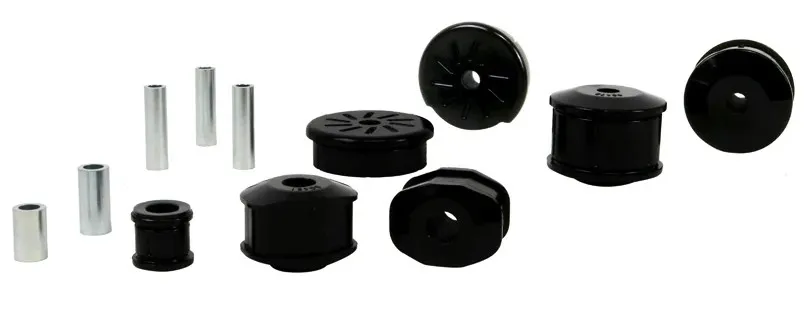
Motor Mount Inserts - 4 Mount Set
Replacing Worn Mounts With Polyurethane
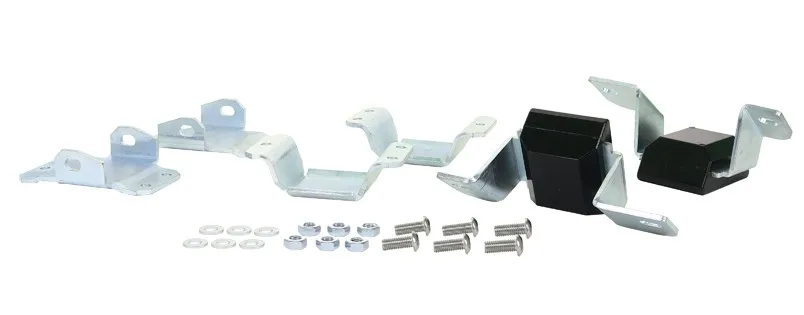
Motor Mount Set - Small Block V8 Only
FAQs
Looking for more information about checking motor mounts? Below we answer the most commonly asked questions
How do you tell if motor mounts are bad?
How do you check engine mounts without a lift?
How much should an engine move on its mounts?
Is the brake torque test safe?
Can a cracked motor mount still work?
Should I check the transmission mount too?
If you found a worn mount, fix it with parts built for torque and heat. Browse our engine mount bushings for your engine and drivetrain.


