
 US
 Australia
 United Kingdom
 Europe
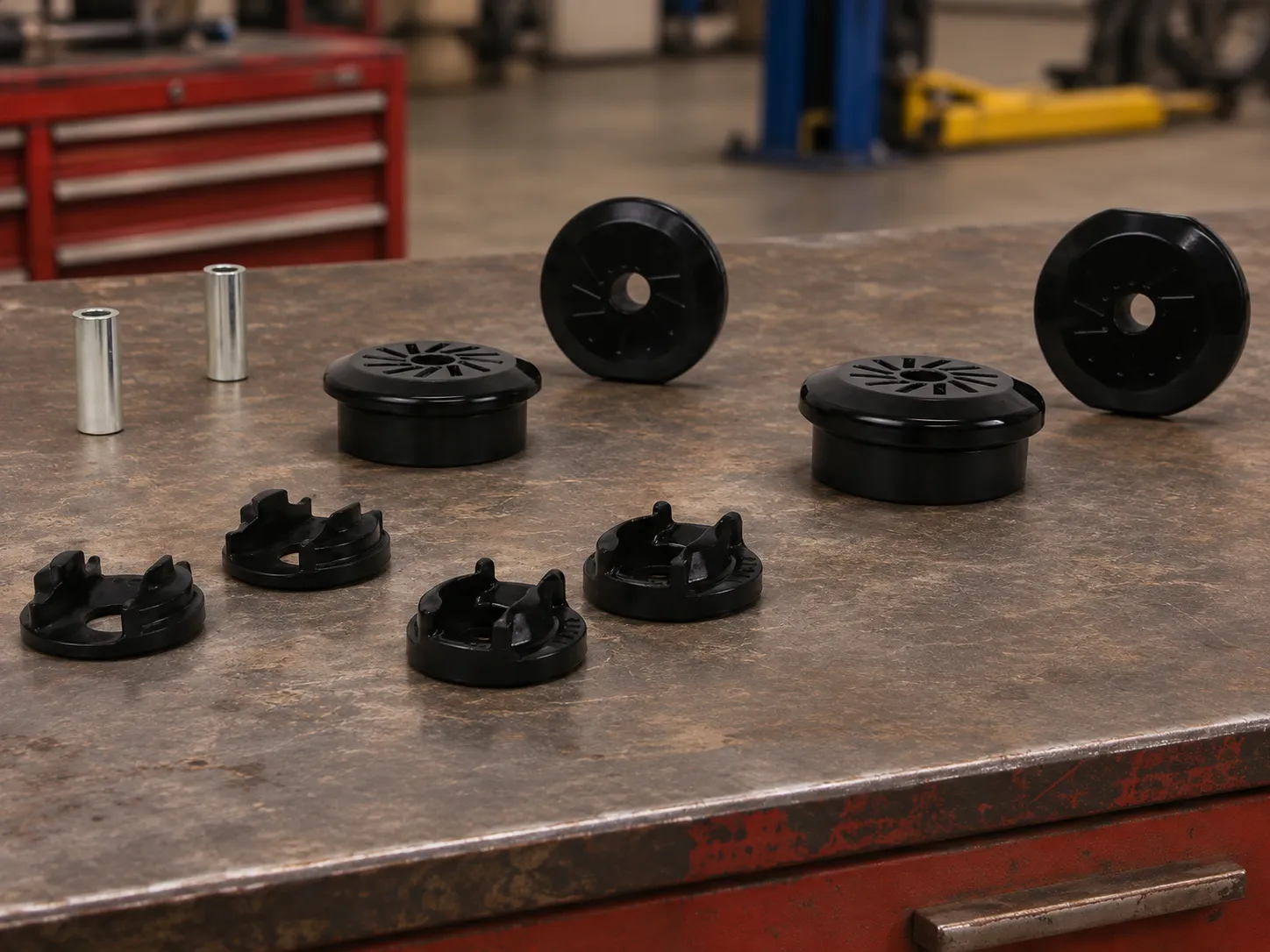

The most common bad motor mount symptoms are a thump or lurch when shifting into drive or reverse, heavy vibration at idle, clunks when accelerating or braking, and an engine that visibly rocks when revved. A broken engine mount can also let the engine sit unevenly or hit nearby parts, so prompt repair protects hoses, wiring and the exhaust.
Engine mounts wear quietly, so the first signs are easy to blame on something else. A little more vibration at a red light or a soft thump when you select drive can go unnoticed for months. Knowing the bad motor mount symptoms helps you catch the problem early, before a worn mount starts damaging the parts around it. Here is what to watch and listen for, and how our polyurethane engine mount bushings fix it.
Vibration at Idle and in Gear
Excess vibration is one of the clearest bad engine mount symptoms. Healthy mounts absorb the engine's firing pulses, so the cabin stays smooth at idle. When the cushion hardens, cracks or collapses, that vibration passes straight into the frame and you feel it through the steering wheel, seats and floor.
The vibration is often worst at idle with the transmission in drive and your foot on the brake, because the engine is pulling against the mounts. If it smooths out in neutral or park, worn mounts are a strong suspect. A misfiring cylinder can also cause heavy vibration, so rule that out before buying parts.
A Thump When Shifting or Accelerating
A worn motor mount lets the engine move further under torque. When you shift into drive or reverse, accelerate hard or lift off the throttle, the engine rocks and lands against the end of its travel with a thump or clunk. You may feel a lurch through the vehicle as it happens.
This bad engine mount sound is especially common on V8s, turbocharged engines and diesels, which produce strong torque reaction. On powerful rear-wheel drive vehicles, worn mounts can also contribute to wheel hop under hard launches.
Clunks Over Bumps and When Braking
When a mount is badly worn or broken, the engine can shift as the vehicle hits bumps or brakes hard. That creates a clunk from the engine bay that is easy to confuse with suspension noise. If the sound comes from the front of the vehicle and gets worse under braking or acceleration, check the engine and transmission mounts as well as the suspension.
Visible Engine Movement and Damage
Some signs of bad motor mounts are visible under the hood:
- Engine rocking under load: With the brake held firmly and a helper applying light throttle in drive and reverse, a worn mount lets the engine lift or lurch.
- Cracked motor mount rubber: Deep cracks, tears or rubber separating from the metal bracket.
- Collapsed or sagging mount: The engine sits lower or tilted to one side.
- Leaking fluid: Hydraulic mounts may show oily residue where the fluid has escaped.
- Contact marks: Rub marks on hoses, wiring, the fan shroud or exhaust where the engine has moved into them.
Our step by step guide on how to check motor mounts explains how to carry out these checks safely.
Engine Mount Symptoms at a Glance
|
Symptom |
When you notice it |
Likely cause |
|
Heavy vibration |
At idle in drive, smoother in park |
Worn or collapsed mount cushions |
|
Thump or lurch |
Shifting into gear or accelerating |
Engine rocking under torque reaction |
|
Clunk from the engine bay |
Over bumps or braking hard |
Broken mount letting the engine shift |
|
Engine sits crooked |
Visible under the hood |
Collapsed or torn mount |
|
Rub marks on nearby parts |
During inspection |
Engine moving beyond its normal range |
What Happens if You Ignore a Broken Motor Mount?
A broken motor mount puts extra load on the remaining mounts, which then wear faster. The engine's extra movement can stretch radiator hoses, pull on wiring and vacuum lines, crack exhaust components and strain driveline parts. In severe cases the engine can shift far enough to affect throttle or shift linkages.
That is why it pays to act early. Our guide to how long motor mounts last covers the typical lifespan and the risks of putting off the repair.
The Lasting Fix for Worn Engine Mounts
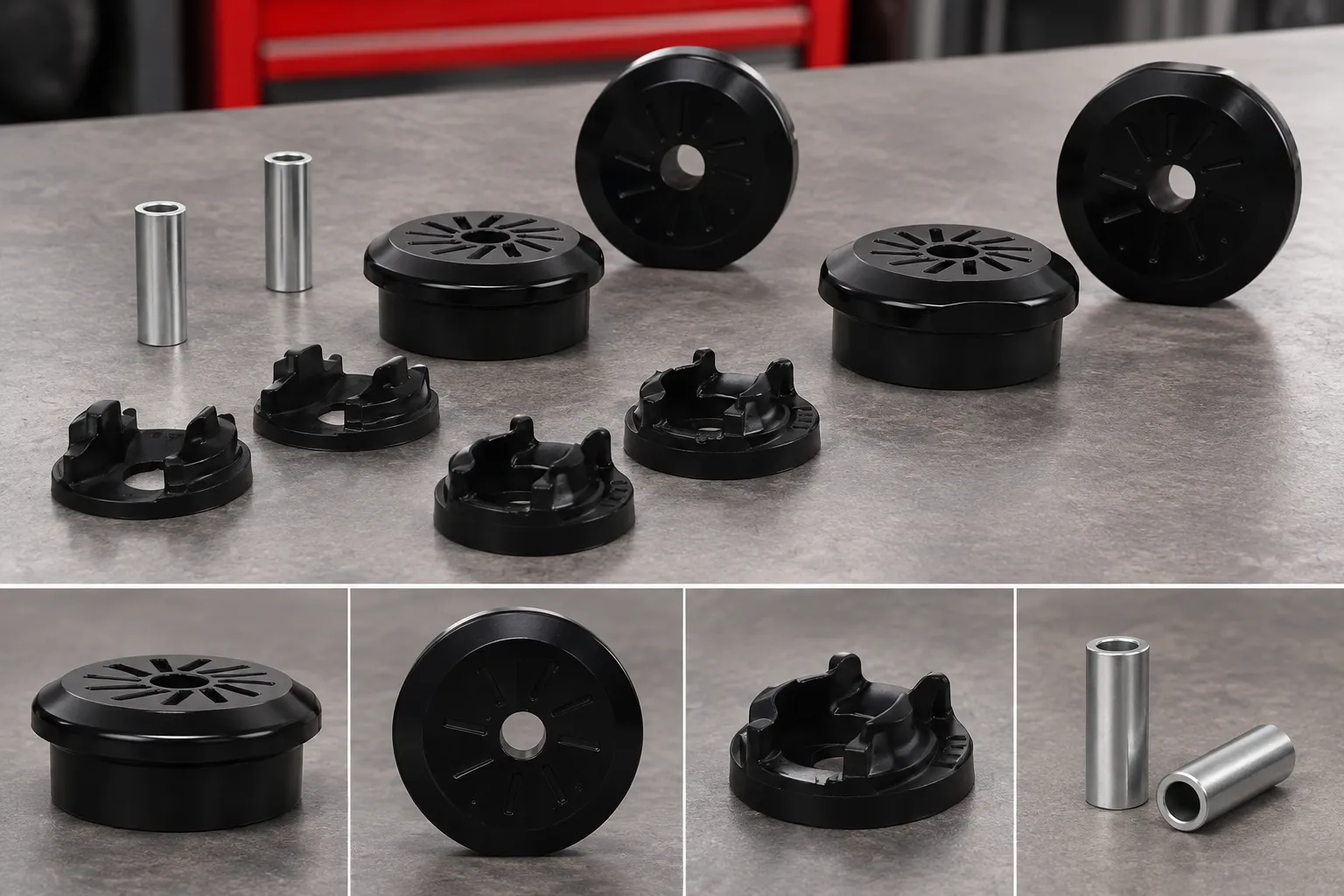
Our polyurethane insert kits and complete engine mount sets control engine movement more firmly than rubber and resist heat, oil and torque reaction far better. Insert kits install into the existing mount shell in under an hour on applicable platforms, while complete sets take up to about two hours. Warranties range from 3 years to limited lifetime depending on the product.
FAQs
Looking for more information? Below we answer the most commonly asked questions
What are the symptoms of a bad motor mount?
What does a bad engine mount sound like?
Can a bad motor mount cause vibration?
Can you drive with a broken motor mount?
Can bad motor mounts cause transmission problems?
How do I know which motor mount is bad?
Stop the thumps and shakes from your engine bay for good. Find polyurethane engine mount bushings for your engine, including insert kits and complete mount sets.


