US
 Australia
 United Kingdom
 Europe
NOLATHANE Lateral Arm Bushings
IMPROVE GRIP, HANDLING & PERFORMANCE.
Nolathane lateral arm bushings renew the pivots on the rear links that hold each wheel in position from side to side. Whether your parts catalog calls the part a lateral arm bushing, a lateral link bushing, or a lateral control arm bushing, its job is the same: keep the rear wheel located across the car and stop toe and camber from wandering whe... Read more
Nolathane lateral arm bushings renew the pivots on the rear links that hold each wheel in position from side to side. Whether your parts catalog calls the part a lateral arm bushing, a lateral link bushing, or a lateral control arm bushing, its job is the same: keep the rear wheel located across the car and stop toe and camber from wandering when the suspension is loaded in a corner, over a bump, or under braking.
These bushings suit multi-link and independent rear suspension (IRS) on sedans, coupes, wagons, hatchbacks, and performance cars, where a small amount of movement at one link shows up as a big change in how the rear end behaves. Each listing shows the position on the arm, the suspension it suits, and whether the bushing is sold singly or as part of a set.
How Rear Lateral Arms Locate the Wheel
A lateral arm runs roughly side to side, from a mount on the rear subframe to the knuckle or hub carrier that holds the wheel bearing. Most multi-link rear ends use two or more per side, alongside a trailing arm that handles front-to-rear location.
Cornering force is what the lateral links resist. As the car turns, the tires push sideways against the road and the body leans the other way, and the lateral arms carry that load between the knuckle and the subframe. Their length and mounting points also decide how toe and camber change as the wheel moves up and down. Engineers tune that movement deliberately, often adding slight toe-in under load to keep the rear planted.
The bushings at each end are where that design either works or falls apart. A firm bushing lets the link pivot through its arc while holding its length. A soft or split one lets the link shift sideways, and the carefully tuned toe and camber curves turn into guesswork.
Inner, Outer and Compensator Arm Bushings
Lateral links usually carry a bushing at each end, and each end does a slightly different job.
Inner Lateral Arm Bushings
The inner bushing sits at the subframe end of the link. It feeds cornering load straight into the subframe while letting the link rotate through its arc. On many cars the inner mount uses an eccentric bolt or slotted bracket for rear toe or camber adjustment, so the bushing must hold that setting without creeping.
Outer Lateral Arm Bushings
The outer bushing sits where the link meets the knuckle or hub carrier. Because it is close to the wheel, it sees every pothole impact and a constant spray of water, salt, and road grit. Outer bushings often wear out sooner than inner ones, and on some designs a ball joint sits at this end instead.
Compensator Arm Bushings
Some rear suspensions add a compensator arm, a short link that works alongside the main lateral arms to fine-tune toe as the wheel moves and to soak up a share of the side load. A compensator arm bushing plays an outsized role for its size, because any slack in it shows up directly as rear toe change. When one bushing in a link has failed, the bushing at the other end has done the same mileage, so inner and outer bushings are usually renewed together.
Signs of Worn Lateral Arm Bushings
Worn lateral link bushings show up in how the rear feels long before anything looks broken. Common signs include:
- A vague or shifting rear end in corners and quick lane changes
- Rear steer over bumps, where the car seems to step sideways mid-corner
- Clunks from the rear when getting on and off the throttle
- Rear tires scrubbing away faster on their inside shoulders
- A rear toe setting that won?t hold between alignments
- Cracked, torn, or separated rubber at the bushing faces
A car showing two or more of these is worth a close inspection with the rear wheels unloaded. Levering gently between the link and its mount with a pry bar will show movement that?s hard to see with the car on the ground.
Rubber and Polyurethane Lateral Arm Bushings
Factory lateral arm bushings are usually rubber, often with voids molded into them. The voids let the bushing give a little in one direction, which filters road noise and builds in a degree of passive rear steer. The trade-off is that rubber tears, softens with oil contamination, and slowly takes a set, at which point the link moves far more than the engineers intended.
Polyurethane holds the link with far less deflection, so the rear wheel stays where the alignment put it. It resists oil, grease, ozone, and weathering, which matters at a position that lives under the car. Nolathane bushings are made in a durometer, or hardness grade, chosen for each position, and they are installed with minimal crush around a lubricated center sleeve. The arm pivots on that greased sleeve instead of twisting the bushing material, so the link moves freely through its travel without fighting itself.
For a quiet commuter that only needs to be put back to factory feel, a fresh rubber bushing is a reasonable choice. For a car that is driven hard, has eaten through rubber bushings before, or needs a rear alignment that stays put, polyurethane is usually the better long-term answer.
Benefits of Firmer Lateral Location
Tightening up the lateral links changes how the whole car drives. The main gains are:
- More consistent rear toe, so the alignment you paid for stays accurate
- Sharper turn-in, because the rear responds with the front instead of lagging
- Steadier tracking under hard braking, with less tendency to squirm
- Even rear tire wear and longer tire life
Performance cars feel this most, but a high-mileage daily driver with soggy factory bushings benefits just as clearly.
Choosing Lateral Arm Bushings
Getting the right bushing starts with knowing exactly which link and which end you?re replacing. Each listing shows which link and end the bushing suits and what comes in the box.
Position on the Arm
Identify whether the worn bushing is at the inner or outer end, and whether it belongs to the front or rear lateral link, the upper or lower link, or the compensator arm. Multi-link rear ends can use several different bushing sizes per side, and a part for one link rarely fits another.
Single Bushings and Inner-and-Outer Sets
Single bushings make sense when only one position has failed and the rest are in good shape. Inner-and-outer sets suit a full rear refresh, since renewing both ends at once keeps the link pivoting evenly and saves pressing the arm out a second time.
Arm Condition
Check every link before ordering. A bent arm from a curb strike, an elongated bushing bore, or corrosion around the eye means a new bushing won?t seat or hold properly. A bent link should be replaced rather than straightened and rebushed, because heating or bending it back weakens the metal.
Fitting Lateral Arm Bushings
Rebushing a lateral link suits a professional shop or a well-equipped home mechanic with a press and the correct receiver cups. As a general guide:
- Support the car securely on jack stands and mark any eccentric adjuster positions before loosening them.
- Remove the lateral arm from the subframe and knuckle.
- Press out the old bushings, clean the bores, and check them for wear or damage.
- Install the new bushings and sleeves, applying the supplied grease to the sleeve and faces as specified.
- Reinstall the arm with the bolts snug, then lower the car and torque them with the suspension at ride height.
- Have a four-wheel alignment carried out, because rear toe and camber will change.
Qualified installation is recommended, since these links control rear wheel position at speed. Once the car has covered a short distance on the new parts, put a wrench back on each bolt to confirm it?s still at specification.
Limitations and Trade-Offs
Polyurethane is a firm, durable fix, with a few honest limits:
- A little more road hum and tire roar reaches the passengers than with new rubber
- Squeaks can develop if the sleeve and faces aren?t greased as directed
- New bushings can?t cure bent links, worn ball joints, or tired wheel bearings elsewhere in the rear suspension
- Renewing one position alone can leave the arm unevenly supported and feeling unbalanced
- A wheel alignment is always required after installation
Compliance and Insurance
Rebushing a lateral link is a routine repair, but suspension condition and safety inspection rules differ between states. Make sure the car meets the inspection rules of the state it?s registered in, and keep your insurer informed of any departure from factory suspension so the policy reflects the car.
Warranty and Support
Nolathane backs each lateral arm bushing with a lifetime warranty on manufacturing defects in the material and workmanship, valid on the original car it?s installed in. If you?re struggling to tell an inner bushing from an outer one, or need help picking between a single bushing and a full set, a quick call or message to our local support team will get you pointed to the right parts.
Shop Lateral Arm Bushings
Tired multi-link rears rarely wear just one pivot, so check the trailing arm bushings too. Both are in our polyurethane bushings selection.
Pick your car to view the lateral link bushings listed for its rear suspension. We ship fast, make returns simple, and back every order with our fitment guarantee, so the bushings in the box match the rear links on the car you selected.
2 items
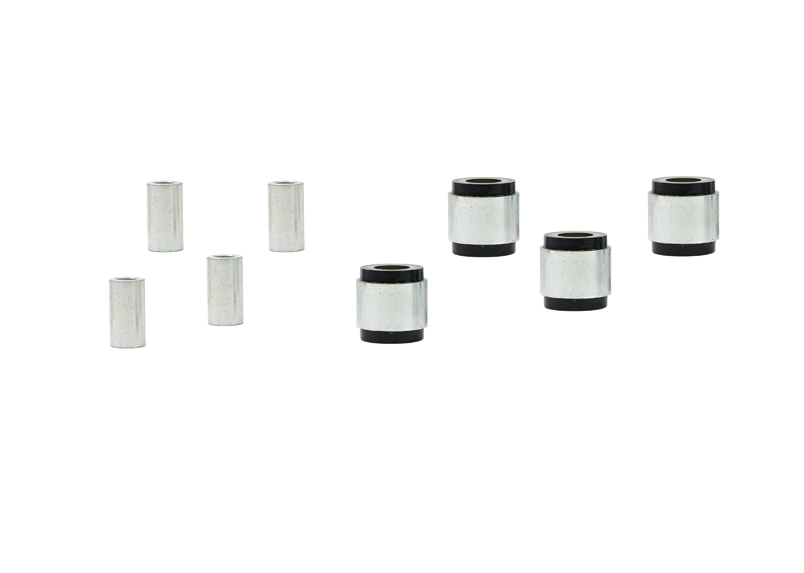 In StockShips within 24hrs.Ships within 24hrs.SKU: REV053.0018
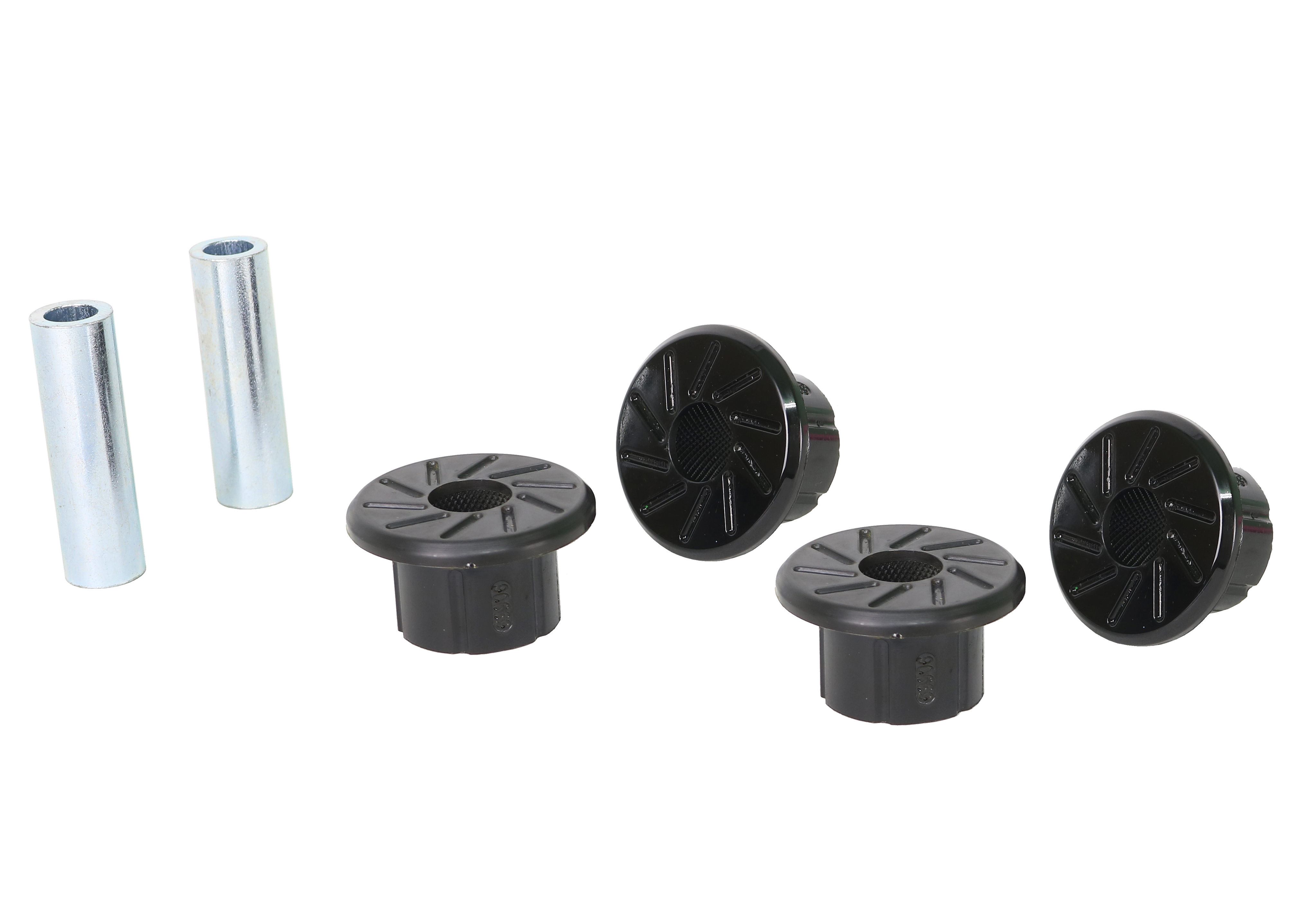
Rear Compensator Arm Inner & Outer Bushing Set
In StockShips within 24hrs.Ships within 24hrs.Qty Required 1$25.87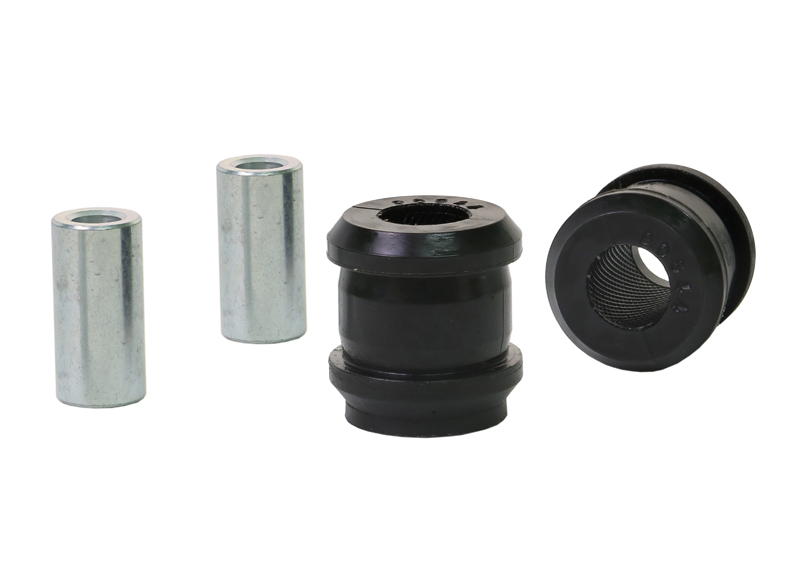 In StockShips within 24hrs.Ships within 24hrs.SKU: REV068.0008
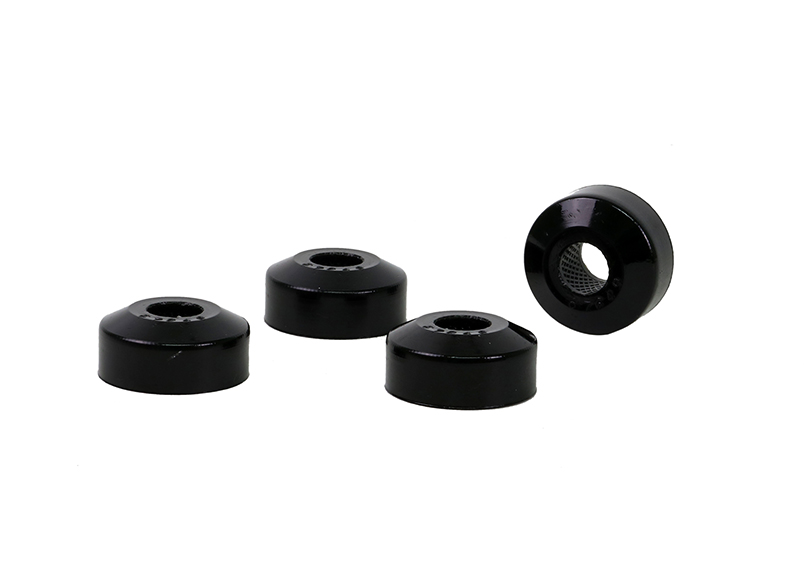
Lateral Arm Front Inner
In StockShips within 24hrs.Ships within 24hrs.Qty Required 1$12.87
Your vehicle
Matching vehicles
No match — try selecting it below.
Refine your search
Clear all- Alignment Parts 2
- Camber Bolts 2
- Bushings 1877
- Alignment Pins and Bushings 7
- Axle Bushings 26
- Body Mount Bushings 89
- C-Bushings 6
- Coil Spring Insulators 14
- Coil Spring Spacers 29
- Control Arm Bushings 755
- Differential Bushings 47
- Fifth Wheel Bushing 1
- Lateral Arm Bushings 2
- Leaf Spring Bushings 41
- Leaf Spring Pads 5
- Leaf Spring Shackle Bushing 100
- Radiator Bushings 3
- Radius Arm Bushings 38
- Shock Bushings 33
- Steering Bushings 67
- Strut Mount Bushing 2
- Strut Rod Bushing 29
- Subframe Bushing 28
- Sway Bar Bushings 406
- Sway Bar Link Bushings 36
- Torsion Bar Bushing 2
- Track Bar Bushings 31
- Trailing Arm Bushing 71
- Transfer Case Bushings 4
- Trunnion Bushing 1
- Watts Link Bushing Kit 2
- Car Accessories 3
- Hood Bumper Stops 2
- Hood Latch Roller 1
- Control Arms 69
- Ball Joint 9
- Control Arm Kit 59
- Control Arm Assembly with Ball Joint 1
- Control Arm Kit - Lower 33
- Control Arm Kit - Upper 9
- Trailing Arm Kits 3
- Radius Arm 1
- Engine Bushings 54
- Engine Mount Bushings 54
- Exhaust Bushing 8
- Exhaust Mount Bushings 8
- Leveling Kits 6
- Nuts, Bolts & Screws 2
- Camber Bolt Kit 1
- Sway Bar & Sway Bar Kits 203
- Sway Bar Bracket 1
- Sway Bar Link 41
- Track Bar 2
- Transmission Parts 27
- Shifter Bushing 8
- Transmission Mount 19
- Universal Auto Parts 55
- Body Hardware 2
- Dust Covers 5
- Grease 1
- Rod End 7
- Spare Tire Carrier Mount 1
- Universal Bump Stops 38
- Winch Isolator 1
- Workshop Tools 3
- Bushing Press Kit 1
- Floor Jack Handle Clip 1
- Jack Holder Spring 1
No categories match.
Can’t find what you’re looking for?
Our team can help you find the right part — or tell us what was missing so we can improve the site.
Call Us +1 909-476-2860 Give Feedback (opens in a new tab)